REVIEW · GUIDED
Wander Nashville- Guided Historic Walking Tour
Book on Viator →Operated by Wander Nashville · Bookable on Viator
Downtown Nashville in two hours? Yes. This guided historic walking tour turns the city’s everyday blocks into a clear story, from where Nashville started to the music and names you see today.
I love the personal listening devices—they make it easy to follow the guide even when the sidewalks get noisy. I also like how the tour packs big-name stops into a $10 price, plus it throws in discounts so you can stretch your day beyond the walk.
The main thing to plan for is the walking and stairs/ramps, plus it depends on good weather. If you’re sensitive to distance or uneven sidewalks, it helps to ask for the accessible alternative route early.
In This Review
- Key highlights to know before you go
- Why This $10 Walk Works in Music City
- Meeting Downtown: Where the Walk Starts and Ends
- The Stops That Build the Story: From Where Nashville Began to the Walk of Fame
- Starting at the Waterway Where Nashville’s Story Begins
- Broadway, the Ryman Area, and the Early Country Scene
- A Sports-Era Nashville Moment at the Predators Arena
- Sit-Ins and the Woolworth Lunch Counter Legacy
- Bootleggers, Mobsters, and the Arts That Came After
- The Tennessee State House: Civic Power in Plain Sight
- The Municipal Venue Where Stars Found Their Place
- Walk of Fame Park: Music Names and Beyond
- The Best Part After the Walk: Using the Included Discounts
- What to Bring (and What to Expect) on a 10:00 am Walking Tour
- Who This Tour Is For (and Who Should Skip It)
- Should You Book This Guided Historic Walk?
- FAQ
- How long is the Wander Nashville- Guided Historic Walking Tour?
- What does the tour cost?
- Does the tour include a guide audio system?
- Where does the tour start and end?
- How big is the group?
- What happens if the weather is poor?
Key highlights to know before you go
- Headsets for clear narration: follow the guide’s commentary without craning your neck
- Small group size (max 20): less wandering, more actual listening
- Landmark-to-landmark flow: you get a tight overview instead of a random checklist
- Downtown themes, not trivia: music, politics, and social change tied to real locations
- Discounts to partner spots: useful momentum for after the tour
- Guides with local personality: names like Dunkin and Sherri Lee show up in standout reviews
Why This $10 Walk Works in Music City
You don’t need a full-day tour to feel like Nashville “clicked.” With this one, you can do the first pass: orientation, context, and the kind of stories that make later stops hit harder.
The price matters, but not in a cheap-only way. At $10 per person for about 1 hour 45 minutes, you’re paying for someone to connect dots quickly—how the city’s music scene grew, how social movements played out downtown, and how old venues relate to what you see now.
One practical win: you’re not stuck relying on your own phone audio while walking. The tour provides personal listening devices, which makes the difference between a pleasant stroll and a frustrating one where half the message gets lost.
Other walking tours we've reviewed in Nashville


Meeting Downtown: Where the Walk Starts and Ends
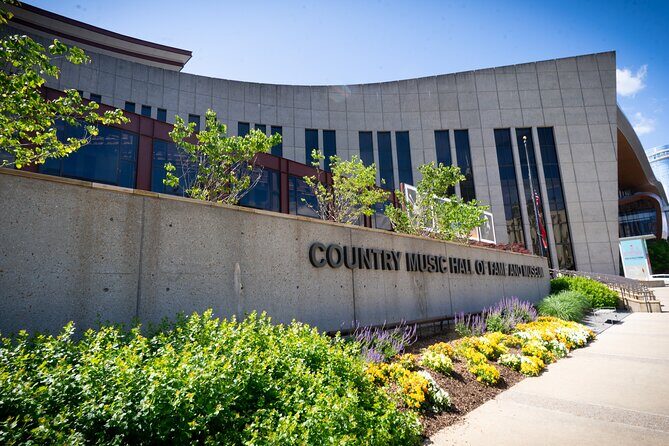
The tour begins at Butlers Run LLC, 138 2nd Ave N #500, and it ends at Walk of Fame Park, 121 4th Ave S. That end point is handy because it keeps you close to other downtown sights right after the tour wraps.
It starts at 10:00 am. Going earlier in the day usually helps with heat and foot traffic, and it also gives you time to use those tour discounts later.
This is also the kind of tour that works well with public transportation. If you’re hopping between neighborhoods, you’ll find it easier than tours that start somewhere far from transit.
The Stops That Build the Story: From Where Nashville Began to the Walk of Fame
This isn’t just a march past famous signs. The route is built around moments that shaped downtown—commerce, music, protest, and the people who left their mark.
Expect a steady rhythm of short walks and stops, with the guide explaining what happened at each location and why it still matters. Reviews repeatedly praise guides for staying engaging and funny while keeping the facts straight, including guides like Dunkin and Sherri Lee.
Here’s how the itinerary comes together, stop by stop.
Starting at the Waterway Where Nashville’s Story Begins
The tour kicks off along an iconic waterway—the kind of place where early Nashville activity made sense. River access historically meant movement of people, goods, and money, and the guide uses that to set the scene fast.
Why this matters: when you understand the city’s early “why here,” later landmarks stop feeling random. You start seeing the logic behind where buildings and entertainment clustered.
This first stop also helps you settle in. You’ll hear how the guide plans to connect the tour stops, which makes the rest of the walk easier to follow.
Broadway, the Ryman Area, and the Early Country Scene
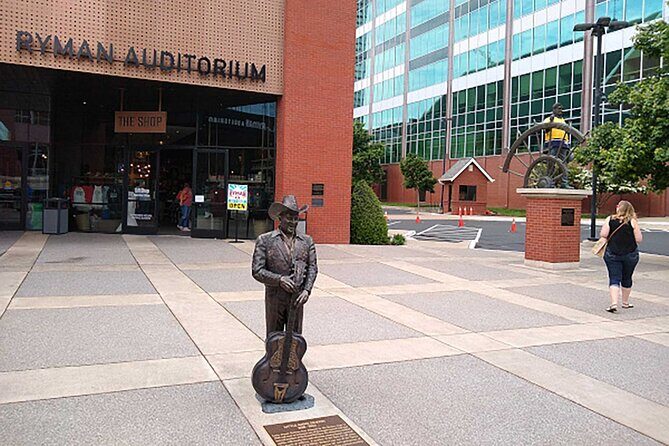
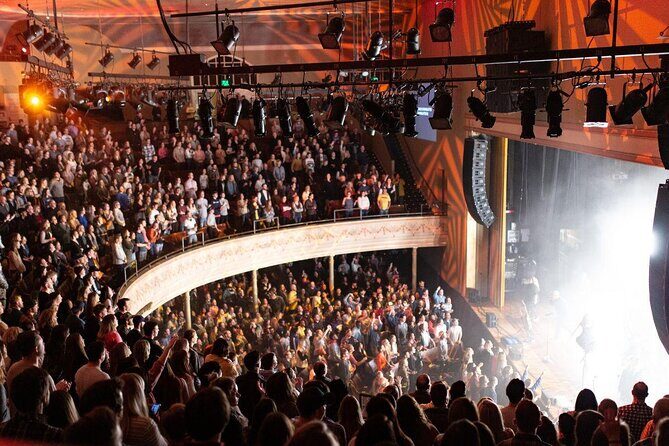
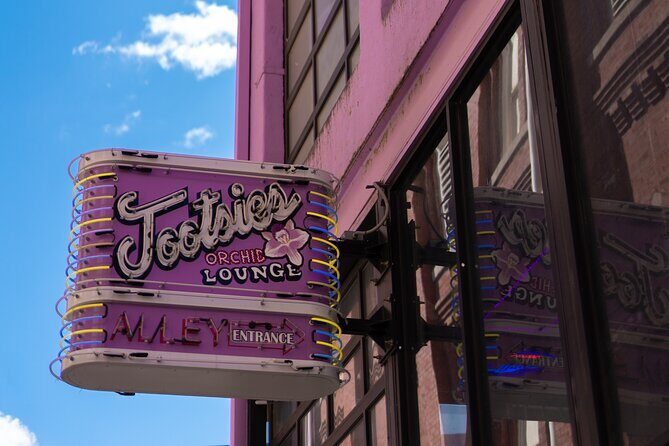
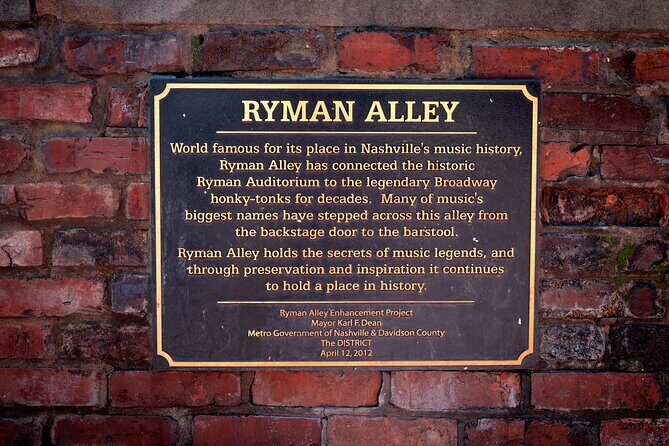
Next up is the classic Broadway area—specifically a famous saloon tied to how young country stars got their start. It’s right in the heart of Broadway and just behind the Ryman.
This stop is fun because it’s not abstract. You’re in the same streets where country music grew into a national sound. You also get a sense of how performance spaces and nightlife fed each other.
If you love music but want more than name-dropping, this is one of the best points of the tour. The guide’s commentary is aimed at the story behind the stage, not just the stage itself.
Other guided tours in Nashville






A Sports-Era Nashville Moment at the Predators Arena

After the music-and-nightlife energy, the route shifts to the modern era with NHL Nashville Predators.
This stop is useful because it reminds you that Nashville isn’t only about classic sounds and old venues. Downtown also reflects newer waves of identity, crowds, and civic pride—things that shape how the city feels on a weekend now.
It’s a clean change of pace, especially if your day includes other indoor attractions. Walking in between helps the whole schedule feel lighter.
Sit-Ins and the Woolworth Lunch Counter Legacy
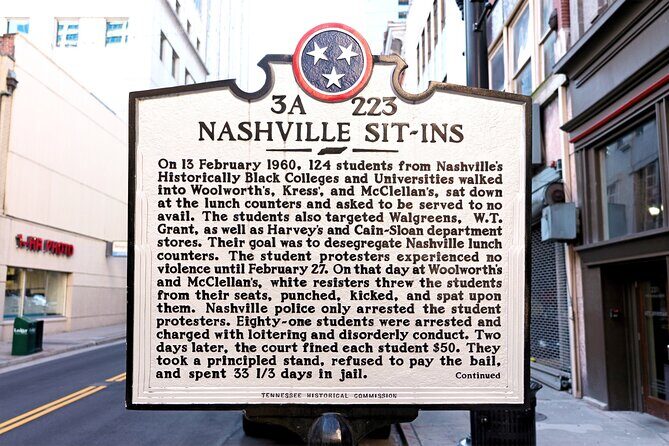
One of the most meaningful stops focuses on the Nashville Sit-Ins and the former site of the Woolworth lunch counter.
This part of the tour gives weight to downtown. You’re not just seeing where people went to eat—you’re learning how a civil rights moment played out in public view, right here in the city’s center.
Even if you know a little about the sit-ins already, the guide’s job is to connect the location to the impact. The goal is understanding: how pressure, organizing, and real people pushed change beyond one building.
If you’re traveling with teens, this is the stop that often keeps attention. Reviews note the tour can hold younger listeners without turning dry or classroom-like.
Bootleggers, Mobsters, and the Arts That Came After

The next section moves into a location tied to bootleggers and mobsters—a past that has since shifted into something more visitor-friendly, with spaces that host jazz bands and burlesque.
What I like about this stop is the contrast. Nashville’s downtown story includes shadowy chapters, but the guide ties them to what replaced them and how entertainment culture keeps reinventing itself.
It also helps you understand something important: cities don’t erase their past. They repurpose it. That’s why downtown can feel layered—old names and new performances sharing the same sidewalks.
The Tennessee State House: Civic Power in Plain Sight
Then you get a shift from entertainment to government at the Tennessee State House.
This is a smart inclusion because it shows how decisions made in official spaces affect everyday life. The guide doesn’t treat politics like a separate world. Instead, you hear how civic identity grew alongside the music industry and downtown commerce.
If you like tours that explain the city as a system—people, rules, and culture—this stop will feel like it clicks the whole day into place.
The Municipal Venue Where Stars Found Their Place
Another stop highlights the first major municipal venue in Nashville, tied to stars from the 60s, 70s, and today.
Even without naming every performer, this kind of location is powerful because municipal venues shape careers. They’re where big acts and big audiences meet, and they help turn local talent into something national.
This part is also great if you’re a visitor who wants a quick understanding of how Nashville’s entertainment machine worked across decades. You’re not just hearing about one era—you’re seeing a pathway.
Walk of Fame Park: Music Names and Beyond
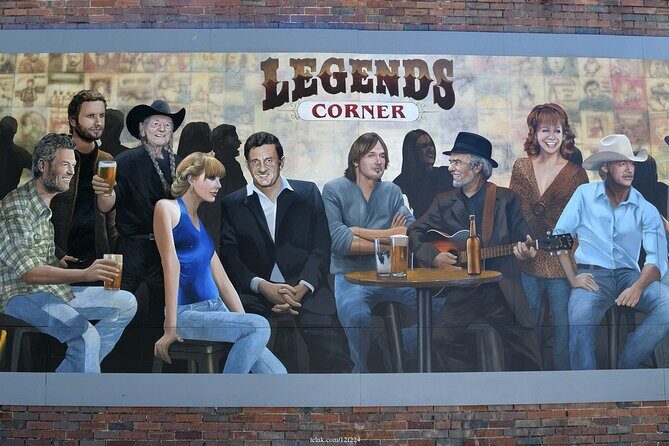
The final stop is Walk of Fame Park, where the stars recognize individuals tied to Music City—musical and otherwise.
This is a fitting end point. After 90 minutes of stories and context, the “names in the pavement” land differently. You understand that it’s not only celebrity spotting—it’s a record of who shaped the city’s identity.
It also gives you a place to pause and regroup before you head out to whatever you planned next: lunch, a museum, or a music stop.
The Best Part After the Walk: Using the Included Discounts
One reason this tour feels like a good deal is what happens after it. The tour includes discounts to partner attractions, stores, and tours, which helps you turn orientation into an actual plan.
Here’s how you can use that advantage smartly:
- Use your headsets’ stories to decide which neighborhood or theme you want next.
- Pick one museum or music-related stop to “follow the thread” from the walk.
- Keep the rest of your time flexible so the day doesn’t feel forced.
The discounts don’t replace the need to shop around, but they can help you avoid paying full price on your top priority.
What to Bring (and What to Expect) on a 10:00 am Walking Tour
This is a walking tour with stairs/ramps in the mix, so wear shoes that can handle downtown sidewalks. If you’re traveling with a bag, keep it light—your hands will appreciate it.
You’ll also want water. In hot weather, the guide support seems to matter; one review specifically notes that cold bottles of water were handed out, and sunscreen was offered halfway through when the sun intensity called for it.
Don’t overpack curiosity either. The tour is built to be an overview. Think of it like getting the city’s filing system explained, then using it later on your own.
The group size limit of 20 travelers also helps. You get a sense of a real tour group, not a mass shuffle, which makes it easier to hear your guide through the headsets.
Who This Tour Is For (and Who Should Skip It)
This works especially well if you:
- want a fast, guided overview of downtown Nashville
- prefer stories that link music with social and civic change
- like walking tours but don’t want a huge time commitment
- want a low-cost first activity that still feels meaningful
It may be less ideal if:
- you can’t comfortably handle walking and stairs/ramps
- you’re only available at times when weather is likely to be rough, since the tour requires good weather
- you’re the type who hates group pacing and would rather roam solo
If you’re unsure, an early walk with headsets is usually a good compromise. You can always spend the rest of the day branching out where your interests landed.
Should You Book This Guided Historic Walk?
If you’re coming to Nashville for the music but want to understand the city’s bigger story, this is a solid booking. The biggest value isn’t the list of landmarks—it’s the way the route connects them: early Nashville access, Broadway’s music beginnings, civic power, and the protest legacy tied to the Woolworth lunch counter.
Add in the listening devices, the small group size, and the “do more afterward” discounts, and you get a tour that punches above its price tag without feeling gimmicky.
If you can handle a walking route and you’re visiting on a day with good weather, I’d book it early in your trip. You’ll walk out with enough context to make the rest of your Nashville day feel like it has direction.
FAQ
How long is the Wander Nashville- Guided Historic Walking Tour?
It runs about 1 hour 45 minutes.
What does the tour cost?
The price is $10.00 per person.
Does the tour include a guide audio system?
Yes. You get a personal listening device so you can hear the narration clearly.
Where does the tour start and end?
It starts at Butlers Run LLC, 138 2nd Ave N #500 and ends at Walk of Fame Park, 121 4th Ave S.
How big is the group?
The tour has a maximum of 20 travelers.
What happens if the weather is poor?
The tour requires good weather. If it’s canceled due to poor weather, you’ll be offered a different date or a full refund.