You’ll see downtown Nashville faster than walking. This 2.5-hour e-bike loop mixes big-name music landmarks with story stops and quick photo moments, all with a guide keeping the group together. I especially like the small-group pace and how the route feels built around sights, not a maze of turns.
One consideration: parts of the ride go through busy city streets, so you’ll want to take the safety briefing seriously and stay alert at intersections.
In This Review
- Key takeaways before you book
- A smooth way to sample downtown Nashville in 2.5 hours
- Start at Music City Adventure Company and get rolling fast
- Marathon Village: the opening chapter in Nashville’s manufacturing past
- The John Seigenthaler Pedestrian Bridge: skyline views over the Cumberland
- The Gulch: from railroad working streets to today’s restaurant blocks
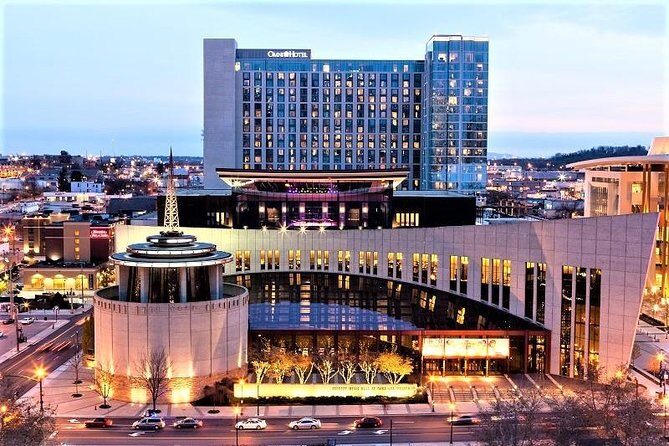
- Country Music Hall of Fame: the first big music-landmark stop
- Bicentennial Capitol Mall State Park: culture and Tennessee details on the move
- First Horizon Park and the game-day vibe nearby
- Nashville Farmers’ Market: the included stop that actually feeds you
- Tennessee State Capitol: multiple views without the long walking
- Downtown square and courthouse area: politics, culture, and a hint of speakeasies
- East bank Cumberland River redevelopment: stadium changes and new projects
- Music City Walk of Fame: quick, meaningful, and perfectly timed for photos
- Lower Broadway: the honky-tonk strip from the bike lane
- Pie Town and music industry landmarks: where Nashville’s music business lives
- Frist Art Museum and Union Station: post office to art and from train hub to boutique stays
- Gibson Garage: guitars, soundproof rooms, and real music energy
- Printer’s Alley: the backstreet story that turns into nightlife
- Schermerhorn Symphony Center: when the music switches modes
- Germantown: history you can feel, plus food you can actually use
- How to use this tour after you ride: your next 24 hours in Nashville
- Price and value: why $85 can feel fair for a 2.5-hour city tour
- Who this tour suits best (and who should skip it)
- Should you book this Downtown Nashville e-bike tour?
- FAQ
- How long is the tour?
- What does the $85 price include?
- Are tickets to attractions included?
- Where do I meet and where does it end?
- What is the minimum age for this e-bike tour?
- How big is the group?
- What should I bring for the ride, like water?
- What happens if the weather is bad?
Key takeaways before you book
- Electric help makes hills manageable so you can focus on the views, not leg burn.
- Short “look and listen” stops let you get off the bike for photos, restroom breaks, and quick on-the-spot history.
- Music-forward route links the Country Music Hall of Fame, Broadway area landmarks, and guitar culture at Gibson Garage.
- Downtown + neighborhoods on the same loop including the Gulch and Germantown, so you get more than just the core strip.
- Modern equipment and helmets are included, and guides work hard to keep the ride calm and controlled.
- Real Nashville rhythm at markets and alleyways with the Nashville Farmers’ Market and Printer’s Alley in the mix.
A smooth way to sample downtown Nashville in 2.5 hours
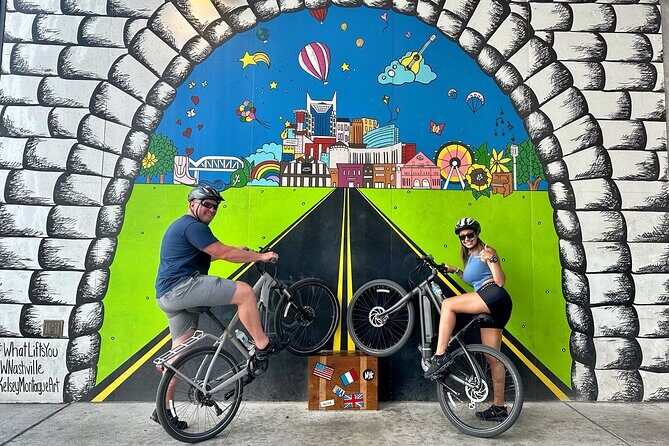
This tour is built for people who want the highlights without spending the whole day in traffic and lines. You roll through key areas, then hop off at planned stops to hear the story behind what you’re seeing—Marathon Village, the Cumberland River views, the Hall of Fame area, and more.
The best part is that the guide’s job isn’t to act like a human GPS. They point you toward what matters, then you ride. That keeps the energy up and makes the whole afternoon feel efficient, especially if it’s your first or second day in town.
Other cycling tours in Nashville



Start at Music City Adventure Company and get rolling fast
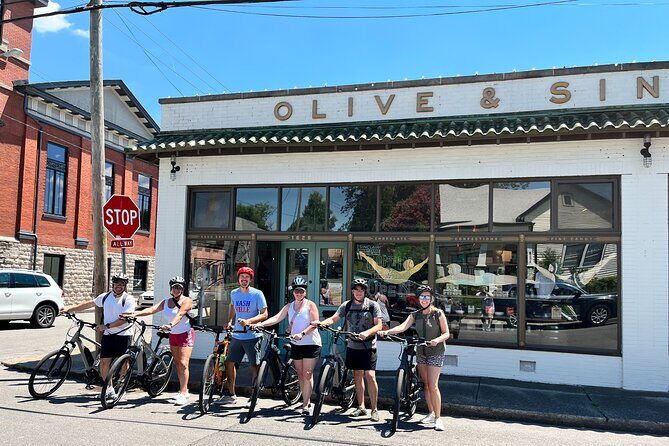
You meet at Music City Adventure Company (1305 Clinton St, Nashville, TN 37203). The tour ends back at the same spot, which makes timing easy—no awkward end-of-tour logistics.
Once you’re kitted out, you get the basics for using the e-bike. The bike assist matters here. Even if you’re not a regular cyclist, the motor support helps you keep a steady pace so the ride stays fun instead of exhausting.
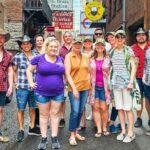
This is a group tour with a maximum of 18 people, so you’ll likely be riding close enough to hear the guide, yet spaced enough to avoid constant crowding.
Marathon Village: the opening chapter in Nashville’s manufacturing past
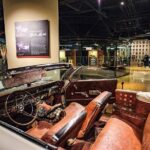
The ride starts at Marathon Village, your start-and-end hub, and it sets the tone with a part of Nashville people often skip. This area connects modern downtown energy with an old-school industrial story, centered around a car factory museum from 1907.
If you like your city tours to have a “wait, that’s here?” moment, Marathon Village delivers. You also have plenty nearby for dining and shopping, so even if you don’t go inside the museum, you’ll feel oriented for the rest of your Nashville stay.
The John Seigenthaler Pedestrian Bridge: skyline views over the Cumberland
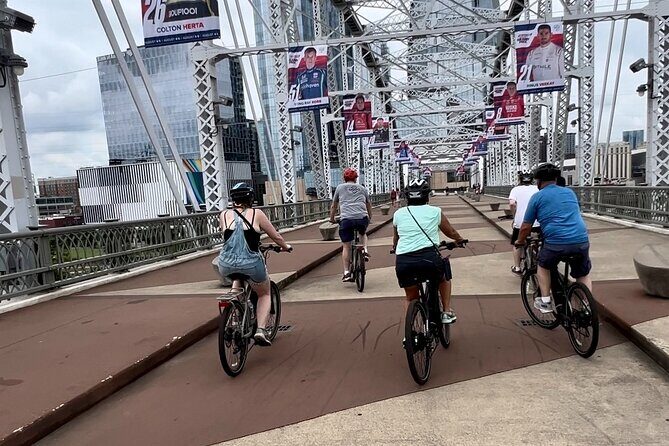
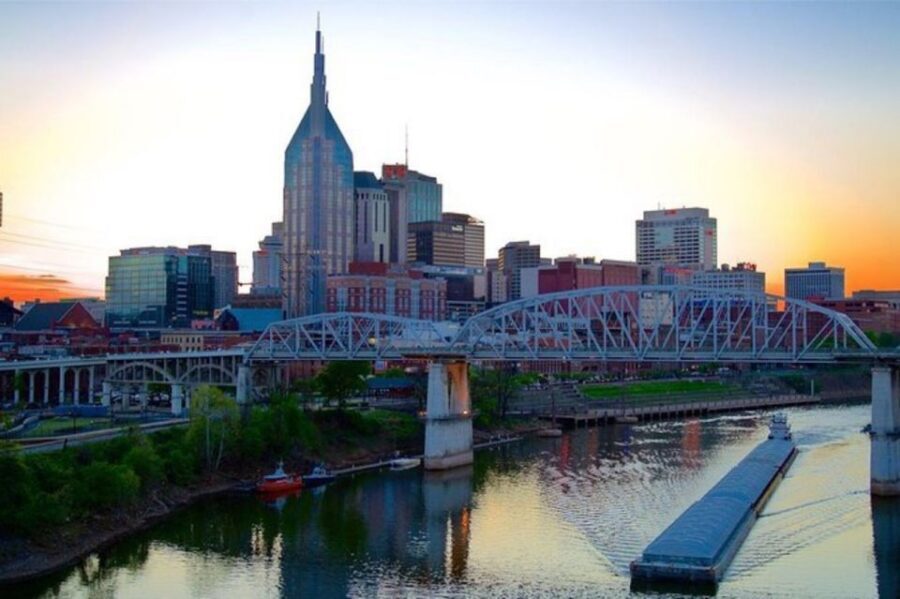
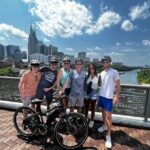
Next comes a classic camera moment at the John Seigenthaler Pedestrian Bridge. Standing in the middle of the bridge gives you that rare perspective where downtown landmarks line up above the Cumberland River.
The guide connects the view to Nashville’s layers of time, including references to Fort Nashborough and what you can spot in the Broadway area. It’s a short stop, but it’s the kind of pause that helps you understand where the city “sits” in a way you can’t get from street level.
The Gulch: from railroad working streets to today’s restaurant blocks
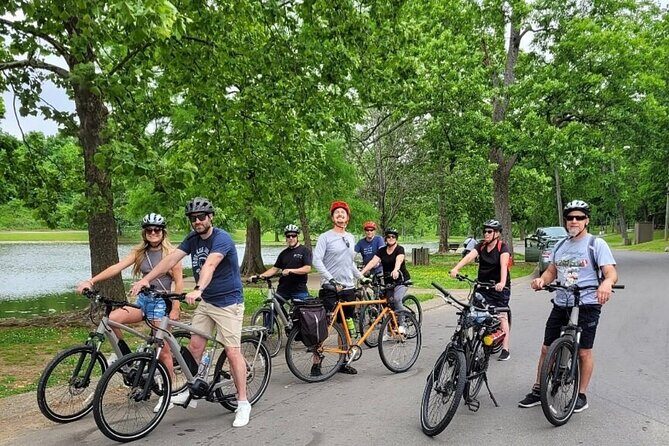
Then you roll into The Gulch, a neighborhood that tells a clear story of change. It’s tied to Nashville’s railroad shipping headquarters in the 19th and 20th centuries, and you’ll see how the old warehouse era has made room for modern high-rise development.
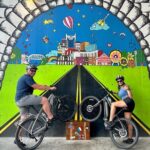
What makes this stop worthwhile is the contrast. The guide ties what you see now—shops, restaurants, murals—back to what used to be there. You end up with a mental map of the city’s evolution rather than just another set of pretty buildings.
A few more Nashville tours and experiences worth a look



Country Music Hall of Fame: the first big music-landmark stop

A short ride puts you at the Country Music Hall of Fame and Museum area. Even if you’re not going deep into museum exhibits on this tour, you’re in the right zone to feel how Nashville moves.
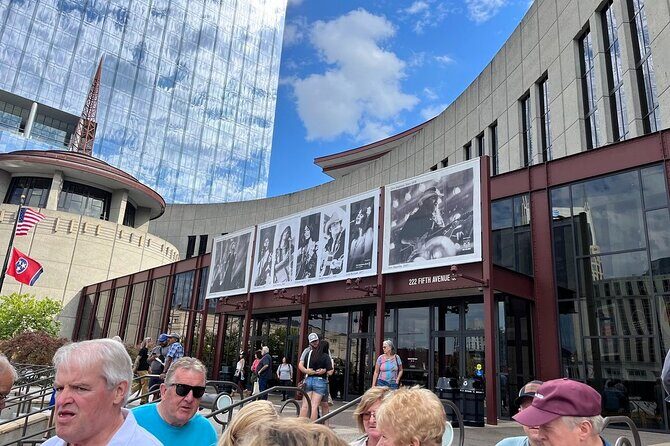
You get a stroll along the Country Music Walk of Fame, plus a sense of where crowds, events, and live music spill out from nearby venues. The point here isn’t to cram in attractions—it’s to get you “in tune” with the geography of music city.
Practical note: this is an easy place to take photos that show both people and place. If you plan to explore more after the tour, this is a strong reference point.
Bicentennial Capitol Mall State Park: culture and Tennessee details on the move
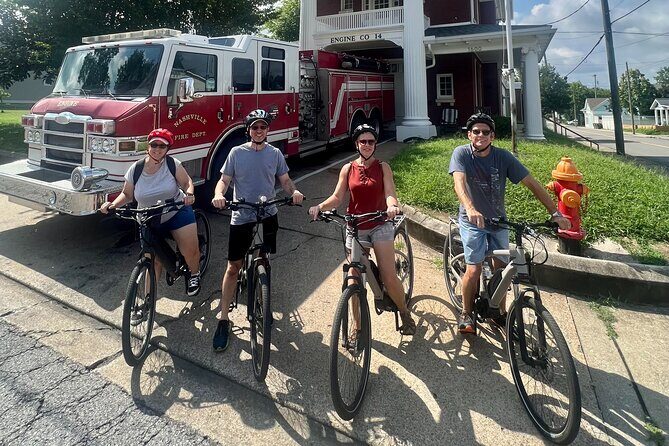
The tour keeps momentum with Bicentennial Capitol Mall State Park and the area around the Nashville Farmers’ Market and the Bicentennial Mall. This stop is described as one of the most informative parts of the ride, and you can feel why once you’re there.
The mall is designed with attention to Tennessee culture, landscape, and history themes, so it works like a fast, readable museum setting. You’re not staring at one building—you’re surrounded by story markers that help you connect the city’s identity to the place you’re standing.
First Horizon Park and the game-day vibe nearby
You also get a quick look at First Horizon Park. If you catch a minor league game while you’re in town, this is a helpful orientation stop. It puts you near the area where local energy spills out on event days.
Even if you’re not attending, it’s a nice reminder that Nashville isn’t only about music on Broadway. It’s also about local sports and neighborhood dining energy in places like Germantown, which you’ll pass through later too.
Nashville Farmers’ Market: the included stop that actually feeds you
One of the most useful parts of the tour is the time at the Nashville Farmers’ Market. It’s only about 20 minutes, but it’s an included stop, and it’s easy to use that window well—snacks, coffee, quick browsing, and a look at what’s local.
This is the spot for people who like real-life travel details: fresh produce, street food, and an indoor setup with options like a brewpub and winery. It’s also the kind of place where you learn what kind of food culture to expect in Nashville without hunting for it alone.
If you’re sensitive to crowds, go in with the expectation that a market can be active. The good news: you’re on a guided schedule, so you’re not stuck there all morning.
Tennessee State Capitol: multiple views without the long walking
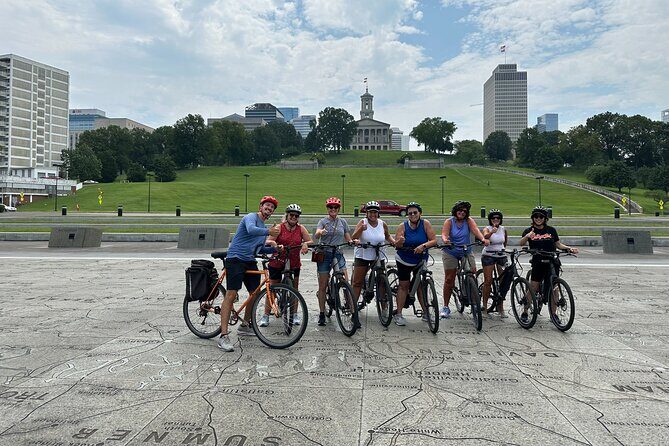
You get views of the Tennessee State Capitol during the ride, with the best perspective coming from Bicentennial Park. The Capitol is noted as one of the oldest operating capitol buildings in the U.S., and the guide adds the kind of context that makes buildings feel like characters, not backdrops.
There’s also a playful warning in the tour style—some stories may feel a little spooky. Even if you’re not into ghost lore, it’s still a solid way to make the stop memorable.
Downtown square and courthouse area: politics, culture, and a hint of speakeasies
The route then includes a public square area connected to the Mayor’s office and County Courthouse. This is where Nashville’s political and cultural stories get a little darker and more interesting.
It’s surrounded by banks, law firms, publishers, historic hotels, and—per the tour description—speakeasies remaining from Nashville’s Prohibition era. Even with a short stop, this setting helps you see how much history sits inside the modern downtown vibe.
East bank Cumberland River redevelopment: stadium changes and new projects
From the river views, you’ll observe the current Tennessee Titans stadium and also the construction site of the new Nissan Stadium next door. The tour frames this as part of a broader redevelopment push along the east bank of the Cumberland River.
For practical travelers, this helps you connect what you see now with what you’ll hear about later—new builds, changing skylines, and why downtown looks like it’s always in motion.
Music City Walk of Fame: quick, meaningful, and perfectly timed for photos
You ride over the Music City Walk of Fame, a kind of Nashville answer to Hollywood-style sidewalk tributes. Stars embedded in a walkway honor artists, producers, and music industry icons across genres.
This stop is short, but it’s a great photo and orientation moment. It’s right near major downtown anchors like the Country Music Hall of Fame, Bridgestone Arena, the Nashville Symphony Center area, and access to the honky-tonk energy spilling toward Broadway.
Lower Broadway: the honky-tonk strip from the bike lane
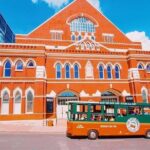
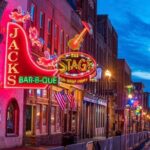
The tour then heads toward Lower Broadway, and this is one of the most electric sections. By e-bike, you pass venues where live music is part of the street scene, with the guide connecting you to major landmarks like the Ryman Auditorium and the Hall of Fame area.
You get the open-air feel of Broadway while still having structure: the guide keeps the group together and manages safe movement through the area. It’s a good compromise if you’re curious about honky-tonk culture but don’t want to spend hours stuck in the crowd.
Pie Town and music industry landmarks: where Nashville’s music business lives
A side of Nashville that many visitors miss is how much music culture sits behind the scenes. The tour references Pie Town as a hub with the City Winery, Pie Town Tacos, Yeehaw Brewing, Ole Smokey Moonshine, Tennessee Brew Works, and multiple recording studios.
You don’t need to stop inside every place to get value from this segment. The idea is to show you where the “industry” happens—so later, when you’re picking where to go, you can aim at neighborhoods that feel right for your tastes.
Frist Art Museum and Union Station: post office to art and from train hub to boutique stays
Another strong stop is the Frist Art Museum, formerly Nashville’s main post office, now a sleek Art Deco space with rotating exhibitions. The tour notes it’s a non-collecting museum, so there’s always something new to see, plus a hands-on Martin ArtQuest Gallery.
Right across the street is Union Station, now a boutique hotel with the original soaring ceilings and stained glass that still give it that historic feel. Even if you don’t go inside, it’s a great pair of viewpoints: old infrastructure turned into modern cultural use.
Gibson Garage: guitars, soundproof rooms, and real music energy
If you’re into music equipment and the craft behind it, Gibson Garage is a must-stop. The tour frames it as a retail store, museum, and live stage combined, focused on Gibson’s legendary guitars.
This is one of the places where you can spend real attention instead of just passing by. The idea is to give you a hands-on feel—there are soundproof rooms where you can test models, plus displays featuring vintage instruments and artist memorabilia.
Printer’s Alley: the backstreet story that turns into nightlife
Then you ride to Printer’s Alley, one of Nashville’s most iconic backstreets. The tour explains how it began as an area for publishing houses and newspapers, then shifted into jazz clubs, speakeasies, and late-night music energy.
Today, the alley is known for neon signs, narrow brick-paved lanes, and a mix of bars that run from underground karaoke to cocktail lounges. Even if you’re not planning a long night out, the short stop helps you understand why locals talk about this place like it’s a secret route to the city’s soul.
Schermerhorn Symphony Center: when the music switches modes
Not every music stop is about rock and country. The tour also covers the Schermerhorn Symphony Center, home of the Nashville Symphony, with a design inspired by European concert halls and a famous “shoebox” layout for acoustics.
The description includes details that make the building feel specific, like natural lighting through clerestory windows and the Laura Turner Concert Hall setup that can transform into a ballroom. It’s cultural variety in a compact time window, and that makes the whole tour more balanced.
Germantown: history you can feel, plus food you can actually use
Finally, you loop through Germantown, one of Nashville’s older neighborhoods founded by German immigrants in the 1850s. The vibe is brick sidewalks, historic architecture, and a neighborhood pace that feels different from downtown’s rush.
You’ll pass restaurant and café options, with the tour highlighting popular local picks like Monell’s and Henrietta Red. It’s also an area known for events like Oktoberfest, so it’s a helpful stop if you’re planning your schedule around what’s happening during your dates.
How to use this tour after you ride: your next 24 hours in Nashville
The way this tour is structured makes it an excellent “get your bearings” experience. When you finish, you’ll know where the big anchors are, plus you’ll have a sense of which side streets and neighborhoods match your interests.
If you liked music-industry culture, you’ve already been pointed toward Gibson Garage and Pie Town. If you want a day that’s more food-forward, the Farmers’ Market and Germantown will guide your choices. If you’re a history person, Marathon Village plus the Capitol area and downtown square give you plenty of threads to follow.
Guides also tend to share practical ideas during the ride and at the end, which is a nice bonus when you’re trying to plan the rest of your trip without overthinking.
Price and value: why $85 can feel fair for a 2.5-hour city tour
At $85 per person for about 2 hours 30 minutes, you’re paying for more than bike time. You’re paying for: the e-bike itself, a helmet, a guide managing the group pace, and a route that links multiple major areas without you needing to drive or map out everything.
You also get entry notes at several stops, with the tour marking multiple sights as free to view. The Farmers’ Market time is included, which helps this not feel like a tour where you only look and never sample.
Big value win: it’s eco-friendly by design and efficient in time. If you’re only in Nashville for a short window, e-bikes let you cover ground quickly while still stopping to see what matters.
Who this tour suits best (and who should skip it)
This tour works well if you want a first-pass Nashville orientation that doesn’t cut corners. It’s also a great fit for mixed groups—people who love music, people who like neighborhoods, and people who want photos and stories without sitting in traffic.
You’ll get the most out of it with moderate physical fitness. The e-bike support reduces strain, and the ride includes stops, but you should still be comfortable spending a couple of hours in motion and handling short bike breaks.
If you don’t like being near road traffic at all, you might feel less comfortable on sections where streets are busy. In that case, consider whether you’d prefer a route with more traffic-free bike paths.
Should you book this Downtown Nashville e-bike tour?
If you want an efficient Nashville overview with real variety—manufacturing history, river views, music landmarks, markets, and neighborhoods—this is a strong booking choice. The ride’s repeat success with different age groups (including teens) and the consistent focus on safety and guide attention make it an easy “yes” for most visitors.
If your travel style is slow, you may find the stops a bit short. Still, that’s also the appeal: you get a lot of Nashville in one afternoon, then you can return on your own to the places you care about most.
FAQ
How long is the tour?
It runs for about 2 hours 30 minutes.
What does the $85 price include?
The price includes the use of the bicycle and a bike helmet. A Farmers’ Market stop is included as well.
Are tickets to attractions included?
The tour notes that admission is free for multiple stops. The Farmers’ Market stop is included.
Where do I meet and where does it end?
You meet at Music City Adventure Company, 1305 Clinton St, Nashville, TN 37203, and the tour ends back at the same meeting point.
What is the minimum age for this e-bike tour?
The minimum age is 15.
How big is the group?
The tour has a maximum of 18 travelers.
What should I bring for the ride, like water?
Filtered water and souvenir bottles are available for purchase. Bottled water isn’t listed as included.
What happens if the weather is bad?
This experience requires good weather. If it’s canceled due to poor weather, you’ll be offered a different date or a full refund.