REVIEW · CITY TOURS
Walkin’ Nashville – Music City Legends Tour
Book on Viator →Operated by Bill DeMain · Bookable on Viator
Nashville’s stories walk beside you. This guided legends stroll strings together the city’s biggest names and a few you’d likely miss, with an insider explaining how Music City went from downtown roots to global stage. I especially loved the way you connect Ryman Auditorium to the songwriter world of Tootsies and beyond, and how the tour turns stops like the Peanut Shop into real, human moments instead of quick photo ops. One thing to consider: some top sights on the route require separate admission, and the whole experience depends on good weather.
The guide for this tour is Bill DeMain, and the feel is conversational, not lecture-y. With a maximum group size of 10, you get time to ask questions, plus a mobile ticket and a straightforward downtown route that runs about 1 hour 30 minutes to 1 hour 50 minutes, starting at 10:30 am and ending near the Country Music Hall of Fame.
In This Review
- Key things to know before you go
- Why this Music City Legends walk is worth $40
- Price and ticket math: what’s included (and what you may pay)
- Timing it right: starting point, walking pace, and where you end
- Stop-by-stop: how the route connects Nashville’s eras
- 1) The Hermitage Hotel: 1910 glamour and celebrity gravity
- 2) Woolworth Theatre: sit-ins and the meaning of good trouble
- 3) The Arcade: an old downtown mall that still feels alive
- 4) The Peanut Shop: a time-capsule business and free samples
- 5) Printer’s Alley: from red light district to backstage deals
- 6) Millennium Hotel Maxwell House: the story behind Good to the last drop
- 7) Ryman Auditorium: Union Gospel Tabernacle to Grand Ole Opry home
- 8) Tootsies Orchid Lounge: songwriter demos and the den mother vibe
- 9) Country Music Hall of Fame and Museum: the best music museum in town
- 10) Skull’s Rainbow Room: a nightclub where songs and scripts traded
- The guide effect: Bill DeMain and the kind of conversations you’ll have
- Who should book this Nashville tour (and who might want a different plan)
- Should you book Walkin’ Nashville: Music City Legends Tour?
- FAQ
- How long is the Walkin’ Nashville Music City Legends Tour?
- What does the tour cost?
- What language is the tour offered in?
- Is lunch included?
- Are admission tickets included?
- Where does the tour start and end?
- Is the tour dependent on weather?
Key things to know before you go
- Bill DeMain is the insider voice: industry-style stories, not just dates and facts
- You hit big icons and offbeat corners: from Ryman to Printer’s Alley to Skull’s Rainbow Room
- Free samples are part of the plan at the Peanut Shop inside the Arcade
- Some admissions are included, some aren’t so plan for a few extra tickets
- It’s built for light walking with short stops that move at a relaxed pace
Why this Music City Legends walk is worth $40
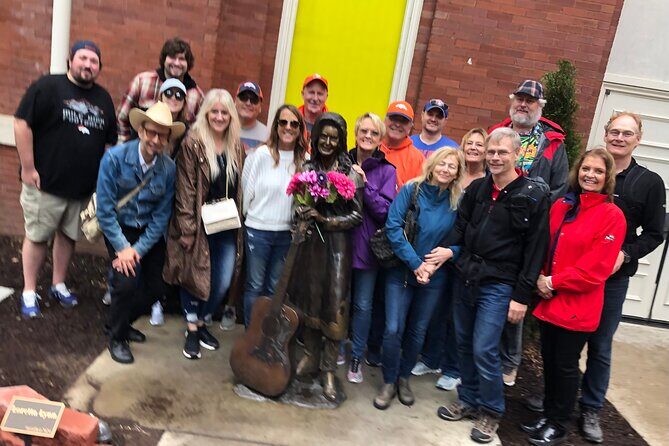
This tour is built for people who want more than a list of famous places. You get the geography of downtown Nashville, yes. But the real value is how the guide ties each stop to a theme: performance, songwriting, commerce, and civil-rights-era change. You’ll hear how different eras overlap in the same few blocks, which is exactly why this works so well in a short window of time.
At $40 per person, it lands in a sensible “one good tour” category. You’re not paying for a day-long program with a meal or full museum tickets. Instead, you’re paying for tight storytelling and a guided route that helps you understand what you’re looking at, without spending hours researching on your own.
The pacing is also a plus. Most stops are only about 5–20 minutes, which keeps you moving while still giving you enough time to get oriented and spot details you might otherwise blow past. It’s the kind of tour that helps you decide what to revisit later, too.
Other city tours we've reviewed in Nashville

Price and ticket math: what’s included (and what you may pay)
The tour price includes all fees and taxes, but it doesn’t automatically include every admission fee you’ll run into. Here’s the practical breakdown:
Admission tickets are included at:
- The Arcade (visit segment)
- The Peanut Shop (including free samples)
- Printer’s Alley
- Tootsies Orchid Lounge
- Skull’s Rainbow Room
Admission tickets are not included at:
- The Hermitage Hotel
- Woolworth Theatre
- Millennium Hotel Maxwell House Nashville
- Ryman Auditorium
- Country Music Hall of Fame and Museum
Also, lunch isn’t included.
If you know you want to do the museum-heavy parts—especially the Country Music Hall of Fame and Ryman—factor in those extra admissions ahead of time. If you’re okay with seeing the exteriors and using the guided stop for context, the included admission pieces still give you real value (and yes, the Peanut Shop samples help with the math).
Timing it right: starting point, walking pace, and where you end
The tour starts at Union Street & Anne Dallas Dudley Boulevard at 10:30 am. It runs about 1 hour 30 minutes to 1 hour 50 minutes total, with a small group size capped at 10. You finish at the Country Music Hall of Fame and Museum.
That end point matters. Once you reach the museum area, you’re already positioned to decide whether you want to go in deeper, grab a coffee, or keep exploring nearby neighborhoods at your own pace. It’s a “guided primer, then choices” setup.
You’ll also appreciate the location and transit convenience. The start is in a zone that’s easy to reach by public transportation, and service animals are allowed. Since this is a good-weather walking tour, check the forecast before you head out so you don’t get stuck rescheduling or waiting for a change due to conditions.
Stop-by-stop: how the route connects Nashville’s eras
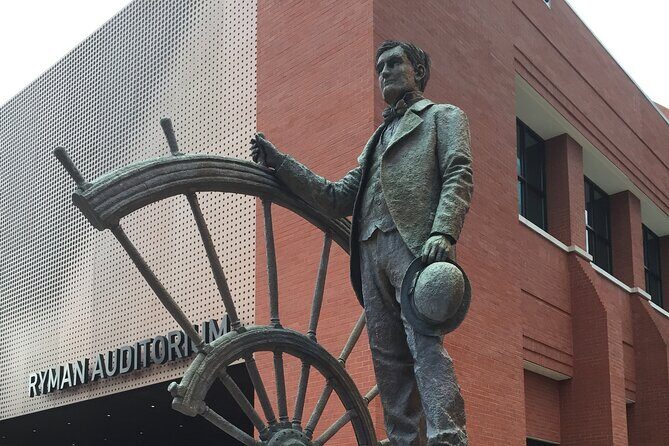
This route is short enough to feel relaxed, but each stop is chosen because it represents a different chapter of Nashville’s story. Here’s what to expect at each major stop and why it matters.
1) The Hermitage Hotel: 1910 glamour and celebrity gravity
Your first stop is The Hermitage Hotel, built in 1910. It’s Tennessee’s only 5-star hotel, and the tour highlights that famous names have long pulled into this building’s orbit—people like Charlie Chaplin, Enrico Caruso, JFK, Paul McCartney, and Dolly Parton.
What I like about starting here is that it sets the tone. Nashville didn’t become Music City by accident. Big-city attention, hospitality, and public-facing prestige were part of the early ingredients. Even if you don’t go inside, you’ll get a clearer idea of why downtown Nashville carried star power long before the modern music boom.
Admission isn’t included for this stop, so keep your expectations aligned: you’re there for context and exterior viewing.




2) Woolworth Theatre: sit-ins and the meaning of good trouble
Next is the Woolworth Theatre. The building opened in 1913, and the tour connects it to the sit-ins and civil-rights activism tied to John Lewis—often referenced through the phrase good trouble.
This stop works because it refuses to treat music history as separate from the rest of American history. Nashville’s growth was shaped by change movements and community courage, not just entertainment industry shifts. If you care about how culture evolves, this will land.
Admission isn’t included here either, so you’re mainly learning the story in place, then moving on.
3) The Arcade: an old downtown mall that still feels alive
Then you step into The Arcade, often called Nashville’s oldest shopping mall, built in 1902. The tour timing gives you a quick, focused walk through the arcade space, which is helpful because it lets you see the building’s “time layer” without it turning into a long detour.
It’s also a nice reset from outdoor sidewalks: you get shade, details, and a different tempo.
4) The Peanut Shop: a time-capsule business and free samples
Inside The Arcade, you visit The Peanut Shop, which opened in 1927 as Planter’s Peanuts. This is one of the oldest surviving downtown businesses, and the tour description leans into the idea of it as a time capsule.
The practical win here is simple: friendly service and free samples. If you’re walking with a coffee and low blood sugar, this is a great moment. Even if you’re not buying anything, the stop adds warmth and personality to the day.
Admission is included for this segment, so you can enjoy it without worrying about extra cost.
5) Printer’s Alley: from red light district to backstage deals
Your next stop is Printer’s Alley, with a long, surprising arc. It was once the heart of Nashville’s red light district, then became a center for music performance and backstage deals.
This is where the tour feels like it’s mapping the backstage logic of the music industry—how deals happened close to stages, how performers navigated the city, and how downtown routes shaped careers. You’ll hear references to big names like Jimi Hendrix, Johnny Cash, and Tim McGraw, which helps connect the story to the music you already know.
Admission is included at this stop, so take a moment to notice street-level details and the flow of the blocks. It’s the kind of place where, once you understand the story, you start “seeing” routes musicians likely took.
6) Millennium Hotel Maxwell House: the story behind Good to the last drop
Then you hit the Millennium Hotel Maxwell House Nashville. This is tied to Nashville’s hotel era, and the tour points you to the real question behind the coffee slogan: what’s the story behind Good to the last drop?
This stop might feel different from the music-heavy ones, but that’s the point. Branding and hospitality mattered in Nashville’s growth. Coffee culture, big hotels, and public-facing slogans all supported the idea that Nashville was a destination, not just a stop along the way.
Admission isn’t included for this stop.
7) Ryman Auditorium: Union Gospel Tabernacle to Grand Ole Opry home
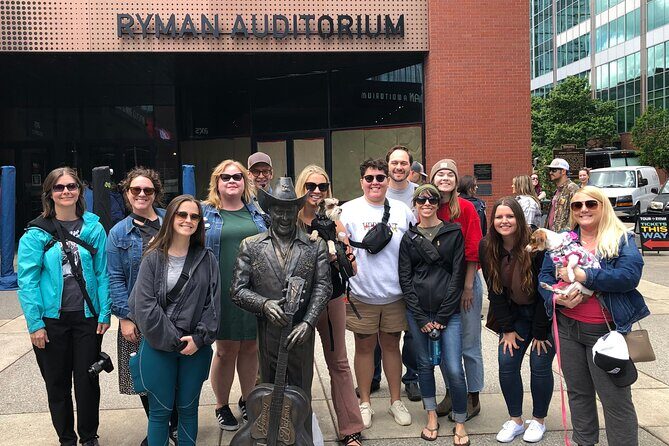
The crown jewel of downtown on this route is Ryman Auditorium. It was built as the Union Gospel Tabernacle in 1892, and it served as the home of the Grand Ole Opry from 1943 to 1974.
This stop is your musical anchor point. Even if you only spend about 20 minutes here, you’ll come away with clearer context for why the building matters. You’ll hear name-drops connected to the venue’s legacy, including Hank Williams, Johnny Cash, and Elvis Presley.
Admission isn’t included at this stop, so if you want to go inside and fully explore, you’ll need to plan for that extra ticket separately. If you’re mainly here for orientation and story, the guided stop still gives you plenty to appreciate.
8) Tootsies Orchid Lounge: songwriter demos and the den mother vibe
Next is Tootsies Orchid Lounge, Nashville’s famous honky tonk spot. The guide shares the backstory of its colorful den mother, Tootsie Bess, and how her jukebox introduced demos of songs that later became major hits—like Hello Walls, Crazy, A-11, and Sunday Morning Coming Down.
This is a great stop for connecting songwriting to real places. Instead of thinking of music as something that appears out of nowhere, you learn how people tested songs, traded ideas, and got heard. It helps you understand how honky tonks functioned as informal industry hubs.
Admission is included here, so you can focus on the story and the atmosphere without extra ticket math.
9) Country Music Hall of Fame and Museum: the best music museum in town
Now you reach the Country Music Hall of Fame and Museum. The tour highlights it as one of the best music-related museums in Nashville, with a solid permanent collection plus ever-changing exhibits.
Admission isn’t included for the stop, but this is also the end point of the tour, which gives you a built-in decision moment: go in now with your guide’s context, or come back later on your own.
Even if you don’t enter, arriving at the museum area right after stops like Tootsies and the Ryman makes the museum feel less random. You can connect exhibits to places you’ve already walked past.
10) Skull’s Rainbow Room: a nightclub where songs and scripts traded
Finally, the route includes Skull’s Rainbow Room, a legendary nightclub tied to artists such as Willie Nelson, Roger Miller, Dolly Parton, and Andy Griffith. There’s also the standout detail that Paul McCartney once wrote a song in the club.
Admission is included at this stop. This is a fun capstone because it brings the tour back to the idea that Nashville isn’t just stages and museums—it’s night life, writers’ rooms, and the in-between spaces where work got done.
The guide effect: Bill DeMain and the kind of conversations you’ll have
Bill DeMain runs this tour, and the overall tone centers on industry-style stories. That matters because it changes how you interpret what you see. Instead of treating Nashville like a set of landmarks, the guide frames the city like a system: venues talk to each other, songwriters move through rooms, and business people shape what gets promoted.
The small group size helps, too. With a cap of 10, you’re not stuck shouting over a crowd. You can ask about what you should try next, especially food recommendations around downtown. Even if you’re not a hardcore history person, the conversational approach helps you leave with a practical game plan.
A good indicator of quality here is what you’ll remember later. This is the kind of tour where you’ll want to return to a few of the places after you’ve had time to process what you just learned.
Who should book this Nashville tour (and who might want a different plan)
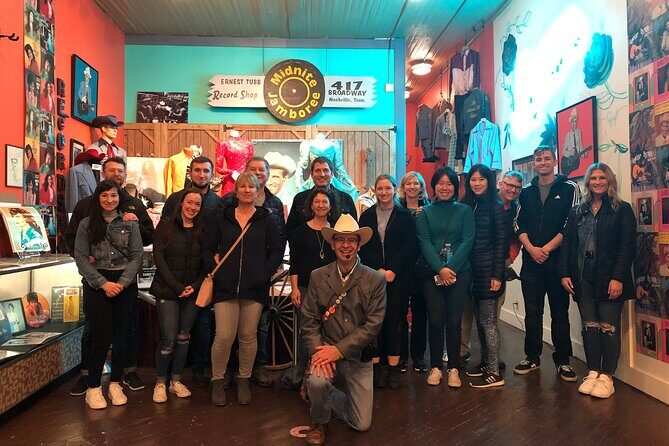
I think this tour is best for:
- You if you want an efficient downtown walk that links major venues to the human stories behind them
- You if you like music history but don’t want to spend hours in transit or reading on your own
- You if you’re curious about how places like Printer’s Alley and honky tonks fit into the larger Nashville picture
It may be a less perfect fit if:
- You want a purely museum-focused day with long indoor time at each stop
- You’re not able to do a downtown walking route and quick transitions between sights
- You want every ticket included, since several key attractions on the route are not included
Also note: the tour requires good weather. If your trip dates are shaky, build flexibility.
Should you book Walkin’ Nashville: Music City Legends Tour?
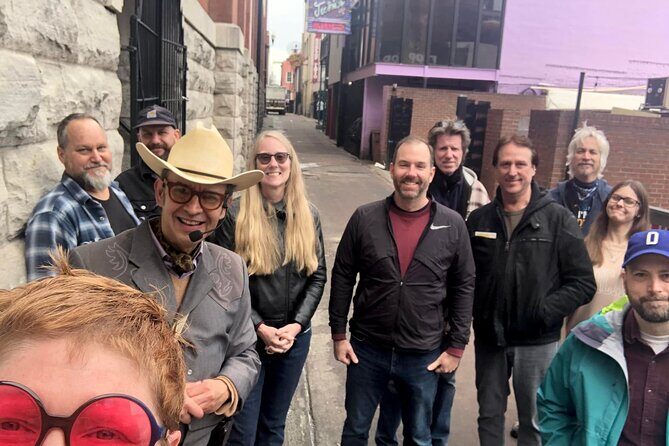
If you only have a short morning and you want to understand why Nashville works as a music town, I’d book it. The price is reasonable for a guided route that covers iconic spots like Ryman Auditorium and Tootsies Orchid Lounge, plus the kind of in-between places that usually don’t make it onto generic checklists.
If you’re planning to visit the museum and want your time there to feel connected to what you saw outside, this is a strong pairing. Just be ready for the fact that you may pay for admission at a few stops, and dress for the weather so the walk stays comfortable.
FAQ
How long is the Walkin’ Nashville Music City Legends Tour?
It runs about 1 hour 30 minutes to 1 hour 50 minutes.
What does the tour cost?
The price is $40.00 per person.
What language is the tour offered in?
The tour is offered in English.
Is lunch included?
No. Lunch is not included.
Are admission tickets included?
Some admission tickets are included and some are not. Included stops are The Arcade/Peanut Shop, Printer’s Alley, Tootsies Orchid Lounge, and Skull’s Rainbow Room. Not included stops are The Hermitage Hotel, Woolworth Theatre, Millennium Hotel Maxwell House Nashville, Ryman Auditorium, and the Country Music Hall of Fame and Museum.
Where does the tour start and end?
It starts at Union Street & Anne Dallas Dudley Boulevard (Union St & Anne Dallas Dudley Blvd, Nashville, TN 37219) and ends at the Country Music Hall of Fame and Museum (222 Rep. John Lewis Way S, Nashville, TN 37203).
Is the tour dependent on weather?
Yes, it requires good weather. If it’s canceled due to poor weather, you’ll be offered a different date or a full refund.