I also really like the instructor-led, song-based approach. You get coaching from Elizabeth Mooney, a professional dancer and choreographer to country artists, and the class is designed for mixed levels, so both brand-new dancers and more experienced folks can participate without slowing everything down.
One thing to consider: the experience is based in the Music Valley Dr area, not right in the middle of downtown. If you want everything walkable from central Nashville, you’ll likely plan for a short ride, and it also has a good-weather requirement.
Key Things That Make This Class Worth Your Time
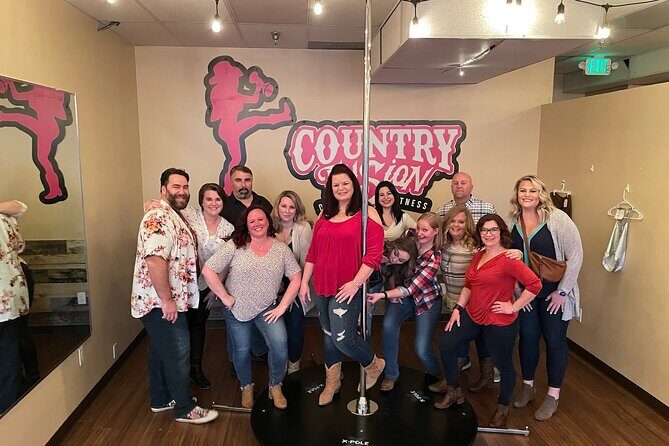
- A pro instructor (Elizabeth Mooney) guiding you with country-artist choreography experience
- Beginner steps taught fast, with enough practice time to feel confident
- Small groups (max 15), which usually means more attention and fewer people to get lost among
- Traditional + a modern mix of songs, so it feels current and not just museum-style line dancing
- Wild Horse Saloon is the fun destination after, where you can try your moves on live music energy
Why Nashville Line Dancing Works (Even If You Think You Cannot Dance)
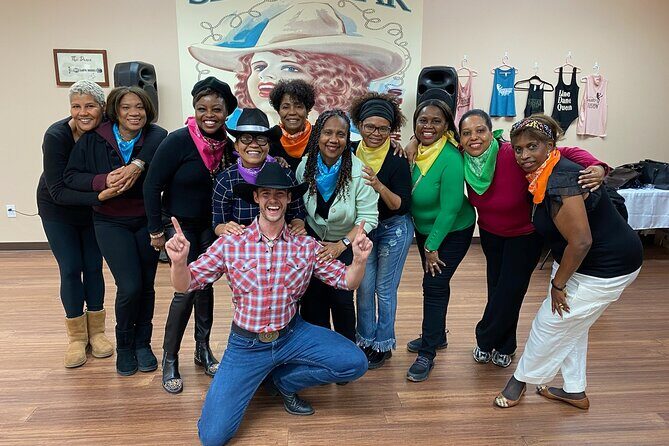
Nashville has this talent for turning music into a group activity. This class taps into that same idea: you’re not watching from the sidelines. You’re learning short, repeatable routines to country and classic hit songs, then using the rhythm to build confidence.
The value here is speed and structure. For $35, you’re not buying an all-day dance binge—you’re getting a focused, one-hour lesson that aims to get you on your feet quickly. The session is built for mixed levels, which matters because line dancing can be intimidating when one person can already do everything and everyone else feels behind.
And yes, you’ll probably end up wanting to do it again. That’s the point. The class gives you enough steps to have fun immediately, not just enough information to say you tried.
Meet Your Instructor: Elizabeth Mooney and the Teaching Style You’ll Notice
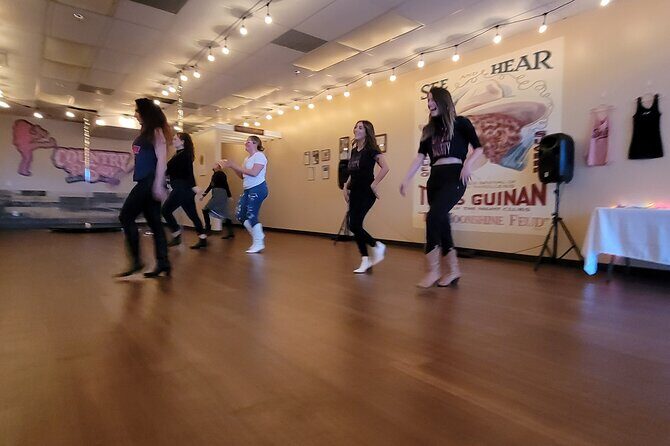
The class is led by Elizabeth Mooney, described as a professional dancer, choreographer to country artists, and performer. That kind of background usually shows up in two ways: clear choreography and good pacing. In a line dance lesson, those two things decide whether you feel empowered or lost.
Another plus: the teaching is tailored to mixed levels. That means you’re not stuck doing only the slowest version of the moves, and you’re not thrown into complicated counts either. You get instruction that keeps the group moving while still letting different skill levels participate.
In participant notes, you’ll also see credit for other instructors by name, including Dana and Phil, with praise focused on friendliness, patience, and easy-to-follow explanations. Even with different instructors, the common thread is consistent: step-by-step clarity and time to practice to the music.
The One-Hour Lesson: What You’ll Do From Start to Finish
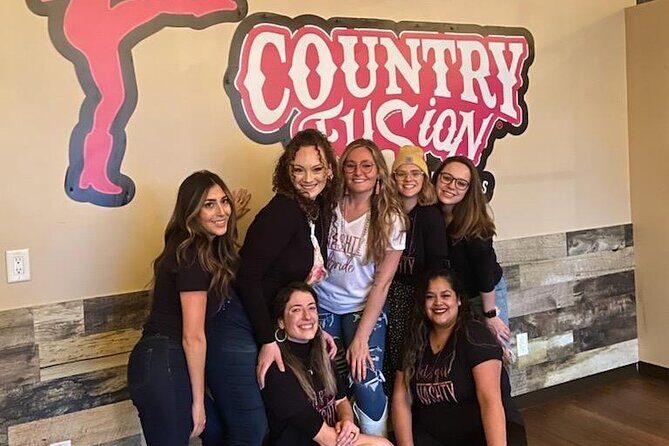
This is approximately a one-hour country line dance session, run with a sound system and a structured “learn then practice” rhythm.
Here’s the practical flow you can expect:
First, you’ll get the basics—how the class breaks down the routine and how to follow the counts. Line dances rely on repetition, so the instructor’s job is to make each move simple enough to land, even if you have two left feet.
Next, you’ll learn the routines tied to country and classic hit songs, with some modern variety mixed in. This matters more than it sounds. When your brain connects the steps to music you recognize, it becomes easier to remember the pattern and feel the groove.
Then you practice. More than once. The goal is not perfection—it’s momentum. By the end, you should be able to run through the steps enough to keep up without constantly asking what’s next.
If you’re the type who gets self-conscious, this lesson is designed to help. The vibe is social and welcoming, and it’s sized to keep you from feeling invisible in a crowd.
Where Wild Horse Saloon Fits In After Class
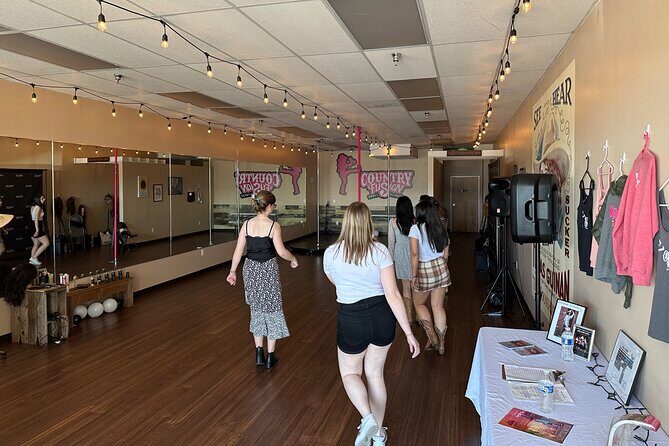
The plan isn’t just learn and leave. The experience highlights a chance to stop by Wild Horse Saloon after and show off what you learned.
That’s smart. Line dancing only feels real when there’s music and space to try it with other people. Wild Horse Saloon is the kind of place where you can turn your lesson into a Nashville moment—something you did, not just something you watched.
You don’t need to turn it into a long commitment either. Even a quick visit after the class can give you that payoff: you’ll recognize the rhythm, you’ll remember the steps, and you’ll see how line dancing fits into the broader honky-tonk scene.
Price and Value: Is $35 a Fair Deal?
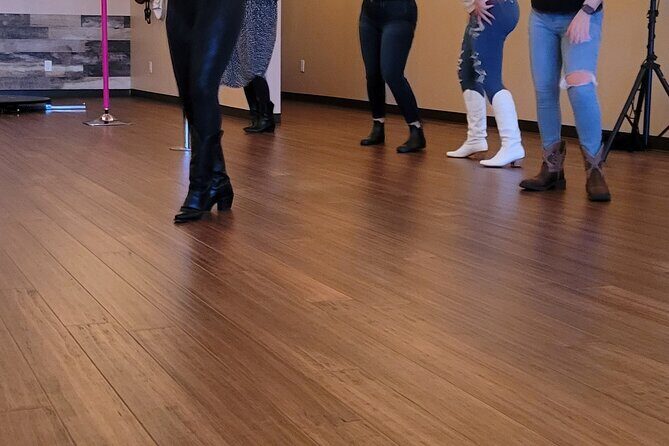
At $35 per person for about an hour, this is priced like an activity you can slot into a day without guilt. The value comes from three things you actually get:
- A pro-led lesson (not a playlist plus a video)
- Sound system support so you’re practicing with music
- Instruction designed for mixed levels, so it doesn’t waste time waiting for one person to catch up
You’re also not paying extra for basics. The class includes all fees and taxes. The only thing mentioned as optional is a gratuity for the instructor.
If you’re traveling with friends, couples, or coworkers, this can be a strong value because everyone can participate. One of the best parts of dance lessons is that you don’t need to be in the same “comfort zone.” You’re all learning the same new steps at the same time.
Practical Logistics That Matter: Location, Size, and How to Prepare
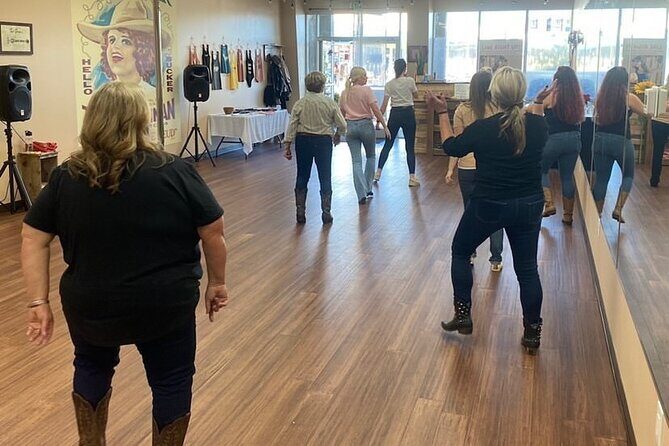
The meeting point is 2416 Music Valley Dr, Nashville, TN 37214, USA. It’s near the Grand Ole Opry area, and it’s not the same as being planted right downtown. In plain terms: plan for a ride if you’re staying in central areas.
Group size is capped at a maximum of 15 travelers. That’s a good number for a lesson. It’s small enough to feel personal, but big enough to keep the energy lively.
A few other practical notes from the provided details:
- The lesson uses mobile tickets
- It’s offered in English
- Service animals are allowed
- Most travelers can participate
What should you wear? The experience leans into a country look—think cowgirl boots and Daisy Dukes if you want the theme. But the real goal is comfort and stable footing. If you’re not wearing boots, just make sure your shoes won’t betray you mid-turn.
Who Should Book This Line Dance Class (and Who Might Skip It)
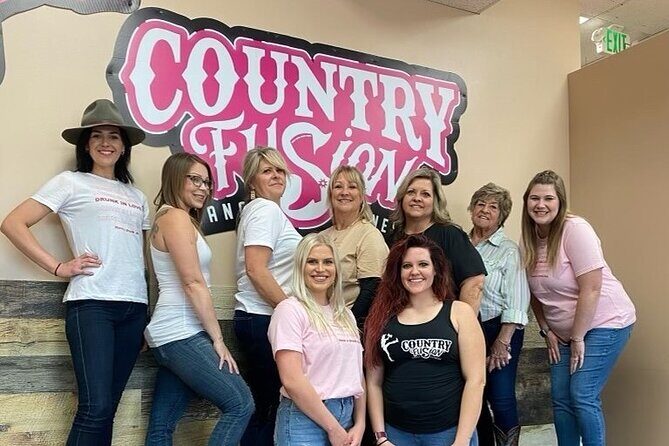
This is a great fit if you:
- Want a fun Nashville activity that isn’t just eating or standing in lines
- Like music-based experiences where you can learn by doing
- Travel with a group and want an activity where everyone participates
- Are a beginner and want clear, step-by-step instruction
It might be less ideal if you:
- Need downtown walkability or hate riding share logistics
- Want something hands-off (this is active learning, not a show)
- Are planning a trip with uncertainty around weather, since the experience requires good weather
If you’re unsure, take the simplest rule: if you’re willing to try, you’ll likely enjoy it. The lesson is designed to make trying feel doable.
The Verdict: Should You Book It?
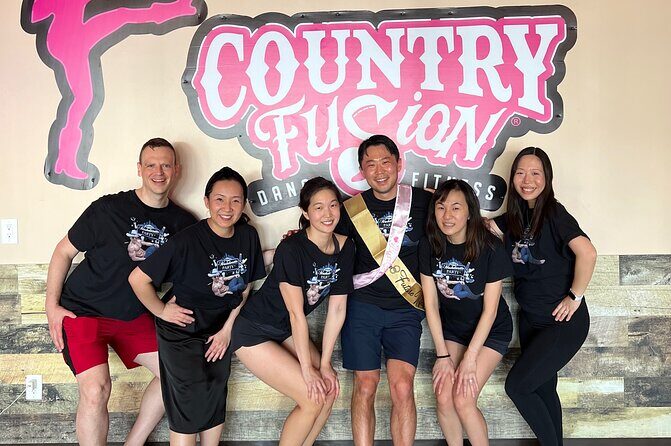
I’d book this if you want a Nashville taste that actually gets you moving. The combination of a pro instructor (Elizabeth Mooney), beginner-friendly structure, and a group size that supports attention makes it one of those “short activity, big memory” choices.
Book it especially if:
- You’re traveling with people who might be shy at first, because the class aims to make participation easy
- You want to add something different to your itinerary besides dining and sightseeing
- You like the idea of learning steps you can try right after at Wild Horse Saloon
If you’re in the area and you’re okay with a short ride to the Music Valley Dr zone, this class is a solid use of time—and a fun way to understand the social side of country music.
FAQ
How much does the line dance lesson cost?
It costs $35.00 per person.
How long is the experience?
The lesson is about 1 hour.
Where do I meet for the class?
The meeting point is 2416 Music Valley Dr, Nashville, TN 37214, USA.
Who teaches the class?
The instruction is led by Elizabeth Mooney, a professional dancer and choreographer to country artists.
Is this class beginner-friendly?
Yes. The class includes beginner, easy-to-follow moves and instruction is tailored to mixed levels.
What’s the group size limit?
The experience has a maximum of 15 travelers.
Is there anything I should pay separately?
A gratuity for the instructor is optional and is not included.
]]>Two things I really like: the friendly, professional chauffeurs who give clear directions to the pickup, and the comfort touches like bottled water plus an air-conditioned vehicle. One thing to keep in mind is that pickup spot confusion can happen anywhere in a big city, so you’ll want to confirm your exact pickup location ahead of time.
Key Highlights You Should Know
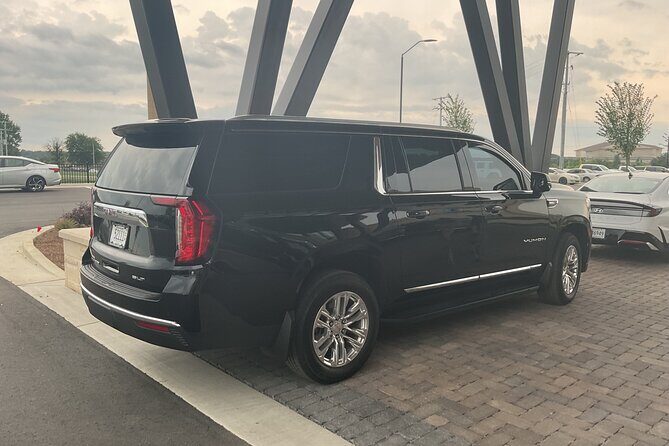
- Private ride for up to 6: It’s your group only, so you’re not squeezed in with strangers.
- Pickup help that actually matters: Name sign, plus call or text to get you lined up fast.
- Mobile ticket: You don’t have to hunt for paperwork at the curb.
- A/C comfort for Nashville weather: You’ll stay cool during the transfer.
- Professional chauffeurs focused on safety and service: The ride is treated like a smooth, controlled experience.
- All fees and taxes included: Fewer surprise add-ons when you book.
A First-Class Limo Ride in Nashville: What the 45 Minutes Really Delivers
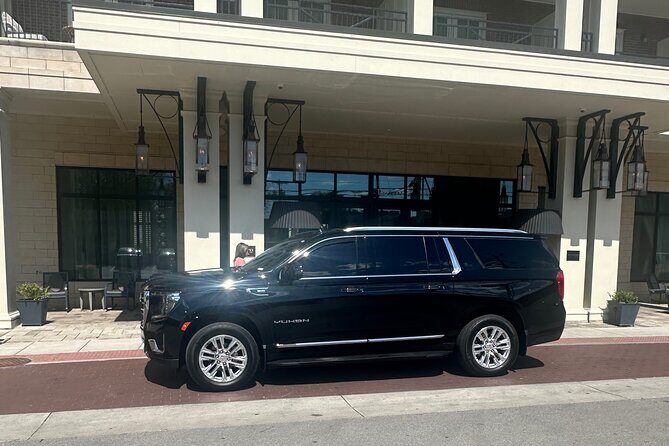
This isn’t a half-day tour with set stops and planned attractions. It’s a private 45-minute luxury car transfer designed to get you from point A to point B in Nashville with minimal friction. That difference matters: you’re not losing time to sightseeing detours, waiting around for other groups, or hunting for parking.
Think of it as a “control the clock” service. For events, that means you’re more likely to arrive when you want, not when traffic and confusion force your hand. For airport transfers, it means you’re not juggling rideshare app pin accuracy or last-second payment hassles while your schedule tightens. And for proms, weddings, and corporate outings, it’s about keeping the vibe polished from curb to destination.
One practical note: the service is offered all day (12:00 AM to 11:00 PM, Monday through Sunday). So if your timeline is odd—late dinner, late flight, or a photoshoot that runs long—you still have a shot at matching the ride to your real schedule.
Pickup Works Differently When There’s a Name Sign and Real Communication
Good limo service is mostly invisible. The best part is what you don’t deal with: confusion at the curb, wrong-car mix-ups, or “where are you?” chaos.
Here, pickup includes a name sign, and the provider accepts a call or text to help you find the right vehicle. That’s a big deal in Nashville because pickup spots can be tricky—hotels, venues, and busy streets all have multiple entry points. A clear pickup process reduces the chance that you’re standing out in the heat (or rain) waiting for the wrong car.
You’ll also have a mobile ticket, which helps keep things moving once you’re there. The goal is simple: you confirm, you meet, you go. The company’s chauffeurs are trained for customer service and local knowledge, so if your pickup point needs clarification, you should be able to solve it quickly rather than through back-and-forth guessing.
Tip I’d follow: before you leave, double-check the exact pickup address and the best curb/entrance (not just the venue name). If the driver can match you to a spot, the ride starts stress-free.
Inside the Vehicle: The Comfort Basics That Actually Change Your Experience
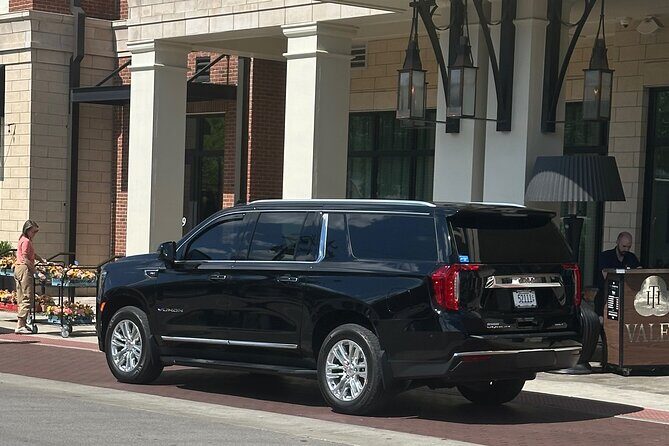
Luxury doesn’t mean you need a show. It means you arrive refreshed and ready. This service builds in a few practical comforts that help your mood right away:
- Air-conditioned vehicle: Nashville heat can turn a short wait into a long one. A/C matters even for a 45-minute trip.
- Bottled water: It’s small, but it’s useful—especially if you’re heading to a ceremony, a long event day, or the airport.
The fleet can include stretch limousines, SUVs, sedans, and party buses, depending on what fits your group and occasion. That variety can be helpful because you can match the ride style to what you’re doing—formal and sleek for a wedding moment, roomier for a group vibe, or something more straightforward for an airport transfer.
And because it’s private transportation, you’re not sharing the vehicle with other parties. That usually means less disruption, less noise management, and more control over timing—especially when you’re planning a photo window or an event arrival.
A Simple “Itinerary”: The Three Phases You Should Expect
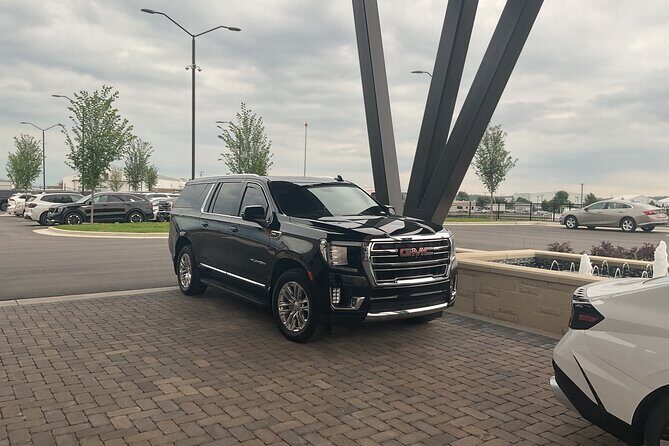
Since this is a transfer-style experience, the schedule isn’t a sequence of sightseeing stops. The value comes from how smoothly the phases connect:
1) Meet your chauffeur and get moving
You’ll start at Tennessee, USA, with pickup arranged through the name sign and communication by call or text. This is the moment to be most alert: confirm your pickup spot and watch for the correct vehicle.
What can go wrong here is also straightforward. In one case, there was a bit of confusion about the pickup location—then it was resolved once the driver had clear direction. That tells me the service is workable even if you’re not parked at the exact right entrance, as long as you respond quickly.
2) The ride itself is about comfort and control
During the trip, you’re in an air-conditioned vehicle with bottled water. You’re also working with chauffeurs trained for safety and customer service, plus local knowledge. That combination matters on city streets: a confident driver reduces the chance of wrong turns and keeps things calm.
3) Arrival and drop-off without last-minute hassle
Because this is a private transfer, your drop-off is centered on your needs. You’re not trying to coordinate with strangers, and you’re not managing multiple parties’ luggage or timing. For events, arriving on cue is often what makes the day feel smooth.
The Best Times to Book: Weddings, Proms, Corporate, and Airport Transfers
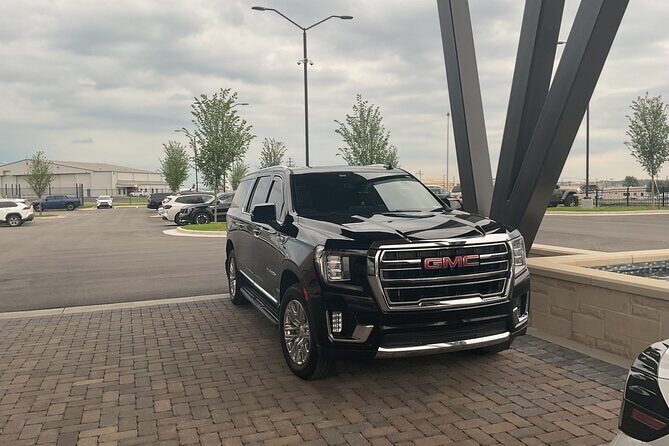
This limo service is positioned for occasions where timing, presentation, and reliability matter. The service includes luxury transportation for weddings, corporate events, airport transfers, proms, and more.
Here’s how it tends to pay off, depending on your situation:
- Weddings: You’re usually moving between photo moments, venues, or event entrances. A private car keeps everyone together and reduces “who has the keys” chaos.
- Proms: It’s not just the ride, it’s the feeling. You show up looking good, not sweaty and rushed. The A/C and bottled water also help after photos.
- Corporate events: For client pickup, event arrival, or a discreet transfer, a professional chauffeur makes the day feel controlled. Clear communication at pickup helps you stay on schedule.
- Airport transfers: The biggest wins are avoiding uncertainty and keeping your travel time simple. A hired chauffeur plus a clear pickup process helps you focus on boarding, not app screens.
If you’re traveling with a group, keep the up to 6 people capacity in mind. That group size is often ideal for shared “dress up” moments or a compact team.
Price and Value: Why $108 Per Group Can Make Sense
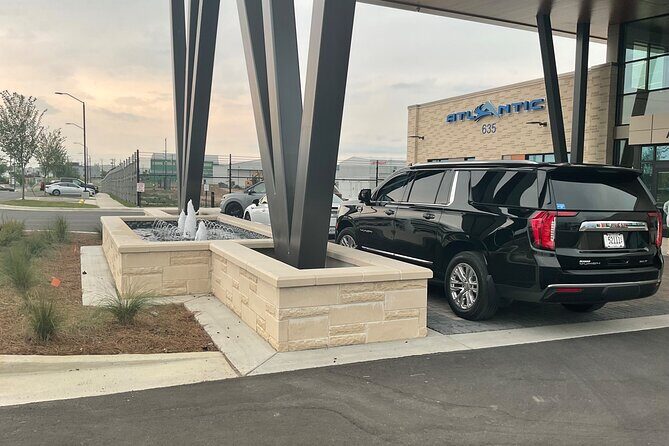
The price is listed as $108.00 per group (up to 6) for about 45 minutes. That’s the key way to think about value: you’re not paying per person like a typical individual transfer. You’re paying for the vehicle experience for your group.
When does that become a good deal?
- When you’d otherwise use two or more cars or rideshares.
- When time matters and you’d rather pay for certainty than “maybe” you’ll get the right driver fast.
- When you want the comfort upgrade (A/C, bottled water, private ride) for a day with plans already on the calendar.
Also notice what’s included: all fees and taxes are covered, plus bottled water and private transportation. Fewer hidden charges can make budgeting easier, especially if you’re also paying for event tickets, meals, or flights.
Booking tends to happen around 42 days in advance on average, which suggests this is a popular option for planning events. If your date is fixed (weddings, proms, big conference days), booking sooner is your friend.
Logistics Reality Check: What You Should Confirm Before You Go
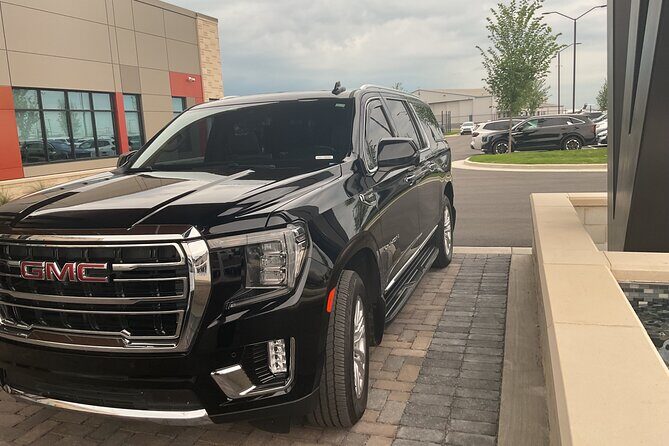
This is a straightforward service, but a few details are worth checking so your ride stays smooth.
Confirm your pickup point precisely
Even when everything is set up well, pickup confusion can happen. The good news is that the company supports call or text communication and uses a name sign, which helps solve issues fast. Still, you’ll reduce problems by sharing the most specific pickup details you can.
Know what’s included vs. not included for your exact need
The info you provided includes an “included” list (bottled water, private transportation, air-conditioned vehicle, all fees and taxes) but also lists some “not included” items. To avoid surprises, I’d treat this as a prompt to clarify what’s covered for your exact route and vehicle type. Ask what your purchase includes end-to-end for the transfer you want.
Plan around the ride length
The duration is listed as about 45 minutes. That’s great for transfers. If your timeline needs longer waiting time (for example, late photo finishing or delayed arrivals), you should ask directly how the service handles extra time, since the provided data doesn’t specify extended-hour pricing.
Cancellation buffer is there if your plans shift
There’s free cancellation up to 24 hours in advance for a full refund. If you book and your schedule might change, that buffer is comforting. Just don’t wait until the last minute.
Who This Works For (and Who Might Want Something Else)
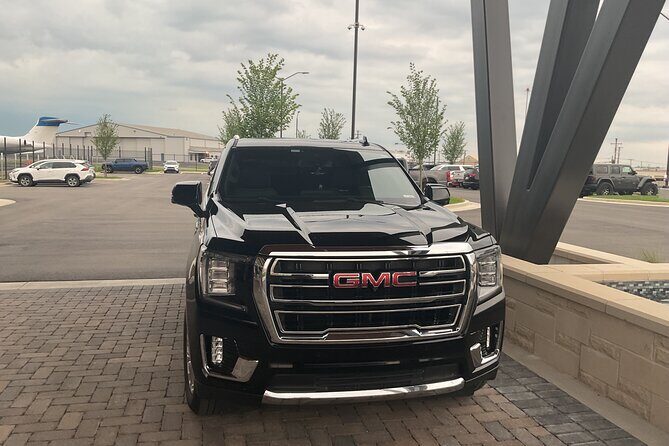
This limo transfer is best for you if you want:
- Private group transportation up to 6
- A professional, safety-focused chauffeur
- A simple experience with pickup support (name sign + call/text)
- Comfort basics like A/C and bottled water
It may be less ideal if you’re looking for guided sightseeing, multiple timed stops, or a full tour structure. This service is about getting you to your next point without drama. If that’s your goal, it fits well.
Also, because service animals are allowed and the experience notes that most travelers can participate, it’s built to be usable for a broad range of visitors.
Should You Book First Class Limo for Your Nashville Trip?
If your day has a deadline, I think this is a smart booking. The combination of private ride, professional chauffeurs, and clear pickup support (name sign plus call/text) is exactly what you want when you’re trying to stay calm and arrive right.
Book it if:
- You’re traveling with up to 6 people.
- You have an event arrival time you can’t miss.
- You want an A/C comfort upgrade and bottled water for the short ride.
- You prefer a straightforward pickup-and-go transfer instead of a tour schedule.
Skip it or ask more questions if:
- Your plans include lots of unpredictable waiting time.
- You’re unsure about pickup specifics and you might not be able to respond quickly at the curb.
FAQ
How much does the first class limo cost in Nashville?
It’s $108.00 per group, covering up to 6 people.
How long is the limo ride?
The duration is about 45 minutes.
Is pickup offered, and how do you find the driver?
Pickup is offered, and the driver uses a name sign. You can also call or text for pickup guidance.
What’s included in the price?
Included items are bottled water, private transportation, an air-conditioned vehicle, and all fees and taxes.
What kinds of vehicles might you use?
The fleet can include stretch limousines, SUVs, sedans, and party buses.
Are service animals allowed?
Yes, service animals are allowed.
What hours is the service available?
Service runs 12:00 AM to 11:00 PM, Monday through Sunday.
What is the cancellation policy?
You can cancel for a full refund if you do it at least 24 hours before the experience starts. If you cancel within 24 hours, the amount is not refunded.
If you tell me your date and whether this is for an airport transfer or an event pickup, I can suggest what details to confirm so the curb meeting stays painless.
]]>If you can walk, you can swing. The class is built around getting you comfortable quickly: a demo with spins and dips, lots of practice, and you dance either with your partner or with an instructor’s help if you want it. A possible drawback is simple: if you’re feeling self-conscious, the first minutes can feel a bit like stage training before the fun kicks in.
Key Highlights You’ll Actually Feel in the Room
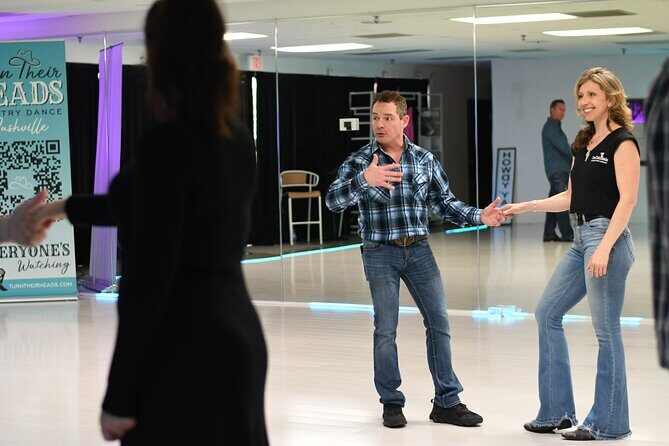
- Top coaches teaching beginners with lots of patience, including partner help if you’re solo
- Two-step plus country swing in one session, with spins and moves for variety
- Bring your own alcoholic beverages, plus storage cubbies for personal items
- Digital sign message so you can send a note to a loved one during class
- Small group size (max 24) so you’re not lost in a crowd
Nashville Two-Step and Country Swing, Packed Into One Hour
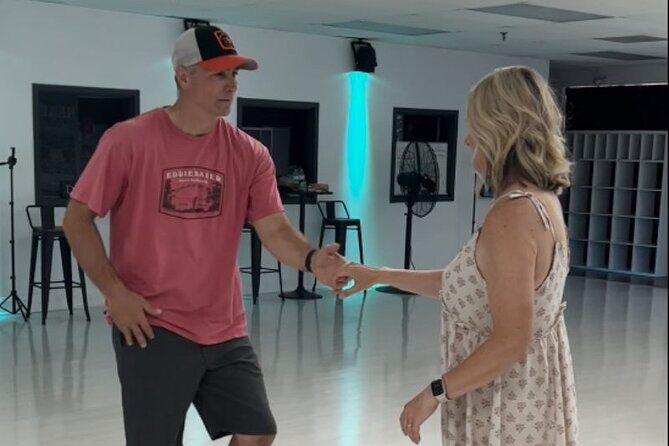
This class is built for quick confidence. In about 1 hour, you’ll learn the basic two-step and then turn those steps into country swing—a partner dance you can do to a lot of different songs, not only specific choreographed tracks. The pitch is simple: start with the fundamentals, practice them right away, then add a few spins and fancier moves so you don’t feel stuck repeating the same step.
You’ll also appreciate the practical angle. Country swing is designed to look good without requiring fancy footwork or even a strong sense of rhythm. And it doesn’t demand a lot of space, which matters in real-world Nashville settings—think crowded bars, festivals, or any place where you can’t spread out like you would in a ballroom.
The biggest value isn’t just that you learn steps. It’s that the structure is meant to get you moving early, not at the end of the hour. That’s how you leave feeling like you can actually join the dancing later, not just survive a lesson.
Where It Happens: The Studio Setup Makes Participation Easier
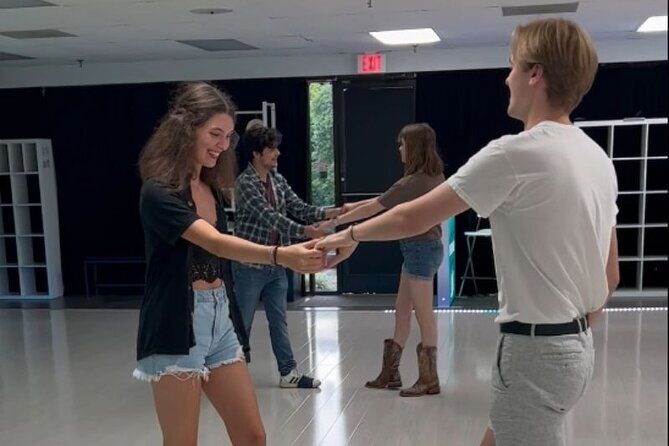
The class meets at Turn Their Heads Nashville Line Dancing Lessons And More, 830 Fesslers Pkwy suite 114, Nashville, TN 37210. The start time is 4:00 pm, and the activity ends back at the same meeting point.
A few details here matter because they affect how relaxed you feel when you arrive:
- Mobile ticket is used, so you can plan to have your phone ready rather than hunting for a paper ticket.
- Cubbies are available, which is a small thing that makes a big difference. When you’re practicing partner dance, you want your bag, jacket, and odds and ends out of your way.
- You can display a message to a loved one on the classroom’s digital sign. This is the kind of extra that turns an ordinary lesson into a personal moment, especially for birthdays, anniversaries, or a fun surprise.
- The studio is near public transportation, which can matter if you’re mixing this with other Nashville stops.
- Service animals are allowed, and the class notes that most people can participate.
And because the group is limited to 24 travelers, you’re less likely to get swallowed by the room. You’ll usually be able to see what the instructors are doing and get enough attention to correct your basics.
The First Minute: A High-Energy Demo That Teaches By Showing
Before you’re asked to copy anything, you’ll get a demo. The class starts with an impressive presentation of two-step and country swing, including spins and dips from the instructors.
This is smart teaching. Instead of explaining every move like a manual, you watch the flow first. Your brain starts to understand what a “good” country swing look is supposed to feel like. That matters because partner dance is as much about timing and connection as it is about step patterns.
You’ll likely notice the instructors are upbeat and direct, and that comes through in the feedback tied to this class. People talk about the staff being friendly and patient, and about instructors who can turn nervous beginners into confident dancers. In this case, the names that come up are Rick, Nicole, and Becky, which is a good hint that you’ll experience a consistent teaching style rather than a rotating cast.
Even if you’re the kind of person who usually hangs back at the dance floor, the demo helps you map the moves visually. Then the lesson moves into steps you can actually do, not just admire.
Two-Step Basics: The Step That Gets You Moving Fast
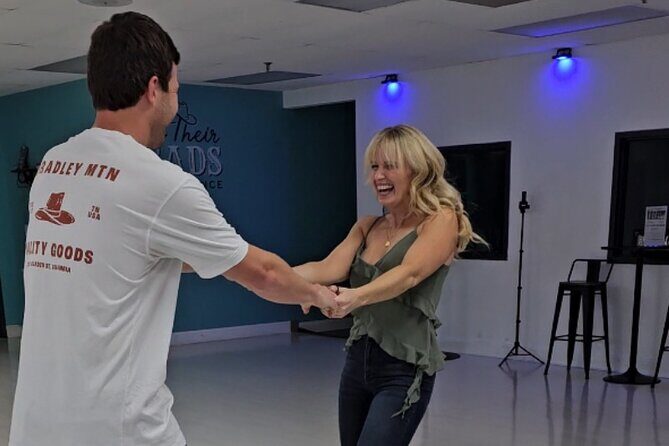
Once the demo wraps, you get down to the core lesson: the basic steps of two-step and how to use them with a partner.
The teaching approach here is beginner-friendly in a very practical way. The class description basically says: country swing can be learned quickly, and the lesson is built for people who are new. You don’t need to be a dancer to start—you need basic movement coordination, the willingness to try, and the ability to follow counts.
What you can realistically expect during the two-step portion:
- You’ll learn a step pattern you can repeat.
- You’ll practice the pattern with a partner so timing becomes natural.
- You’ll build the connection needed for country swing, because swing is not just your feet. It’s the feel of the dance together.
If you’re solo, you’ll still be kept busy. You’ll either dance with an instructor or be paired with another student. That’s a big deal for solo travelers, because the lesson isn’t designed as a couple-only performance class. It’s designed so you don’t wait around while others practice.
The end goal of this phase is confidence. Not perfection. The basics are what you’ll reuse again later when you hit Nashville dance floors.
Turning Steps Into Country Swing: Practice, Then Add Flair
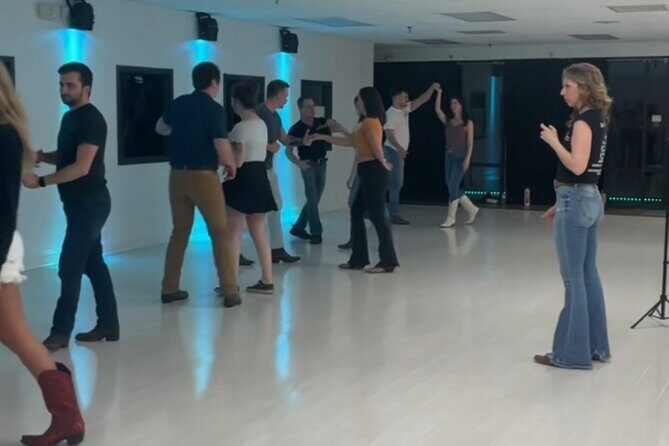
After the basics click, the class shifts from learning steps to doing country swing dancing.
Here’s where the hour starts to feel fun rather than instructional. The lesson doesn’t stop at a simple step. You’ll also learn a variety of spins and moves so you can add variety and style.
That matters because country swing can get boring fast if you only know one move. By giving you additional options—especially spins—you’re more likely to feel like the dance is dynamic. Even if your spins are small or basic at first, adding them early lets you look engaged instead of stuck.
The class description also mentions “lots of practice,” and that lines up with the kind of feedback people leave. The instructors are repeatedly praised for patience and for helping beginners relax. That’s not just a nice personality trait; it affects learning. If people feel rushed or mocked, they freeze. If they feel supported, they try again after a mistake, which is how you improve in a single hour.
And since the group is limited and the instruction is hands-on, you’re not just watching. You’re dancing through the learning process.
Partnering Up: Couples, Solo Dancers, and Instructor Support
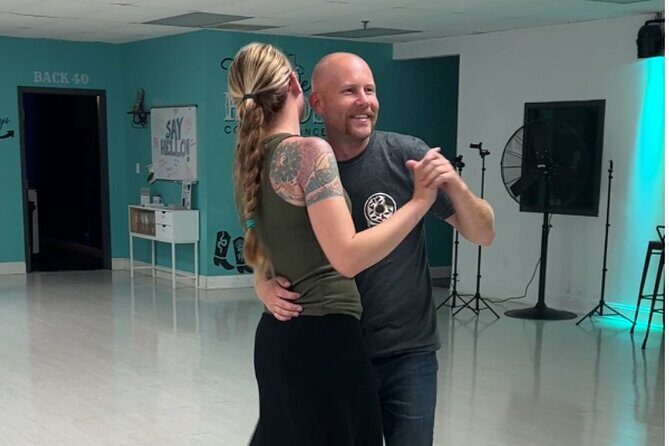
This is a partner dance class, but it’s set up so you’re not trapped without a partner.
You’ll dance:
- with your partner if you have one,
- with the instructors during practice,
- or with another student if you come on your own.
This gives you flexibility. Couples can build shared muscle memory and keep practicing the connection. Solo dancers still get the experience of dancing with someone rather than standing off to the side.
One useful thing to know: some people come in expecting to feel awkward, especially if their partner isn’t a “dancer” by nature. The feedback around this class includes examples of people who were unsure at first but ended up enjoying it a lot and even wanting to take another class. The instructors’ job seems to be getting people past the initial self-conscious moment.
So if your inner voice says, I’m going to be terrible, I’d treat that as a warning label—not as truth. The class is built for first-timers.
Spinning Without Fear: How the Class Helps You Look Good
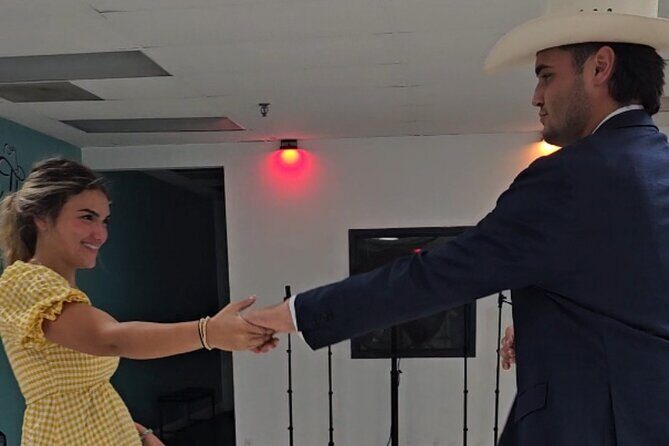
The spins and dips in the demo are eye-catching. But the real learning value is what they represent: the class teaches you where the move comes from and how to connect it to your basic steps.
In a one-hour class, you don’t want complicated multi-step choreography. You want moves you can layer on top of the basic rhythm without getting lost. That’s exactly the pattern here: fundamentals first, then extra moves for variation.
You’ll probably leave with a small menu of moves you can remember on a night out. That’s the point. You want something you can reuse in real settings, not just something that works inside a studio.
Also, because country swing can be done to a wide range of music and doesn’t require huge space, you can practice what you learned in more situations than you might think. The lesson is designed for the kind of dancing most people actually run into.
Cost and Value: What $44.97 Buys You (and What It Does Not)
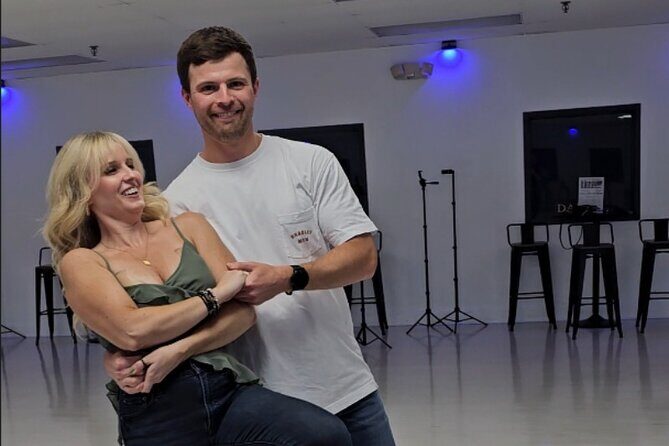
At $44.97 per person for about 1 hour, this isn’t the cheapest thing in Nashville. But for what you get, it’s reasonable.
Here’s the value logic that matters:
- You’re paying for live instruction from the studio’s country dance coaches, not a self-paced video.
- You learn both two-step and country swing, plus some spins and moves.
- The group size is limited to 24, which helps keep the teaching practical.
- The class is designed around getting you dancing quickly, which reduces the “I paid to stand and watch” problem.
What it does not do is turn you into a competitive dancer. You’re not leaving with a full routine. You’re leaving with fundamentals and a few confidence-boosters so you can hit the dance floor and actually participate.
For many people, that’s the sweet spot: one structured hour that gives you a repeatable skill.
Practical Touches That Make the Lesson Feel Like an Event
This class isn’t only about steps. It includes a few details that turn the experience into something you’ll remember.
A message on the digital sign
If you want to celebrate something, this is a fun option. The classroom has a digital sign where you can send a message to a loved one. It’s a small setup, but it changes the emotional tone of the class.
Bring your own drinks
The class includes an option to bring your own alcoholic beverages. That can make the session feel more like a social Nashville activity, not just a lesson. Just remember: it’s still a practice environment, so you’ll want to keep your balance and stay focused.
Cubbies and real-world comfort
Cubbies help you avoid carrying bags while you dance. That’s practical design for partner movement.
Photos, if you want them
One detail that matters: there was a report about not receiving a picture, with the studio offering that instructors can take photos upon request. If photos matter to you, ask during the session.
Who Should Book This Class in Nashville
Book this if you want a short, social, beginner-friendly way to learn partner dancing in Nashville.
It’s especially good for:
- couples who want something active to do together,
- friend groups where one or two people are brave enough to teach the rest by example,
- solo dancers who want partner practice without having to arrange a dance partner ahead of time.
If you’re the type who likes learning a skill you can use that same week, this fits. If you’re looking for hours and hours of choreography, you might find one hour too short. But if your goal is to leave the studio able to join the dance floor with confidence, the format is built for that.
Should You Book? My Decision Guide
I’d book this class if you want the quickest path to practical partner dancing. The instruction format, the high-energy demo, the step-by-step basics, and the addition of spins and moves make it more than a casual walk-through.
Also, the studio has a strong reputation for keeping beginners at ease. Names like Rick, Nicole, and Becky show up repeatedly in the kind of feedback that centers on patience, friendliness, and turning hesitant dancers into people who actually want to go out and try what they learned.
If you’re nervous about dancing in front of others, go anyway. The class is designed for first-timers, and you’ll be paired with support rather than left to guess.
FAQ
How long is the class?
The class is about 1 hour.
What time does it start in Nashville?
The start time listed is 4:00 pm.
Where is the meeting point?
It meets at Turn Their Heads Nashville Line Dancing Lessons And More, 830 Fesslers Pkwy suite 114, Nashville, TN 37210.
What does it cost?
The price is $44.97 per person.
Do I need a partner to take the class?
No. You’ll dance with your partner if you have one, but if you’re solo you’ll either be paired with another student or you may dance with the instructors.
Can I bring my own alcoholic beverages?
Yes, the class offers an option to bring your own alcoholic beverages.
Is the class taught in English?
Yes, it’s offered in English.
What is the cancellation window for a full refund?
You can cancel up to 24 hours in advance for a full refund. If you cancel less than 24 hours before the start time, the amount paid is not refunded.
]]>Two things I really like: you get private, personalized coaching (just your group), and the teacher breaks down each move at a pace that can work for beginners and still keep more advanced dancers challenged. One consideration: this is a short session (about 50 minutes), so if you want a long, party-length lesson with extra practice time, you may feel a bit rushed.
How the Nashville Line Dance Lesson Works (50 Minutes, Up to 3 Dances)
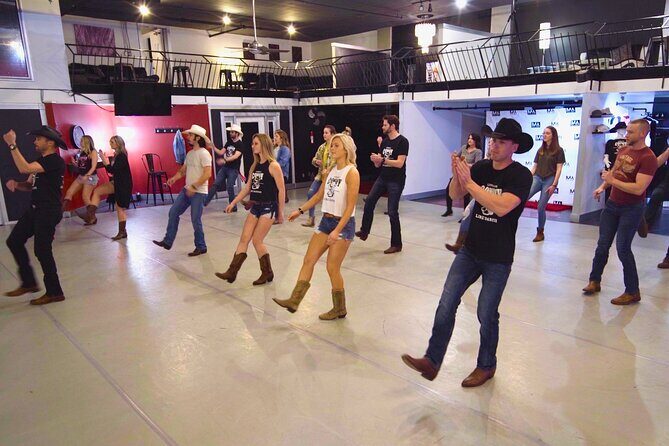
This class is set up like a practical mini-workshop. You meet at a dance studio in downtown Nashville, starting at 12:00 pm, at 630 Rundle Ave, Nashville, TN 37210. The activity runs about 50 minutes, and you end back where you started.
You’ll learn up to three line dances. Some are built to country music, and some use pop tracks. That mix matters more than it sounds: country tends to match the classic line-dance rhythm, while pop songs often make it easier to remember the steps because the beats feel familiar. Either way, the goal is the same—leave with something you can actually do on a bar dance floor later, not just memorize steps for a moment.
The lesson is customized. You’ll start by learning the proper steps (around 10 minutes for each dance), and then the class moves into performing the routine to songs with an easy, fun energy. Yes, you’ll work up a sweat. But it’s not the kind of workout where you feel lost. The instructors focus on keeping everyone comfortable and moving correctly.
Where You Meet: 630 Rundle Ave and a Real Downtown Studio Setup
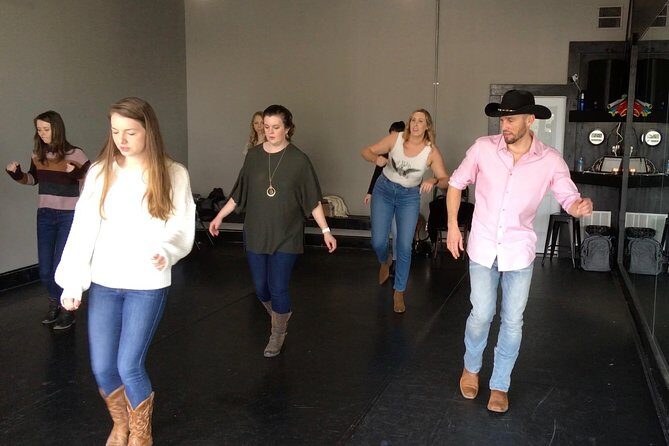
Meeting at 630 Rundle Ave is a big plus if you want Nashville without the hassle. The location is described as near public transportation, so you’re not stuck thinking about parking stress. And because you’re in a studio environment (not a makeshift space), you get the right kind of surface, space to practice, and a classroom feel that helps you focus.
The class also benefits from being private. Only your group participates, so you’re not competing for attention in a giant crowd. In past classes, groups have included everything from first-timers to experienced dancers, and the instructor’s job is to keep the teaching readable and the learning steady.
If you’re someone who feels self-conscious dancing in public, the studio setting helps. You get coached first, then you perform the routine in that same supportive environment before heading out to test it.
Your Instructors and Why Their Teaching Style Matters
The instructors are a major part of why this works. Names you might meet include Kyle, Wayne, Justin, and Cowboy Jordan. Different personalities, same approach: clear instruction, a patient attitude, and energy that keeps the room moving.
Here’s what that looks like in practice:
- You get step-by-step breakdowns so you’re not just copying movements.
- The instructor adjusts pacing so beginners can keep up while more confident dancers still get pushed a little.
- Many sessions emphasize encouragement, not perfection.
A standout detail from the experience is that some instructors record the dances as a keepsake. That’s useful in a very down-to-earth way. After class, you can check your timing, remember the order of moves, and feel more confident taking the steps out into Nashville nightlife.
One more teaching note: the instructors don’t treat this like a lecture. They teach, then immediately apply. That fast feedback loop is why people tend to feel like they learned quickly instead of just surviving the lesson.
The Lesson Itinerary: Learning Steps, Then Performing to Music
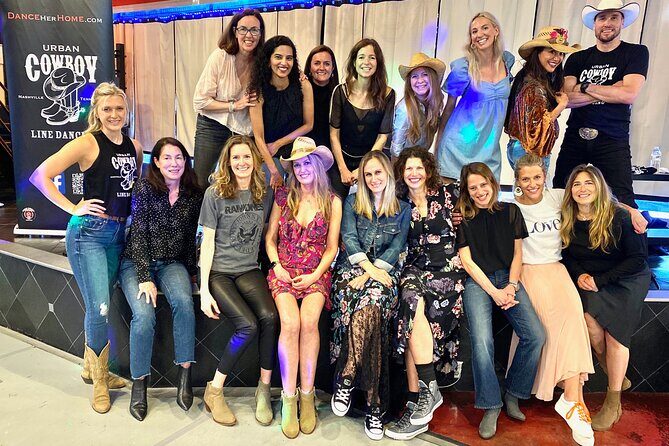
This is the core rhythm of your session. It’s simple, and that simplicity is why it’s fun.
Step 1: Arrive and get ready in the studio
You start at the studio in downtown Nashville. From there, the instructor sets expectations and gets the group organized so you’re not wasting time. Since the class is only about 50 minutes, the pacing tends to be efficient.
Step 2: Learn the steps (about 10 minutes per dance)
The training segment is structured. You spend time learning the proper steps for each line dance. The instruction focuses on what your feet and body are doing in the correct order.
You’ll likely see a progression like:
- Learn the basics of the routine
- Practice sections until the sequence clicks
- Get ready to run it as a full routine
Step 3: Perform each dance to fun songs
Once the steps are learned, you perform the dance to music. Some routines go to country-style tracks; others use pop songs. That song choice affects feel. Country songs often push you toward a classic stomp-and-swing style. Pop tracks can feel bouncier and help you lock into a steadier beat.
The class has a “do it for real” energy once you start performing. That’s where the workout happens. Your legs will notice it. Your heart rate may rise. The payoff is that you’ll actually finish the session having danced, not just practiced.
Step 4: Wrap-up and head back
The activity ends back at the meeting point. If you’re pairing this with food or bar time, the timing is built for it: you still have plenty of afternoon or early evening left for Nashville.
What You’ll Really Get Out of This (Not Just Steps)
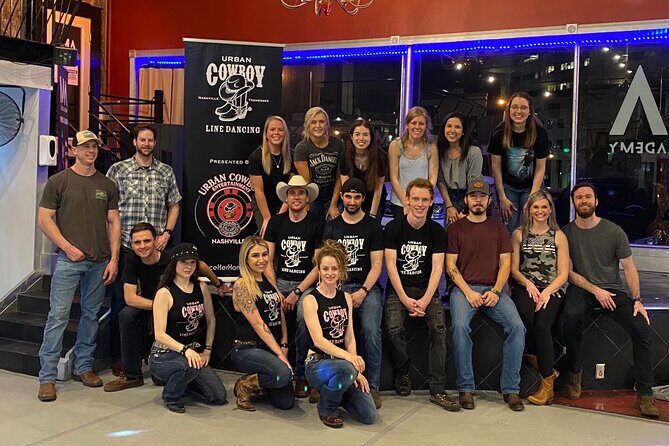
Line dancing sounds straightforward until you try it. The value here is that the lesson turns confusion into muscle memory. You’re taught the moves in a way that makes them stick fast, then you rehearse immediately with music so your brain isn’t building a routine in a vacuum.
You’ll also get a social payoff. A good instructor keeps the room relaxed and gives you a goal to work toward. People often leave feeling confident enough to try the steps later. Even if you start as someone who says I can’t dance, the format helps you change that to I can do this.
And because the class is customized to abilities, it doesn’t feel like a punishment for not already knowing the choreography. Beginners can keep it clean and simple while more experienced dancers can often follow the full routine with more swagger.
Price and Value: Short, Private Coaching in a Pro Setting
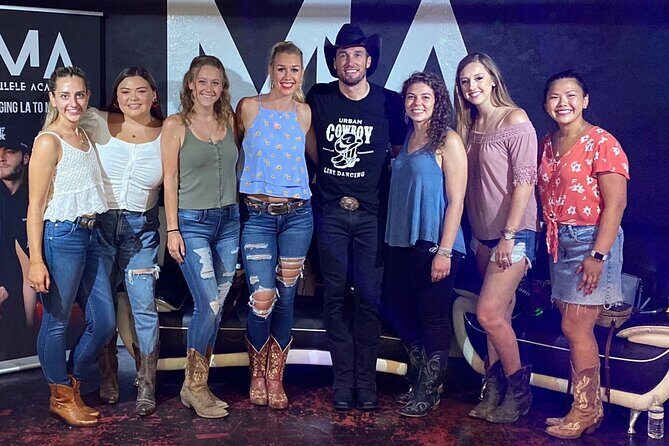
Because the class is private and happens at a professional dance studio, you’re paying for instructor time plus a real training space. Also, this is about 50 minutes, not a half-day workshop. That can be a great deal if you want a focused experience that fits into a normal Nashville schedule.
But here’s the honest part. If you expect a long extended rehearsal, you might find the time a little tight. Some people have wished for a longer lesson, and it makes sense: more time would mean extra run-throughs, more chances to correct small form issues, and more comfort with transitions.
Value tip for your planning: treat this as a first win, not your final rehearsal. If you want to improve further after the class, that’s when you use what you learned at a honky-tonk or dance floor. The lesson gives you enough to start, then Nashville gives you the repetition.
One caution from the experience record: there has been at least one major complaint where an instructor did not show and the refund process was not satisfactory for that person. That’s not typical based on the overall rating pattern, but it’s a reminder to keep your booking confirmation handy and double-check your session time before heading over.
Who Should Book This Nashville Line Dance Class
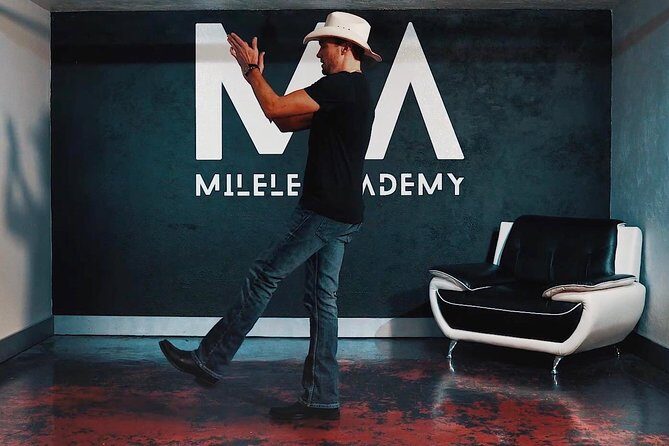
This experience fits best when you want a fun activity with real instruction.
I think it’s especially good for:
- Beginners who want confidence fast and clear step breakdowns
- Groups looking for something different than another bar stop
- Bachelorette parties or celebrations that want an actual skill, not just a photo moment
- Families and older dancers, since instruction has been described as patient even for ages 70+
- People who want a controlled workout without the gym vibe
It might be less ideal if you:
- Need a long session to fully learn routines
- Want zero physical activity (you will move)
- Are expecting a casual street performance instead of studio coaching
Practical Tips Before You Go (So You Feel Good On the Floor)
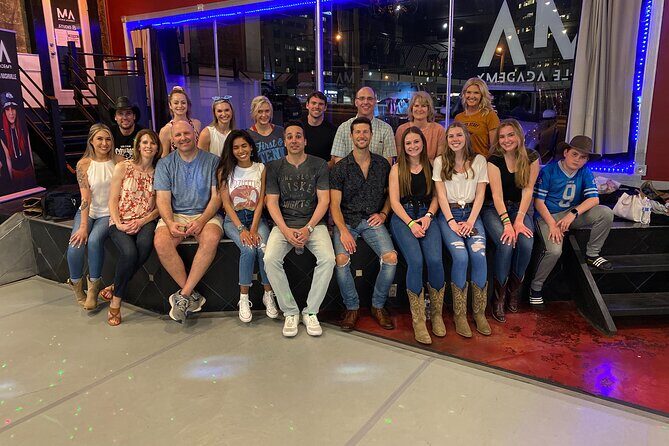
You’ll have a better time with a little prep.
- Wear shoes you can move in comfortably. Line dancing depends on quick footwork.
- Arrive a few minutes early so you’re not rushed into learning.
- Be ready to sweat lightly. Not a marathon, but you’ll use your legs.
- Don’t worry about being the most coordinated person in the room. The teaching style is built to help you catch up.
If you’re planning a night out afterward, consider eating first. This type of class can make you more hungry, and you’ll want energy for the next step of your Nashville day.
Should You Book? My Take on Booking Timing and Fit
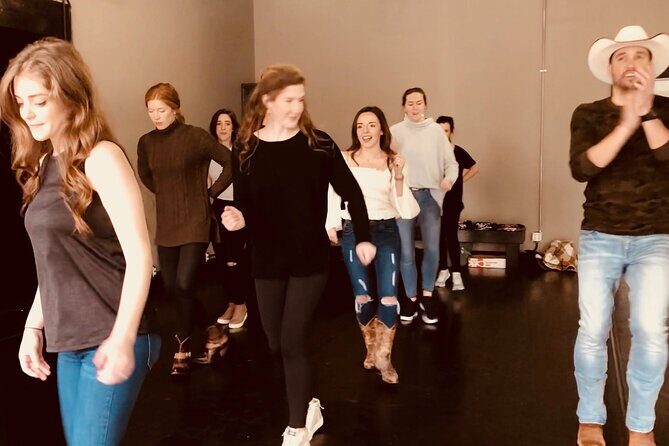
If you’re doing Nashville and you want a hands-on, authentic-sounding activity that’s genuinely learnable, I’d book it. The combination of studio coaching, the chance to learn up to three dances, and the mix of country plus pop music gives you more variety than a single routine lesson.
Book it when you still have time to explore after. With a 12:00 pm start and about 50 minutes total, you can pair it with lunch, then hit the nightlife with at least one routine you can actually do.
Don’t overbook yourself right before. You’ll want a little time to decompress and process what you learned, especially if you’re doing it with friends who also want photos or recordings.
If you want a short, upbeat skill-building experience in downtown Nashville, this is a strong choice. Just go in with the right mindset: learn it, perform it, and then let Nashville be the rehearsal space.
FAQ
How long is the line dance class in Nashville?
It runs for about 50 minutes (approximately).
How many line dances will I learn?
You’ll be taught up to 3 line dances during the session.
What kind of music will the dances be taught to?
Some dances use country music, and some use pop.
Is this a private class or shared with other groups?
It’s private. Only your group participates.
Where is the meeting point?
The class starts at 630 Rundle Ave, Nashville, TN 37210, USA, and it ends back at the meeting point.
When does it start?
The start time shown is 12:00 pm.
What language is the class taught in?
The instruction is offered in English.
What’s the booking confirmation timing?
You should receive confirmation within 48 hours of booking, subject to availability.
What if the class is affected by weather or minimum attendance?
If it’s canceled due to poor weather, you’ll be offered a different date or a full refund. If it’s canceled because a minimum number of travelers isn’t met, you’ll be offered a different experience or a full refund. Free cancellation is available up to 24 hours in advance for a full refund.
]]>Two things I like a lot: the small group size (limited to 8) and the “you make it” format with an unlimited topping bar. The class also includes photos and a Roll Academy apron, which is a nice touch for anyone who wants more than just a quick sweet bite. One thing to weigh: it’s a tight 45 minutes, and the price can feel steep if you’re expecting a longer meal-style hang.
Key highlights to look for
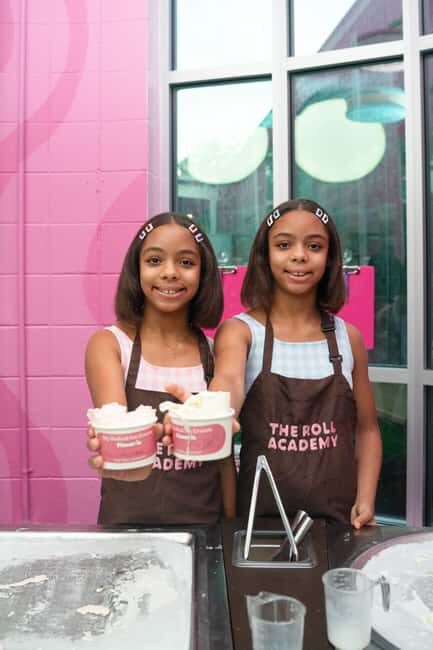
- Hands-on rolling: you get the chance to craft your own rolled ice cream
- Unlimited topping bar for mixing and matching your flavor build
- Small group limit (8) means you’re not lost in a crowd
- Photos included so you leave with more than just a sugar memory
- Dietary options with dairy-free and gluten-free choices
- Apron + instructor guidance keeps it playful but still instructional
Rolled Ice Cream at The Roll Academy: what the class really feels like
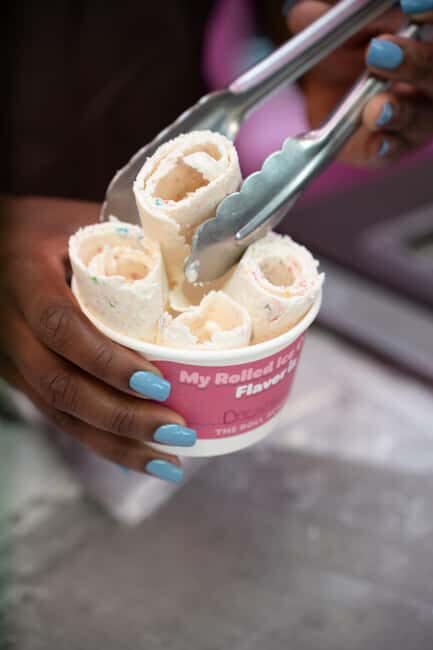
This is a 45-minute, instructor-led craft class built around one simple idea: learn the technique, then go make a dessert you actually chose. The experience runs at small-group size, so you’re not waiting around while a big group rotates. Instead, you get more attention as you work, ask questions, and figure out what your “ideal roll” looks like when you’re the one doing the prep.
What makes this class especially appealing in Nashville is that it fits into a normal day. You can combine it with market browsing, grabbing a nearby bite, and still keep the schedule contained. It’s also a good “activity dessert” for people who want something interactive but don’t want a full-day commitment.
You’ll start by settling into The Roll Academy setup, where the instructor guides you through what rolled ice cream is and how it’s made. The class includes the history and science behind rolled ice cream, but it’s taught in a way meant for doing, not lecturing. Then you create your own custom flavor with access to an unlimited topping bar, plus you get photos as part of the experience.
The $45 value: fast, fun, and surprisingly complete

Price is $45 per person, and yes, you should take a hard look at value before you book. This class is only 45 minutes, so if you measure value by time alone, it can feel like a lot. One review also noted a sense of being rushed once the ice cream is made. That’s a fair consideration for anyone who likes to linger.
But the value doesn’t come only from the minutes. Here’s what you’re getting for that money:
- You’re making ice cream, not just tasting it
- Unlimited toppings are included, so you can build a real flavor instead of one pre-set scoop
- Photos are included, which adds a lot of value if you like remembering experiences visually
- You receive a Roll Academy apron
- Instruction is hands-on, with a small group limited to 8
Also, this isn’t just “edible sugar.” It’s a skill-based activity with a guided process. When you leave knowing how rolled ice cream works, it feels more like a craft lesson than an expensive treat stop.
Where to meet inside Nashville Farmer’s Market (and how not to waste time)
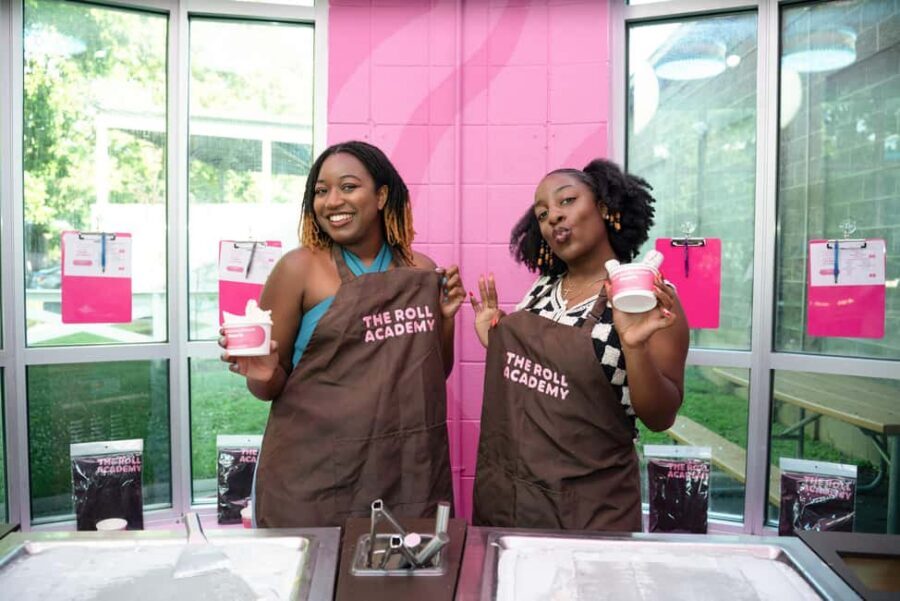
Meet at The Nashville Farmer’s Market, inside the market behind Bella Nashville Pizzeria. That location matters because the market area can feel busy and spread out. If you arrive late, you’ll spend your class time trying to find the right spot instead of learning the rolling process.
My practical tip: plan to arrive with a little buffer so you can check signage and get comfortable before you start. Since the experience is scheduled by starting times (and lasts 45 minutes), being early is a simple way to avoid stress.
The activity ends back at the meeting point. That’s helpful if you’re pairing it with other market plans, because you don’t need transport or a second location jump.
What you’ll do during the 45 minutes
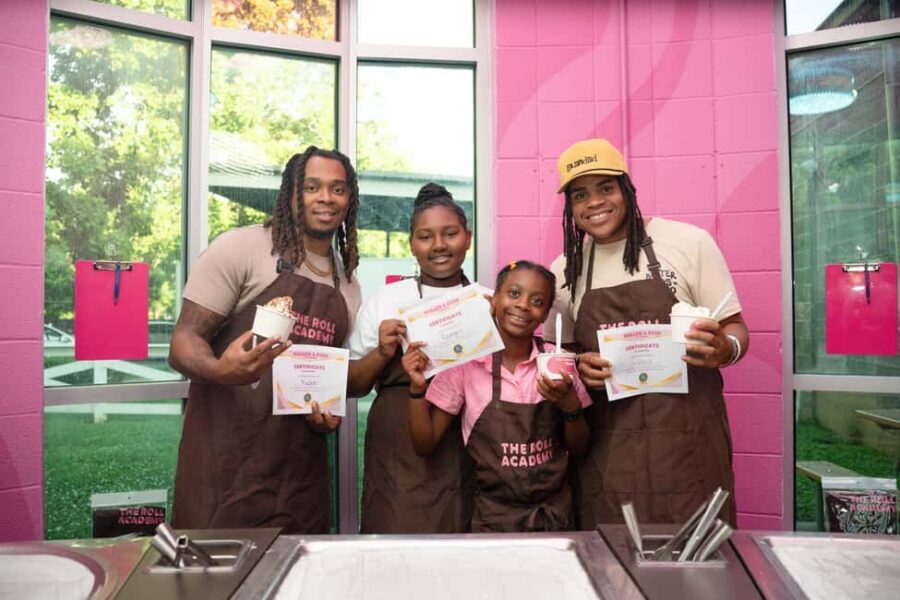
The class is designed as a smooth sequence: you learn the concept, you practice the technique, then you build and finish your own rolls.
You can expect these moments:
- You’ll hear the history and science of rolled ice cream, explained in a beginner-friendly way.
- You’ll follow the instructor’s steps as you make rolled ice cream on the cold-surface format the style is known for.
- You’ll create custom flavors using the toppings available.
- You’ll take part in an immersive photo experience, and photos are included.
- You’ll leave with your apron.
One detail that’s worth knowing: some groups end up making multiple rolled ice creams. In one case, the class flow included creating three rolled ice creams, including chocolate, cookie & cream, and then a final custom addition. Even if your exact mix differs by schedule, the point is consistent: you’re meant to actually produce rolls, not just watch.
The toppings bar: why this matters more than it sounds
An unlimited topping bar can sound like a throwaway feature, but here it changes the entire experience. You’re not just adding a cookie crumble on top. You’re designing your flavor identity.
For people who like dessert variety, it turns the class into a mini flavor workshop. For couples and families, it also becomes a fun comparison moment: one person might go chocolate-forward, another might build something crunchy and sweet, and you’ll see how different combinations change the final bite.
And if you’re bringing along people who are picky about textures or sweetness, unlimited toppings gives you control. You can tailor your rolls in a way that a pre-set dessert simply doesn’t allow.
Dietary options: dairy-free and gluten-free without awkward compromises
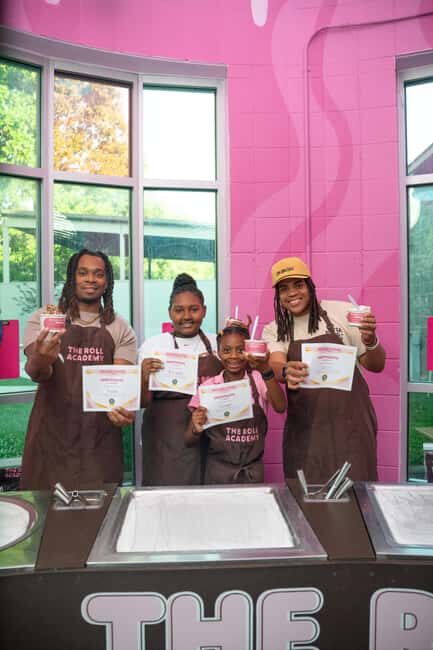
The class offers dairy-free and gluten-free options, which is a big deal for a dessert activity like this. It means you’re not stuck guessing whether you’ll be able to participate fully.
In practice, that matters because this isn’t a “sit and watch” experience. You’re making the ice cream and building toppings. Having suitable options helps everyone feel included, instead of waiting while someone else gets to do the fun part.
If dietary needs are part of your travel plan, this is one of those activities that usually makes it easier to say yes. You can focus on learning the technique and building your flavor, rather than treating the dessert as an obstacle.
Instructors and group energy: small, friendly, and hands-on
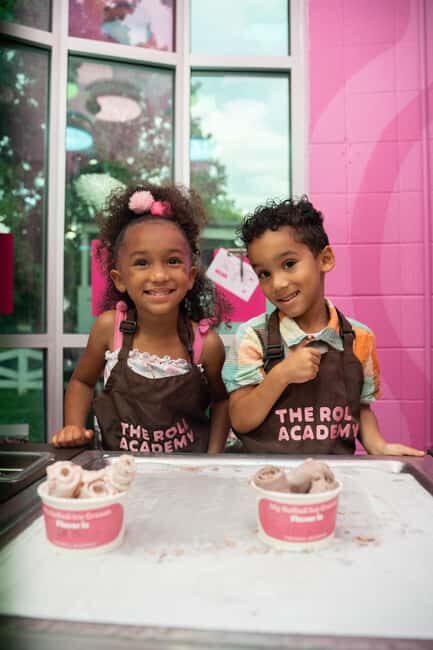
Small-group size is limited to 8 participants, and it shows in the way the class runs. With that number, you’re more likely to get clear guidance and quick help if you’re not sure what your roll is supposed to look like.
The teaching style seems upbeat and patient based on instructor experiences shared by participants. Names that came up include Berry, described as fun and patient while making sure people got the techniques right. Another instructor name mentioned was AG, who was praised for supportive teaching, especially with a multi-age group where kids were able to participate with minimal help.
The overall vibe is playful craft time with real instruction. That combination is perfect for people who like learning something new but still want the dessert payoff.
The photo experience and apron: a souvenir you actually use

This isn’t only about the ice cream. The class includes an immersive photo experience, and photos are included. That means you’ll spend at least part of the time in a guided “experience” setup designed for pictures, not just a selfie at the end.
You also get a Roll Academy apron. That’s a small thing, but it adds value because it’s not just a token. It’s a wearable reminder of the activity, and it makes the whole event feel more official and memorable.
If you like sharing travel moments, the included photos can save you time and hassle. You’re not relying on someone else to photograph the action.
Who should book this Nashville class

This experience fits well for:
- Couples who want a playful date with an edible result
- Families looking for a hands-on activity that still feels like a treat
- Bachelorette groups and friend groups wanting something different from the usual Nashville bar path
- Team building events that can be more cooperative than competitive
Age note: it’s not suitable for children under 7 years. That doesn’t make it limited to adults, though. One participant story highlighted an 8-year-old who was proud to participate with minimal help, which suggests kids can do well if they’re old enough to follow steps and enjoy the craft aspect.
If you’re traveling with grandparents, too, this type of dessert workshop can be a great bridge between generations. It’s structured but not overly complicated, and the end result is immediate.
A realistic drawback to consider before you go
The biggest possible downside is the time-to-satisfaction ratio. At $45 for 45 minutes, you want it to feel like you got full value, not just a quick rush to finish. One comment specifically pointed out that it felt like a large spend for the time and that the group seemed to move out quickly after the ice cream was made.
How to reduce the sting: treat this as an experience, not a hangout. Plan your day so you’re not disappointed that it ends when it ends. If you want a longer meal-style dessert, you might pair this with a separate stop for extra time after.
Should you book Rolled Ice Cream in Nashville?
Book it if you want a hands-on Nashville activity where you actually make the dessert, build your own flavor with unlimited toppings, and leave with photos and an apron. The small group limit helps the class feel guided rather than chaotic, and the dairy-free and gluten-free options make it easier to include more people.
Skip it if you’re very price-sensitive for short activities or you hate feeling on a schedule. In that case, you might still enjoy the idea, but the 45-minute structure could feel too tight.
If you like interactive food experiences, this one is a strong yes.
FAQ
How much does the Nashville Rolled Ice Cream class cost?
It costs $45 per person.
How long is the class?
The class lasts about 45 minutes. Starting times depend on availability.
Where is the meeting point?
It meets inside The Nashville Farmer’s Market, behind Bella Nashville Pizzeria.
What’s included with the class?
The experience includes ice cream, an unlimited topping bar, photos, a Roll Academy apron, and an instructor.
Are there dairy-free or gluten-free options?
Yes, dairy-free and gluten-free options are available.
How big are the groups, and is it suitable for kids?
The group is limited to 8 participants. It is not suitable for children under 7 years.
Can I pay later or cancel if plans change?
You can reserve now and pay later (pay nothing today), and there is free cancellation up to 24 hours in advance for a full refund.
]]>This hands-on Tennessee whiskey workshop in East Nashville turns cocktail-making into an actual night out. You’ll learn to build three Old Fashioned-style cocktails using professional tools, while your host shares Tennessee whiskey history and real bar know-how instead of reading from a script.
I really like how practical it stays: you mix the drinks yourself, then leave with tweaks you can use at home. Another win is the atmosphere—small-group energy, lots of Q&A, and storytelling that helps the recipes stick. A possible drawback: it’s built around whiskey, so if you truly hate it, you may still enjoy the technique but the flavor theme won’t change much.
Key things you’ll notice

- Tank Room setting at Love & Exile: a private workshop space that keeps the class focused while the venue stays lively.
- Three full-size cocktails included: you don’t just taste; you actively make and drink them.
- Old Fashioned fundamentals as the backbone: the class teaches how small ratio and ingredient changes change everything.
- Chris Mallon leads the workshop: a host with chef background who ties flavor decisions to real technique.
- You’ll get customization tips: you can adjust flavors in ways that make sense at home, even as a beginner.
Tennessee Whiskey in East Nashville, with real bartender energy

Nashville is great at music and great at myth-making. This workshop does something smarter: it uses that vibe to teach you how Tennessee whiskey drinks are actually built.
At the start, you’ll be in a small, dedicated space inside Love & Exile, the kind of room where you can hear your questions answered. Over about 90 minutes, the pace stays social and hands-on. You’re not watching someone else work from across the room—you’re working right there with the tools and ingredients.
The focus is Tennessee whiskey cocktails, and the centerpiece is the Old Fashioned format. You’ll make three different versions, each one showing a different flavor move. That’s the big value for me: you aren’t memorizing one recipe. You’re learning the structure behind the drink so you can adjust it later, based on what you like.
This isn’t a stuffy lecture. Expect stories, practical tips, and enough humor that the class feels like a cool stop in your Nashville evening—not homework.
Where the class happens: Love & Exile’s Tank Room

Your meet-up point is Love and Exile Bar, 715 Main St A, Nashville, TN 37206. The session starts at 3:30 pm, and it ends back at the same location.
The workshop itself takes place in the Tank Room, a private space tucked inside one of East Nashville’s most popular venues. The venue matters, because it gives you two experiences in one: a focused class in the private room, plus the option to linger afterward in the main bar or on the patio.
One thing I appreciate about this setup is the balance. You get a controlled teaching environment, but you’re still in a real local hangout, not a temporary classroom somewhere anonymous. That’s also why group size matters. The class caps at 24 travelers, so even when it’s full, it doesn’t feel like you’re swallowed by a crowd.
If you’re walking in from the rest of your day, this time slot is handy. You’re early enough to learn and drink without having to worry that the whole evening is already booked up.
What you’ll make: three Old Fashioned cocktails (and why that format wins)

The headline is simple: you’ll make three whiskey cocktails in total, and you’ll also enjoy three full-sized cocktails that you mix yourself. The included experience is very clear that the builds are three different Old Fashioned cocktails, so the class is about the Old Fashioned more than it is about random drink trivia.
Here’s why that matters. The Old Fashioned is one of the most adjustable drinks in the world. It can be classic, can tilt sweeter, can lean citrusy, can get spice-forward, and can even shift through the whiskey choice itself. By staying inside one framework, the workshop helps you notice what each ingredient change does.
You’ll use professional bar tools and glassware, and everything you need—ingredients and equipment—is provided. That lowers the stress. You don’t need to bring a shaker, a special strainer, or a dream.
The class also invites you to share and learn out loud. The experience includes storytelling and laughs as part of the flow, which makes a difference when you’re learning something hands-on. You remember better when you’re having fun.
If you want one strong takeaway, it’s this: you’ll learn how to make an Old Fashioned in a way that feels repeatable, not lucky.
The craft stuff: ratios and the ingredient moves that change flavor
The best cocktails are boringly consistent. The secret is what you change—usually tiny changes. This workshop teaches that mindset from the start.
A theme that shows up again and again in how people describe the class: the moment the ratios finally click. That can be the difference between a drink that tastes right and one that tastes slightly off, even when you used the same ingredients last time. You’ll learn how to think about amounts and balance, not just how to follow a list.
You’ll also get real guidance on flavor components that most people ignore at home:
- Bitters and how they anchor aroma and bitterness
- Citrus oils and why the peel matters even when it’s not a big ingredient
- Sugar and how sweetness shifts the whole profile
- Salt and how a tiny pinch can sharpen flavors
That’s where the chef-brain part of the instruction helps. Chris Mallon brings a background in food, and you can feel it in how he talks about flavor relationships. Instead of treating ingredients like vague “suggestions,” the class treats them like tools.
One more practical angle: you’ll be taught with the idea that you’ll make adjustments later. People leave with suggestions for changing the drink at home, including approaches for what to modify when you like it stronger, less sweet, or more aromatic.
And yes, this matters even if you’ve made Old Fashioneds before. The tweaks you learn aren’t about turning a drink into something weird. They’re about making the classic idea taste cleaner and more intentional.
Chris Mallon and the way the storytelling actually helps
A good instructor doesn’t just teach technique; they make you care. Chris Mallon is the lead here, supported by other Nashville hospitality professionals and whiskey experts.
What makes this work is how the stories and history connect to the drink you’re currently building. Tennessee whiskey is more than a label. The class connects the culture and traditions to why people like certain styles, and how bartenders think when they’re designing the final taste.
From the way people talk about the experience, Chris also has a knack for staying engaged. He answers questions, adjusts as you go based on what you’re hoping to learn, and keeps the room light. That’s important because cocktail classes often have two traps: they either feel too stiff, or they feel like a demo where you don’t really learn anything.
This one keeps you moving. You’re mixing, tasting, and refining. The storytelling gives you context, but it never takes over the lesson.
There’s also a nice element of flexibility. If you’re not the biggest whiskey person—or if you want to try a variation—people describe how Chris accommodates preferences. That doesn’t mean the workshop turns into something totally different. It means you won’t feel stuck if you want to nudge the direction slightly.
Timing your night: how the class fits before dinner
With a 3:30 pm start, you’re doing this at a time when most of Nashville hasn’t fully “gone out” yet. That can be a sweet spot. You get a fun activity, drink three included cocktails, and still have time to eat like a human before or after.
Food isn’t included in the workshop price, but Love & Exile’s kitchen offers options that are designed to pair well with what you learned. If you’re staying in the area, you can keep the evening going by grabbing a seat on the patio, ordering wine, or heading into the main bar after class.
This is one of those details that quietly improves the value. You’re not forced into a hard stop right after the 90 minutes. You can let it flow into dinner without needing to plan a whole new destination on the spot.
A small practical note: since you’ll be drinking three full-sized cocktails, pace yourself. If you’re pairing it with more drinks later, do it intentionally, not automatically.
Price and value: is $90 worth it?
Let’s talk straight about the money. It costs $90 per person for an about 1 hour 30 minutes workshop.
At face value, that’s not cheap. But look at what you get:
- You mix three cocktails yourself
- You take home the recipes and technique confidence (especially for Old Fashioned builds)
- All bar tools, glassware, and ingredients are provided
- The class is led by Chris Mallon and supported by whiskey and hospitality experts
- The class cap is 24 travelers, so it feels like an actual group experience
If you were paying for a comparable cocktail experience à la carte, three full drinks alone can add up fast in Nashville. Here you’re paying for the drinks plus the guided instruction plus the tasting in the moment. For a lot of people, the “value” is less about the cost of whiskey and more about leaving able to recreate what you liked.
Is it perfect for everyone? Not necessarily. If you only want a quick bar stop and zero instruction, you might feel like you paid for teaching you didn’t ask for. But if you want a fun, social way to learn a skill, this price makes more sense.
And the biggest proof point is the rating: people consistently recommend it, often saying it’s worth the investment and that the knowledge helps them at home.
Who should book this Tennessee whiskey workshop?
This is a great match if you want:
- A hands-on activity in Nashville that’s not just standing around
- To learn Old Fashioned technique with real ingredient logic
- A fun group setting for couples, friends, or solo travelers looking for conversation
- A guided experience even if you’re new to whiskey
It’s also a strong choice for drinkers who don’t love whiskey in general. The workshop teaches how to customize. Even if you personally don’t order whiskey every night, you can still enjoy the process and learn how to steer flavor.
Where it might not fit as well:
- If you want a non-alcohol class, or you don’t want to drink during the session
- If you’re expecting a super technical, ingredients-only chemistry lecture with zero story and no social vibe
Otherwise, it’s one of the more reliable “do this, you’ll be glad you did” Nashville experiences because it gives you both a good time and usable skills.
Should you book this Tennessee Whiskey Workshop?
Yes, if you’re the type who likes to learn by doing. For $90, you’re getting three full cocktails, a tight group setting, and instruction that focuses on how flavors actually work—especially Old Fashioned ratios and ingredient adjustments.
Book it sooner rather than later. On average, this workshop gets reserved about 25 days in advance, so if your dates are tight, don’t wait.
If you’re on the fence because you’re not a whiskey person, I’d still consider it. You may leave knowing how to make the drink in a way that matches your tastes. And even if you only take one or two techniques home—like how small ingredient changes shift the whole profile—that alone can make the experience feel worth it.
FAQ
How long is the Tennessee whiskey workshop?
The workshop runs for about 1 hour 30 minutes.
What time does it start, and when does it end?
It starts at 3:30 pm and ends back at the meeting point.
Where do I meet for the class?
Meet at Love and Exile Bar, 715 Main St A, Nashville, TN 37206, USA.
What’s included in the $90 ticket price?
Your ticket includes the 90-minute workshop experience, three full-sized cocktails that you mix yourself, all bar tools, glassware, and ingredients.
How many cocktails will I make and drink?
You will make three whiskey cocktails and drink three full-sized cocktails, included in the price.
Are these cocktails all Old Fashioned variations?
Yes. The class includes making three different Old Fashioned cocktails.
What’s the maximum group size?
The experience has a maximum of 24 travelers.
Is the workshop taught in English, and do I need experience?
The workshop is offered in English. The format is designed to teach you how to make the drinks, including tips you can use at home, so you don’t need prior cocktail experience.
Can I bring a service animal, and is it near public transportation?
Service animals are allowed, and the experience is near public transportation.
What is the cancellation policy?
You can cancel for a full refund if you cancel up to 24 hours before the experience starts. If you cancel less than 24 hours before, the amount paid is not refunded.
]]>This one is interesting because it’s built around what you’ll do in Nashville honky-tonks: lead and follow, simple terminology, and then steps you can actually use right away. It’s also professionally taught, with instructors who know the technique—not just the club vibe—and it adapts to your level.
I love how you don’t need a partner. You’ll still learn the lead/follow roles, just in a way that works for solo travelers. And I really like the small-group pace—clear instructions, plenty of practice time, and teachers who stay patient when your feet disagree with you.
One thing to consider: the studio is in a strip-mall area (with specific store/suite signage). That’s not a deal-breaker, but it does mean you should arrive a bit early so you’re not hunting for the right door.
Key highlights worth your attention
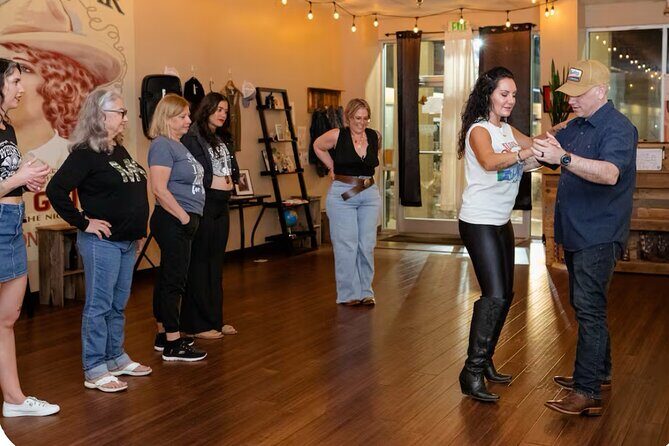
- No partner required: you can come solo or as a couple and still learn lead/follow
- Professionally trained instruction: technical teaching geared toward real honky-tonk dancing
- Small group size: up to 20 people, so the class doesn’t feel like a cattle call
- Water included: complimentary bottled water to help you stay fresh for practice
- Two-step vs country swing focus: some nights lean more toward country swing—good to know before you go
Two step and country swing, taught the way you’ll use it

Nashville is famous for line dancing and barroom dancing, but two step and country swing feel different when you understand the mechanics. Instead of memorizing moves like a robot, you learn what your body is doing: timing, weight shifts, and how to communicate with your partner through your frame and direction.
The big value here is the teaching style. You’re not just shown a sequence and sent onto the dance floor. You get the terminology and the lead/follow basics so you can make the dance work with different people. That’s why solo travelers usually do well: you’re learning the system, not relying on your own personal partner being ready.
Also, the instructors are presented as technically trained, with connection to NYC training. In plain terms, that means you’re more likely to get explanation than vague “just do this” coaching. And in the class reviews, the pattern is consistent: patient, encouraging teaching that helps beginners feel comfortable.
Where you meet: Music Valley Dr and how to find Suite #142

The class starts at 2416 Music Valley Dr, Nashville, TN 37214. It’s near public transportation, which helps if you’re staying downtown and don’t want to wrestle with parking.
The studio sits in a strip-mall setup, and that’s where a couple of people got tripped up. One review notes it can be tucked away in a strip mall and points to store signage, including Store #104 and Suite #142 (next to a dinner theatre). So here’s my practical advice: don’t treat the address like the whole story. When you’re leaving, check the suite/store number in the confirmation details and give yourself extra time to locate the door.
If you’re using rideshare, it’s a short ride for most visitors, but Nashville traffic can happen. One review mentions an instructor delay tied to traffic, and while it sounds like the situation was handled, it’s still a reminder to aim early rather than right on time.
Your 1-hour plan: what you’re doing the whole time
This experience is about an hour. It’s short, so the structure matters. Expect a fast ramp-up: you’ll learn the core steps first, then add turns and variations, and finish with enough practice that you can repeat the pattern without needing a coach in your ear every second.
Here’s the flow you should picture:
1) Warm setup and basics
You’ll start with the lead/follow concept and the “how to move” foundation. This is where beginners benefit most. If you’ve ever felt lost in dance lessons, it’s usually because nobody tells you what matters. Here, you do get the key terminology and roles.
2) Practice with guidance
Then you’ll go step-by-step. Reviews repeatedly mention time to practice and instruction that feels easy to follow. That matters because quick learning is only useful if you can actually reproduce the steps.
3) Skill-level pacing
The class is described as based on skill level. That means if you’re brand new, you won’t be thrown into advanced footwork. And if you already know a little, the teaching can move you forward once you show you’ve got the basics.
4) Moves you can take to honky-tonks
The idea is to translate what you learn into real Nashville dancing. So you’ll spend the final stretch practicing with the kind of connection and direction you’ll use at a bar, not just on a studio floor.
One more interesting detail from reviews: at least one class included a short line-dance-style element (the “quick quick slow slow” reference). The core promise is two step and country swing, but it looks like the instructor may add a small bonus pattern depending on the group and timing.
Two step basics: what to learn if you want the real rhythm
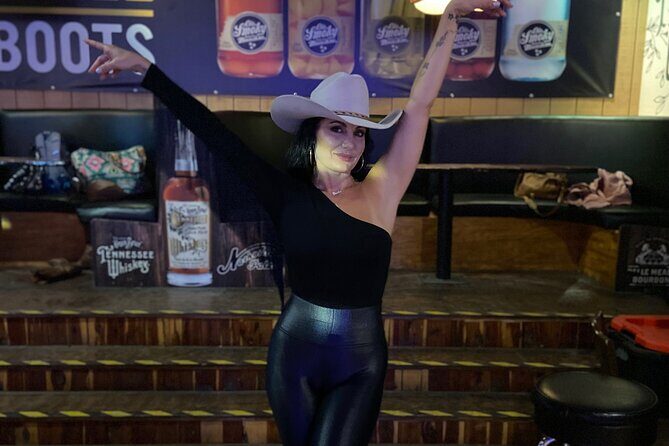
Two step is all about timing and feel. A lot of people struggle because they count steps only, not the weight transfer that makes it look right. In this class, two step is covered, and the teaching is attributed to an instructor named Dana. That’s useful if you’re thinking, I want to learn the actual two step, not just a general country-dance vibe.
What you’ll likely work on:
- Basic two step footwork with clear timing
- How to lead and follow so the couple connection makes sense
- How to avoid the beginner mistake of anticipating what comes next
One review explicitly praises the lesson for teaching not to anticipate and to follow. That’s a big deal. If you keep trying to predict the next move, you’ll tense up and your partner will feel it. Instead, you learn to respond to the lead.
Possible consideration: there was one complaint that the class label seemed to promise two step but ended up being mostly country swing on that night. The owner’s response clarifies that Dana teaches two step and that other instructors handle country swing. So the safest approach is this: if two step is your #1 goal, don’t assume every single night is identical. Ask or confirm the focus when you book.
Country swing: where the turns and connection come alive
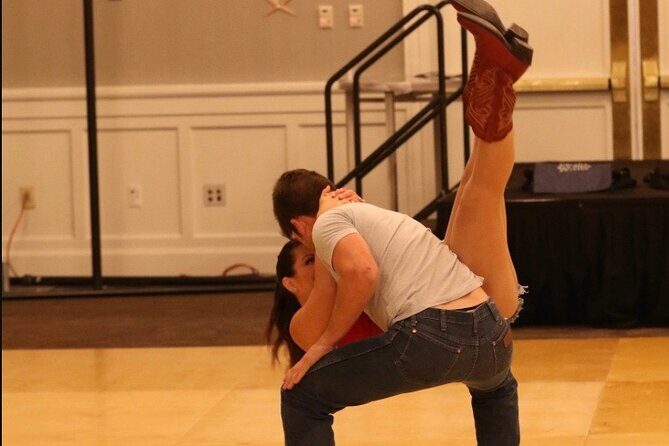
Country swing is the barroom-friendly cousin that makes couples dancing feel playful and flowing. The class frames it as taking dance steps and terminology to the honky-tonks in Nashville. That’s a promise worth caring about, because Nashville nightlife is where you’ll test whether a lesson actually stuck.
In the reviews, the most praised themes for country swing coaching are:
- Clear instructions that don’t talk over your head
- Teachers who adapt quickly to your level
- A relaxed, encouraging vibe
The main instructor is identified as Elizabeth, and she’s also described as the owner in the class responses. That matters because you’re not just getting whoever is available—you’re likely getting someone who’s been running the program.
What you’ll practice:
- Lead and follow in motion, not just standing still
- Turns and directional changes that are easier to do once you understand the connection
- Steps that feel natural enough to repeat, not memorize once
A fun detail: one review calls out “dirty dancing vibes,” but clarifies it was really just playful and fun, not anything inappropriate. If you’re looking for a flirty date activity without awkwardness, this is the kind of tone that tends to work.
No partner needed: how solo travelers fit right in
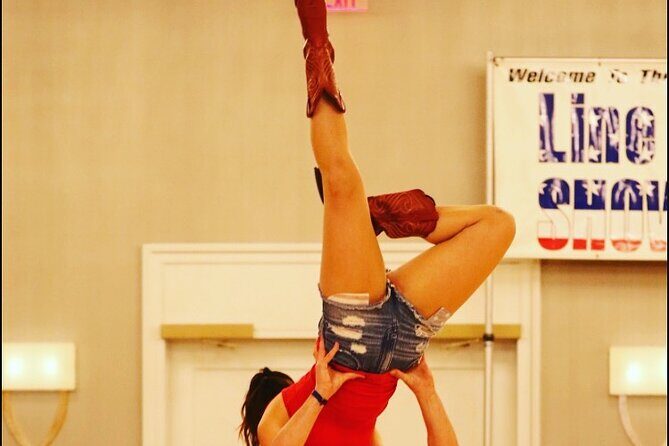
If you’re solo, this is a top pick because you don’t need to arrive with someone who knows the basics—or someone who’s willing to be patient with your feet. The class is set up for people who come alone, and the lead/follow training is built into the lesson.
How you’ll feel during the session:
- Less pressure than a partner-dependent format
- More time to learn the mechanics without constantly worrying about your partner’s confidence
- A structured way to practice with rotation or guided pairing
Reviews also mention couples and groups of friends having a great time. And one review says even people with two left feet got comfortable with the basics. That’s consistent with a lesson designed for first-timers.
Small group size and why it changes the quality
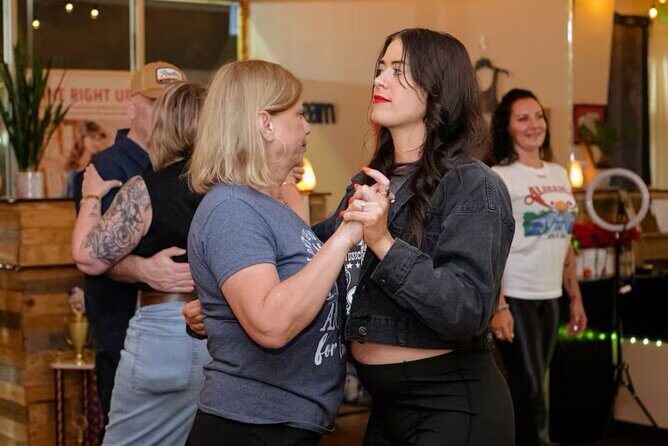
This class caps at a maximum of 20 travelers. In a dance lesson, that number matters. With a larger room, you’d be stuck watching more than doing. Here, the feedback is that the environment is relaxed, and instructors respond to questions.
In several reviews, people call out:
- Patience with novices
- Teachers breaking things down simply
- Plenty of chances to practice
Even when it’s a couples-focused activity, the “small and responsive” setup is why beginners usually leave feeling capable instead of embarrassed. If you’re nervous about being the slow one, this helps.
Price and value: is $45 for an hour worth it?
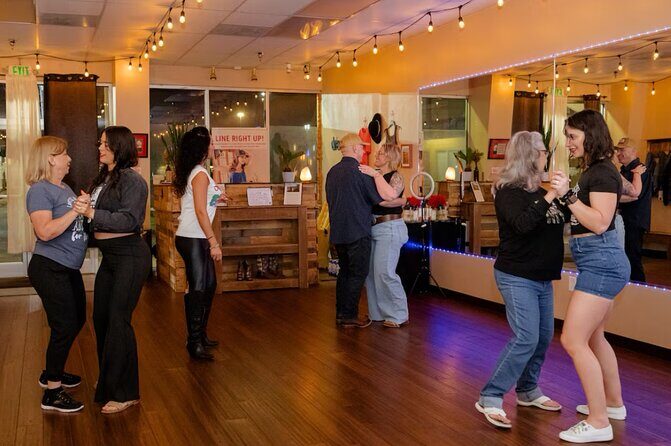
At $45 per person for about an hour, this isn’t a bargain lesson, but it also isn’t “throw money at a club night and hope for the best.” The value comes from three things you can’t really fake:
1) Technical teaching
You’re learning lead/follow, terminology, and timing. That’s what makes a lesson transferable.
2) Time on your feet
You get practice instead of passive watching. Short lessons are only worth it if you’re actively dancing.
3) Beginner-friendly coaching
If you walk in knowing nothing, the class is designed to teach from the ground up. Several reviews emphasize that instructors adapted and moved people forward when they were ready.
For couples, it’s also a useful date-night option: you’re not just paying for the activity, you’re leaving with a skill you’ll use again. One review even frames it as a highlight of the Nashville trip.
What to bring affects value too. Bottled water is included, so you’re not paying extra for hydration. Alcoholic beverages aren’t included, but you can bring your own beverage (BYOB). If that’s your style, it can make the experience feel more relaxed without inflating the core cost.
What to bring (and what to skip)
The practical checklist is simple.
Bring:
- A beverage if you want one (BYOB is allowed)
- Comfortable clothes and shoes you can move in
- Water-friendly mindset since water is provided, but you can still bring your own if you prefer
Skip:
- Expecting alcohol to be included. It isn’t.
- Showing up with rigid expectations about the exact two step share on every night.
Also remember: this is described as requiring moderate physical fitness. That doesn’t mean athlete-level effort, but it does mean you should be comfortable standing, stepping, and repeating movements.
Comfort details: the room can get hot
One review mentions the room was very hot, making it harder to enjoy. Another review calls the studio relaxed and comfortable, including the AC being on in that response.
So your real-world takeaway is this: wear breathable layers. If you’re sensitive to heat, plan for it. And speak up if you’re uncomfortable—one instructor response suggests they could have made adjustments if notified.
How to use what you learn after class
This isn’t just about the hour. The point is taking your new muscle memory to a Nashville dance floor.
Here are the most useful habits to practice:
- Focus on responding to the lead, not guessing the next move
- Keep your movements controlled enough that your partner can follow you
- Repeat the basics at home. One review says they practiced in the kitchen, and honestly, that’s the fastest way to keep it from evaporating
If you do this, you’ll notice something quickly: you stop thinking so hard. The class gives you the framework. Your job after is just repetition.
Who should book this class—and who might want a different option
Book it if you:
- Want a beginner-friendly Nashville activity that teaches you real dance fundamentals
- Are traveling solo and don’t want to scramble for a partner
- Want a fun date night with a skill at the end
- Prefer structured, patient instruction over random barroom trial and error
You might want to double-check your expectations if:
- You’re specifically hunting for two step only, every single time. One complaint suggests some nights emphasize country swing more. The owner’s clarification indicates two step is taught by Dana, so it’s a matter of instructor and night-to-night focus.
Should you book Country Fusion’s Two Step & Country Swing Class?
Yes, if you want a small, patient lesson in Nashville dancing. The combination of lead/follow teaching, beginner pacing, and a non-partner format makes it a strong value at $45 for an hour.
I’d book it with confidence if you’re open-minded about the balance between two step and country swing and you mainly want to leave feeling capable. If two step is your obsession, send a quick message or confirm the focus when you book. Either way, you’re walking into a studio lesson designed to get you moving, not just watching.
FAQ
How long is the dance class?
It runs for about 1 hour.
Do I need a partner to join?
No. You can join without a partner.
What is the price per person?
The price is $45.00 per person.
What’s included in the class?
Bottled water is included.
Are alcoholic beverages included?
No. Alcoholic beverages are not included; BYOB is allowed.
Where does the class meet?
The meeting point is 2416 Music Valley Dr, Nashville, TN 37214.
Is the class limited in size?
Yes, the class has a maximum of 20 travelers.
What language is the class taught in?
It is offered in English.
What is the cancellation policy?
Free cancellation is available up to 24 hours in advance for a full refund. Canceling within 24 hours doesn’t receive a refund.
Are service animals allowed?
Yes, service animals are allowed.
]]>This beginner-focused Nashville class turns that jitters-to-grins moment into a real, doable plan for learning two line dances in about an hour. It’s built around honky-tonk style fun, upbeat coaching, and recordable practice so you don’t leave with just vague memories.
I especially love how the instruction keeps you moving step-by-step without making you feel silly. I also love the video and tripod setup, so you can replay what you learned and actually build confidence for your next night out.
The only drawback: with the class running about an hour, you should expect basics and a couple routines, not a full dance repertoire you can freestyle with on Day 1.
Key Highlights Worth Noting
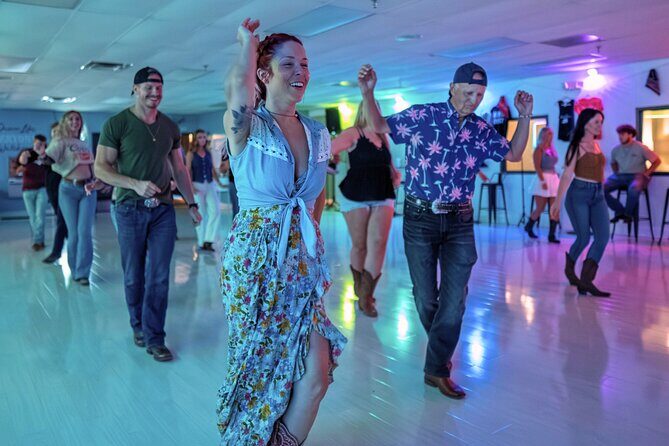
- Beginner-first pacing that starts slow, then adds speed once your feet catch on
- Two dances in one session, enough to use at honky-tonks or parties right away
- Tripods and videographer so you get a practical keepsake, not just a vague memory
- Instructors with real stage energy, including Rick and Nicole as seen in the class experience
- Free parking and BYOB policy that helps keep your Nashville night both easy and fun
Nashville Line Dancing, Built for Real Beginners
If you can clap in time and walk forward without tripping over your own optimism, you’re in the right place. This one-hour beginner class in Nashville is designed to take you from nervous start to repeatable steps, with a layout that mirrors how line dancing is taught in the real world: learn one piece, drill it, then stitch the pieces into a full routine.
It also helps that the class feeds directly into the Nashville vibe. You’re not learning in a vacuum. You’re learning dances that fit the country music mood people come to town for, so it’s easier to picture yourself using the moves when you’re back on Broadway or at a friend’s gathering.
The session is English-language instruction and geared to ages 8+, so it works for mixed groups, multigenerational trips, and first-time dancers who worry they’ll be the only ones who look lost.
The One-Hour Flow: How You Actually Learn
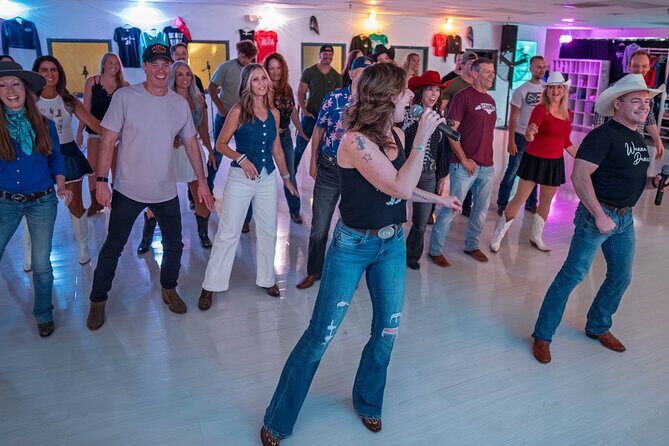
The biggest value here is the rhythm of the lesson. You don’t get thrown into a full routine and told to survive. You build it, piece by piece, at a speed that matches beginners.
Starting slow and building the first step
You begin at a slow pace, with the instructor teaching a beginner-friendly Nashville line dance step by step. This is the part where you learn the basics of timing and foot placement, not just what to do, but when to do it.
Then you add the next step. After that, another. The goal is to get you to the point where you can follow along without needing to memorize every count instantly.
Practice runs with the music turned up
Once you have enough of the dance in your body, you do practice runs. This is where the instruction tends to click for most people: you stop thinking about every movement and start trusting the pattern.
Then comes the country music phase. The music gets cranked, and you practice the full dance with the momentum it’s meant to have. That’s when it stops feeling like a class and starts feeling like an activity.
The final run plus recording your progress
The class doesn’t just teach the steps. It also captures them. There’s a videographer recording the fun, and you’re supported with tripods so you can record yourself and your group too. That means you get a keepsake you can use while the moves are still fresh in your mind.
Instructors Who Make Beginners Feel Capable
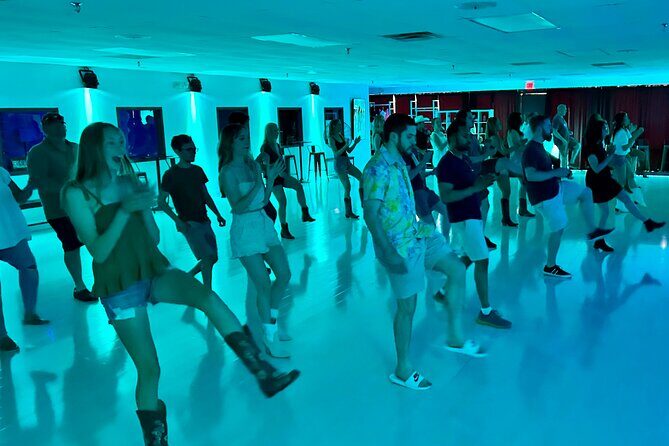
The instructors are a huge part of the experience. You can tell from how the class is described: the teaching leans on humor, patience, and repetition, so you’re not left guessing.
Names show up often in the class experience, including Rick and Nicole. People also mention Natalie and Alyssa in a very positive way. What matters more than the name is the teaching style: instructors keep you comfortable enough to try, then they correct you in a way that feels doable.
If you’re worried about looking awkward, you’ll likely like the way this is handled. The atmosphere is friendly, and the coaching emphasizes confidence. More than one person notes that they started nervous and ended up fully engaged, which is exactly what you want from a beginner lesson.
Studio Setup, Parking, and Getting There Without Stress
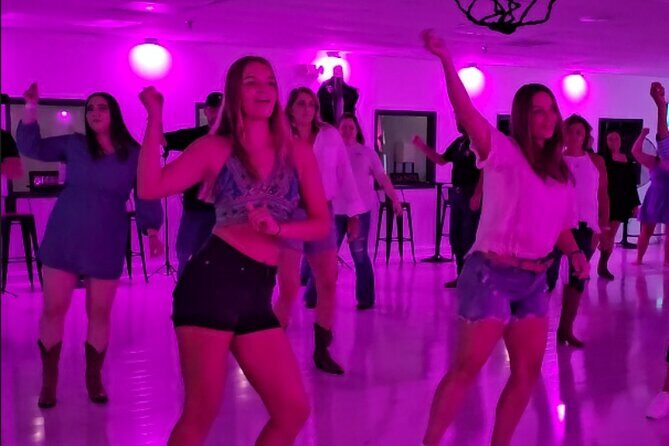
Logistics matter more than most people think. Nashville has crowds and traffic at the wrong times, and a dance class is not the moment you want to be late or frazzled.
This class takes place in a clean, comfortable studio space, and you can plan to reach it with a short drive or Uber. It’s also set up with free parking, which can save money compared with rideshare everywhere in a busy city.
The meeting point is:
Turn Their Heads Nashville Line Dancing Lessons And More
830 Fesslers Pkwy, suite 114, Nashville, TN 37210
It’s also described as near public transportation, and service animals are allowed. If your group is coming from different hotels or rental cars, this is the kind of location that tends to work smoothly.
The Video Keepsake: Why It’s More Than a Nice Extra
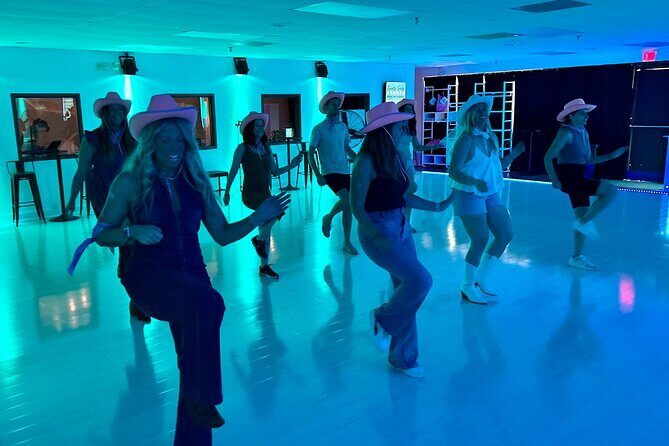
A lot of activities give you a memory. This one tries to give you something you can use.
You’ll learn the steps, practice them, and then you’ll have the chance to record. Tripods are provided, and a videographer captures the session. That professional video is described as a short, post-friendly keepsake.
There’s also mention of photos and videos turning up after the class, which makes this great for groups. It’s one thing to remember you had fun. It’s another thing to share your attempt at a two-step routine you can actually replicate later.
Practical tip: if you care about getting useful footage, arrive a little early so you’re not adjusting your recording device while your nerves are peaking.
Honky-Tonk Reality: What You Can Do After the Class
This is where the class earns its place on a Nashville itinerary. You don’t just learn steps. You learn enough to feel like you belong in the environment that made Nashville famous.
Line dancing is social. It’s built for groups and shared rhythms. After one hour, you’ll likely have enough familiarity to jump in for a dance at an event, or at least to hold your own during a party playlist.
Many people describe the class as a confidence boost for hitting honky-tonks or Broadway. Even if you don’t plan to dance every night, learning two routines helps you participate instead of standing around watching everyone else.
BYOB and Group Energy: Plan Like It’s a Night Out
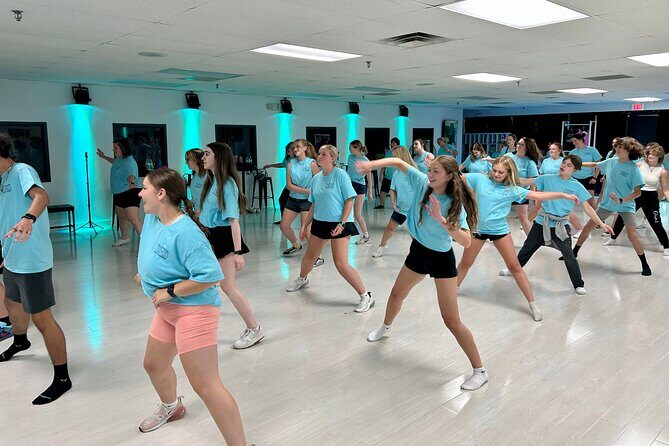
This class includes a BYOB policy, noted as responsible. That matters because it changes the feel of the evening. You’re not stuck in a rigid, sterile training vibe. It’s meant to be light, social, and fun.
At the same time, you should treat it like a structured activity. Bring what you can enjoy responsibly, stay hydrated, and remember that you’ll be using your feet for the whole hour.
The class also fits groups well. Friends trips, couples visits, and families all show up in the way people describe the experience. If you want something that doesn’t require advanced dance skills, but still feels like you did something uniquely Nashville, this is a strong contender.
Who This Class Suits Best (And Who Might Want Something Else)
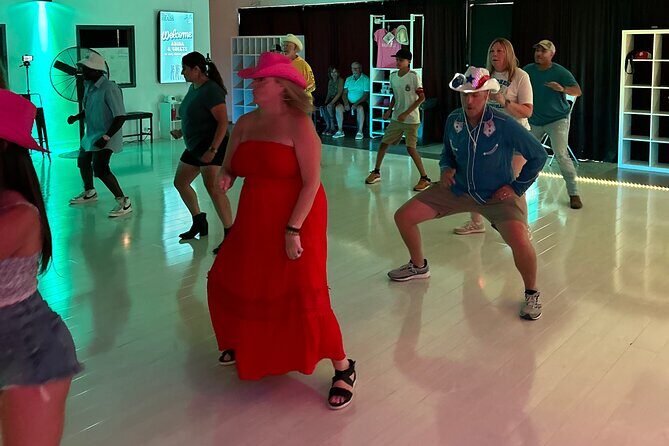
Great fit if…
- You’re a first-timer who wants to learn without embarrassment
- You’re short on time but still want a hands-on Nashville activity
- You like music and movement and want your day to end with a real story
- You’re traveling with friends or family and want an activity everyone can participate in
The class is also said to be friendly for all skill levels, but it’s clearly built around beginners. That makes it a smart choice even if your group includes people who think they cannot dance.
Consider a different option if…
You’re looking for long training, advanced choreography, or a deep catalog of routines. With the session at about one hour, the focus is on basics and a couple dances. You’ll leave with usable steps, but not mastery.
Also, if you hate being recorded or don’t want any video involvement, the videographer and recording setup might be a dealbreaker. The class is designed to capture the experience.
Value: Is $39.97 Worth It?
At $39.97 per person, you’re paying for more than a casual dance night. You’re buying guided coaching that takes beginners from zero to repeatable steps in one hour.
The value gets stronger because the cost includes:
- real-time instruction with humor and repetition
- the time structure that helps you learn instead of just watch
- tripods so you can record
- a videographer and a professional short video afterward (described as post-friendly)
In other words, you’re not just paying for the instructor. You’re paying for the whole learning system: practice, correction, and a keepsake that makes the lesson stick.
If you’re on a tighter budget, this still compares favorably with the cost of a night out where you might only get food and a show. This class gives you both entertainment and a skill you can use again.
A Few Practical Tips Before You Go
These come from the way the class is set up and how beginners typically do best:
- Wear shoes you can move in comfortably. You’ll be repeating steps and shifting your weight a lot.
- If you’re bringing friends, decide in advance who’s filming so you’re not competing for the tripod.
- Go in expecting to laugh. The instruction style is clearly built to reduce fear and keep things relaxed.
One more thing: treat the first run as the warm-up for learning, not a test of your dance identity.
Should You Book This Nashville Line Dance Class?
I think you should book it if you want an easy, fun, Nashville-style activity with real payoff. You get beginner-level instruction, enough time to learn two dances, and the recording support that turns the class into a memory you can revisit.
Skip it only if you want something more advanced, longer, or you’re uncomfortable with video being part of the experience. If you fall anywhere in the middle, this class is the kind of “short time, big fun” plan that works for most trips.
If you’re even slightly curious about line dancing, this is a low-risk way to try it, learn the basics, and walk into the honky-tonk world feeling like you can at least participate.
FAQ
How long is the beginner line dancing class in Nashville?
The class runs for about 1 hour.
What is the price per person?
The price is $39.97 per person.
What language is the class taught in?
The experience is offered in English.
Do we get video or recording of the lesson?
Yes. A videographer records the session, and tripods are provided so you can record too. The experience also includes a short professional video described as perfect for posting.
Is BYOB allowed?
BYOB is allowed, noted as responsibly.
Where is the class meeting location?
You meet at Turn Their Heads Nashville Line Dancing Lessons And More, 830 Fesslers Pkwy, suite 114, Nashville, TN 37210.
What ages can participate?
The class is recommended for ages 8+.
What is the cancellation policy?
Free cancellation is available. You can cancel up to 24 hours in advance for a full refund.
If you want, tell me your group size and whether anyone is totally new to dancing, and I’ll suggest the best way to plan what to bring and how to make the most of the hour.
]]>This hands-on session happens right at the Goo Goo Chocolate Co. flagship in the middle of downtown, where you get a quick history lesson and then jump into making your own Goo Goo Cluster-style candy. You’ll also sample multiple chocolate options so you’re not just standing around watching.
What I like most is how practical it feels: you actually work with the candy process, including a chocolate machine moment, instead of doing a passive tour. I also love the energy of the instructors—names like Rayna and RK show up in the class experience, and they keep things moving with humor and clear guidance.
One consideration: the class is short (about an hour, sometimes a bit longer), and everyone in the classroom needs a ticket. If you’re hoping for a long, slow “sit and stroll” activity, plan for something more bite-sized.
Key highlights at a glance
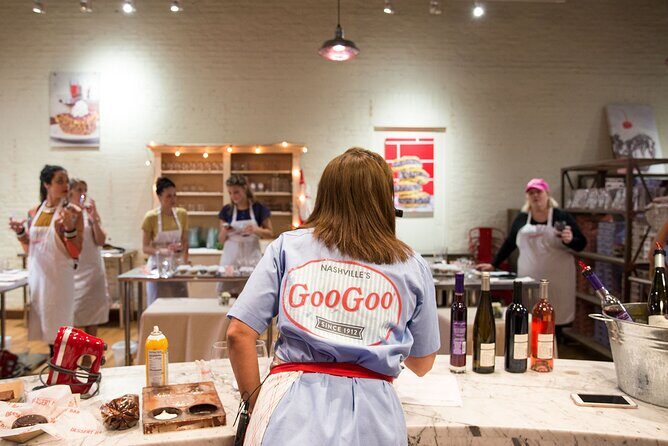
- Downtown meeting spot at 116 3rd Ave S, right in the Goo Goo shop area
- Small group size with a maximum of 8 travelers in the classroom
- Hands-on candy making with a chocolate machine experience
- Customize your premium Goo Goo by choosing from included ingredients
- Tasting flight included plus the small Lil Goo sample of the Original Cluster
- Take-home apron plus extra goodies and purchase discounts
Entering Goo Goo Chocolate Co in the heart of downtown Nashville

You’ll start at the Goo Goo Chocolate Co at 116 3rd Ave S, Nashville, TN 37201. The location matters more than you’d think. If you’re doing Nashville on foot, this is one of the more convenient “activity blocks” because you can pair it with nearby sights and still be back out on the street fast.
Check in is simple—this runs with a mobile ticket, and it’s offered in English. The class also stays small (max 8 travelers), so it doesn’t feel like you’re being funneled through a factory line. You’ll be close to the action, with enough room to focus when it’s time to make candy.
The “A Taste of Goo Goo” story: what the class teaches you
The class is built around a very Nashville origin myth you can actually explain afterward. In 1912, Nashville is credited with creating America’s first combination candy bar. That’s the backdrop for the Goo Goo Cluster, which is essentially a round-ish mound of caramel, marshmallow nougat, and fresh roasted peanuts, all coated in milk chocolate.
This matters for two reasons. First, it gives the candy a real identity, not just a brand name. Second, it helps you understand why the flavor combo works: caramel + nougat + peanut has that sweet-salty balance that keeps people coming back.
During the session, you’ll get a tasting flight alongside the history, then you’ll move into making your own premium version. So the story isn’t floating in the air—it lands right on your tongue.
Your tasting flight: what you’ll try before you make your own
You’ll sample several Goo Goo offerings in the classroom experience. The typical lineup includes a tasting flight of various chocolates, plus the Lil Goo sample, which is a small taste of the Original Goo Goo Cluster. You’ll also get to experience the signature Original Cluster itself—caramel, marshmallow nougat, fresh roasted peanuts, all covered in milk chocolate.
And yes, you’ll taste again at the point where the class shifts from history to hands-on candy making. That’s a smart pacing choice. It helps you notice flavor and texture differences as you go from tasting to building.
If you’re the kind of person who buys chocolate and then second-guesses whether it’s “too sweet,” this flight helps you calibrate fast. You’ll learn what you personally like before your own candy is finished.
Candy making in real time: how the class flows
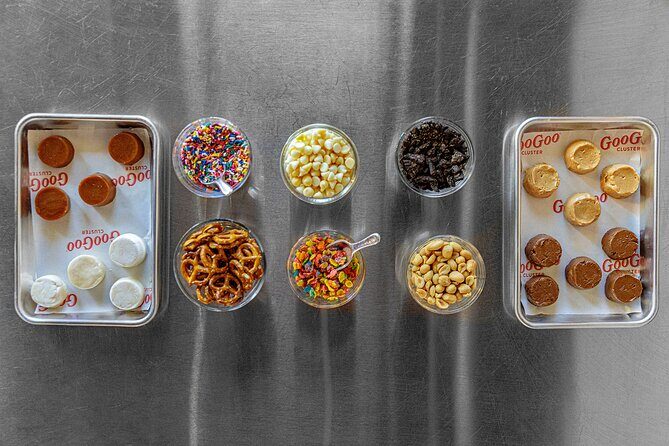
This is not a lecture with a snack at the end. It’s an hour-plus session built around doing the steps yourself. The highlights specifically call out a chocolate machine experience, and the class is designed to keep the momentum going so you don’t feel lost.
Here’s the practical rhythm you should expect:
1) Start with tasting + instructions so you understand the candy components.
2) Move into hands-on candy making with the chocolate machine moment.
3) Customize your premium Goo Goo candy using different included ingredients.
4) Finish with take-home items and time to enjoy what you made.
Group size helps here. With a maximum of 8 travelers, the instructor can actually keep watch, offer fixes, and help you stay on track when you’re working with something sticky and timing-sensitive.
Also, the size of what you make is decent. In other words, this isn’t a “tiny bite for a photo.” You’ll leave with something substantial enough to feel like a real souvenir.
Customizing your premium Goo Goo cluster: choosing ingredients and designing yours
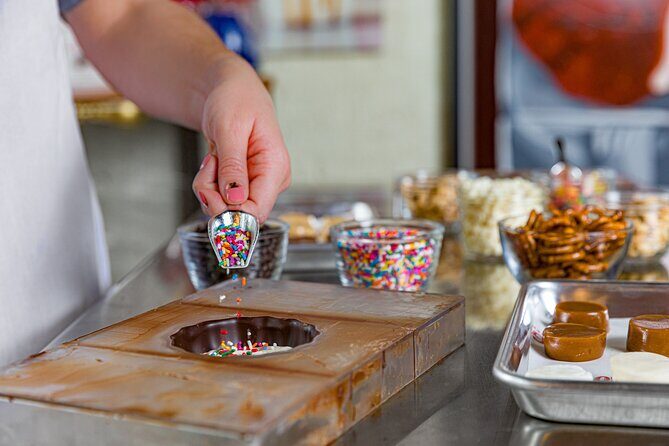
One of the fun parts is that you don’t just assemble a single pre-set candy. You’ll design and make a premium Goo Goo candy from different ingredients, selecting from the included options.
That customization is where the class becomes more than a tasting. It turns into a small creative project. You get to think through your preferred balance—sweetness, crunch, and that peanut-meets-caramel vibe—then apply it to what you build.
If you’re doing this as a couple, it’s also a natural “compare and trade bites” moment. If you’re doing it as a family, it gives kids or teens a job that feels like theirs, not something they’re being dragged through.
Who teaches the class and why it matters
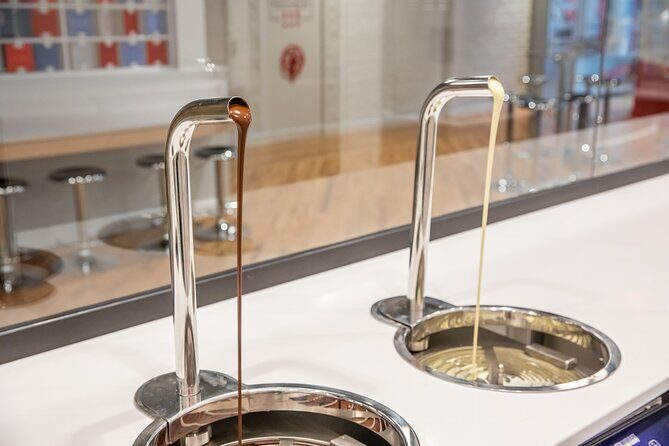
In a short class, the instructor quality really shows. Reviews repeatedly highlight instructors by name—Rayna and RK come up as energetic, funny, and knowledgeable, with a talent for keeping everyone engaged. Other names that appear include Brenna and Sophia, plus CB and BC in different experiences.
What you want in this setting is someone who can explain steps clearly, then switch to hands-on help when you need it. The good news is that the class is run with that in mind: the flow is structured, but the teaching stays personal.
So if you’re worried you’ll feel awkward making candy in front of strangers, don’t be. With small groups and instructors who stay patient, it’s more like a guided workshop than a show.
What you take home: apron, candy, and purchase perks

You’ll leave with multiple take-home elements. The class description includes classic clusters and a take-home apron. That apron is a nice detail because it turns the experience into something you can remember and reuse, not just a one-time snack.
You should also plan on extra treats during the class. People mention complimentary goodies alongside the tasting and candy making. And there’s usually a perk when you shop afterward—reviews mention discount codes for purchases.
If your group is already excited about buying Goo Goo in the shop, it’s worth going into the class with that in mind. The class doesn’t just end when you’re done making candy; it nudges you toward grabbing the flavors you liked most.
How long it really takes, and how to schedule it
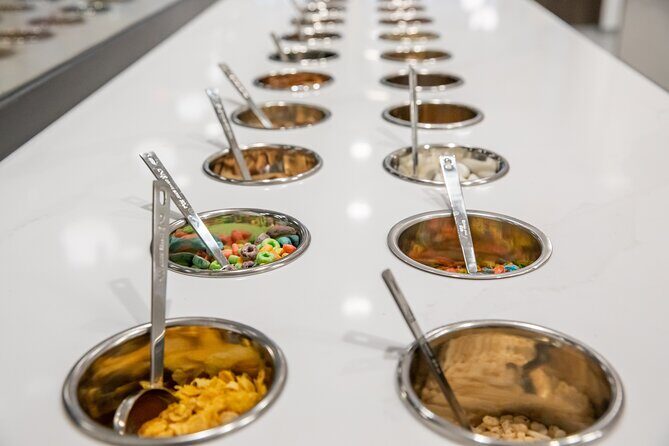
The tour duration is listed at about 1 hour. Some experiences run a little longer (think around an hour and some change), which lines up with a class where you’re tasting, learning, and then making something from start to finish.
Plan your day like this:
- If you’re on a tight schedule, treat it as a firm “block” and build in a small buffer around it.
- If you’re doing a broader Nashville day, slot it early or mid-day so you’re not trying to fit it around a late dinner.
Because it’s downtown, you can easily connect it to nearby activities without needing a car shuffle. And the small group size means you’re less likely to feel stuck behind a long line.
Families, kids, and the age question that actually matters
Children have specific guidance: anyone under 12 must be accompanied by an adult, and all parties in the classroom must purchase a ticket. The experience also recommends kids 5 and over for best enjoyment.
That recommendation makes sense. With candy making, kids need enough patience to follow steps and handle the tools safely with guidance. In practice, the class tends to work well across ages when an adult is actively involved.
So if you’re bringing a younger child, don’t assume it’s “drop-off friendly.” It’s more of a shared activity—parents should plan to stay engaged.
If your group includes teens, this can be a surprisingly good break from typical sightseeing. It’s hands-on, it’s social, and it ends with something you made.
Value for $55: why this price can work
At $55 per person, this isn’t the cheapest activity in downtown Nashville. But it also isn’t priced like a basic tasting. You’re paying for several things at once:
- a guided history + instruction component
- a tasting flight
- a hands-on candy making session that includes a chocolate machine experience
- take-home items like an apron
- and you likely leave with extra candy and shopping perks like discount codes
If you compare it to booking a generic walking tour plus buying candy separately, this can be a better deal because everything is bundled. It’s also a one-hour activity, so you’re not paying for a half-day commitment.
It’s best value if you want something different from bars and typical attractions, and if your group enjoys tasting as much as building.
Practical notes before you go
A few details help you have a smoother experience:
- It’s offered in English with a small classroom size.
- Service animals are allowed.
- It’s near public transportation, so you can reach it without stressing about parking.
- You’ll want to keep your phone charged for the mobile ticket.
Also, bring the right mindset. This class rewards attention. If you show up expecting a quick photo-op only, you might miss the fun parts. If you show up ready to make and taste, you’ll feel satisfied when you walk out.
Should you book the Nashville Goo Goo Chocolate tasting and candy making class?
Book it if you want a short, sweet, downtown activity that mixes local food history with real hands-on making. It’s especially worth it if your group includes chocolate fans, families with kids around age 5+, or anyone who wants a break from the usual Nashville rhythm.
Skip it if you’re looking for a long guided tour, a deep museum-style history session, or an activity that doesn’t require participation. This is a do-something class, and it works best when you lean into it.
If that sounds like your kind of day, this is a very easy “yes.” The combination of tasting, customization, and take-home candy makes it feel like more than the sum of its parts.
FAQ
How much does the Goo Goo Chocolate tasting and candy making class cost?
The price is $55.00 per person.
How long is the class?
It runs for about 1 hour, approximately.
Where do I meet for the class?
You’ll meet at Goo Goo Chocolate Co, 116 3rd Ave S, Nashville, TN 37201.
What do I get to taste during the class?
You get a tasting flight of various chocolates, a small Lil Goo sample, and you’ll also experience the Goo Goo Cluster that includes caramel, marshmallow nougat, fresh roasted peanuts, and milk chocolate.
Can kids participate?
Yes, but children under 12 must be accompanied by an adult. The experience recommends children 5 and over for best enjoyment, and all parties in the classroom must purchase a ticket.
Is the class offered in English?
Yes, the class is offered in English.
How large is the group?
The class has a maximum of 8 travelers.
Do I take anything home?
Yes. The class includes classic clusters and a take-home apron, plus you make a premium Goo Goo candy during the session.
What if the class gets canceled due to weather or I need to change plans?
You can cancel for a full refund up to 24 hours before the experience starts. If it’s canceled due to poor weather, you’ll be offered a different date or a full refund.
]]>This one-hour line dancing class gives you a real taste of Nashville on Broadway, taught in historic honky-tonk rooms. I love that it’s built around easy step-by-step coaching (not intimidation) and that you leave with a free keepsake video so you can replay your moves for family and friends.
The only real drawback is logistics: classes run upstairs in bars, with no elevator. If stairs are hard for you, plan an alternative. Otherwise, it’s a fun, no-judgment way to get the “I’m doing Nashville” feeling fast.
Key highlights you’ll care about
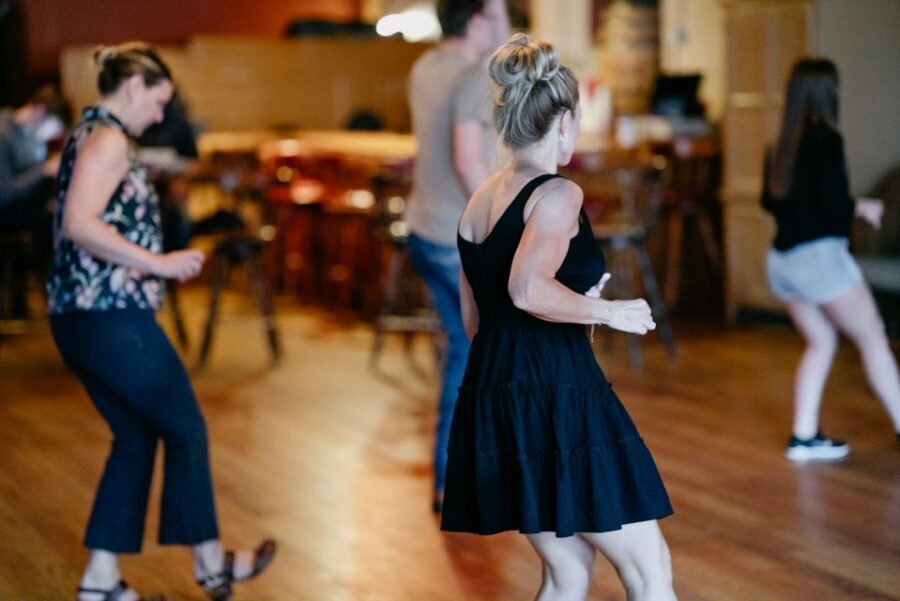
- Historic Broadway honky-tonk rooms where you learn like a local
- Two dances in one hour, taught back-to-back at your level
- You vote on the routines, starting simple and then leveling up
- Strong beginner support from patient, upbeat instructors like Jason, Lauren, and Lisa
- Free class video (sent after an approximate two-week turnaround)
- 30–50 person group energy, so go ready to laugh and move
Why a Line-Dancing Class Belongs on Your Broadway Plan
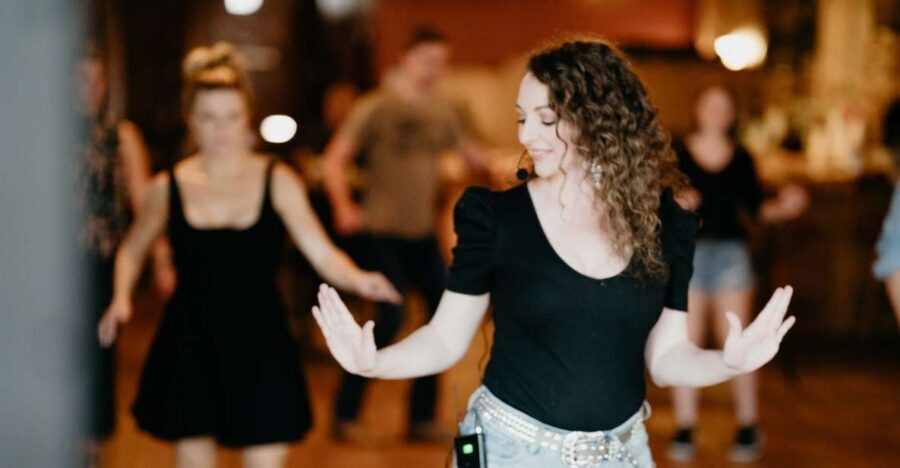
Nashville isn’t just neon signs and music rows. It’s also what happens when strangers decide to move in sync, right there under the bar lights. This class hits that sweet spot: it’s structured enough that you can actually learn, but playful enough that you don’t feel like you’re studying choreography for homework.
I like that the vibe follows a simple rule: Fake It Til You Make It. That motto keeps the pressure low. You start by copying steps, then you build confidence until the routine clicks. And yes, it turns into a real workout. Expect to break a sweat more than you expect to sit and watch.
If your group includes non-dancers, this is a great match. The teaching is designed to work for kids and adults together, so you’re not stuck hoping your most rhythmically challenged friend suddenly becomes a pro.
Where You’ll Dance: Three Broadway Honky-Tonks (And the Upstairs Part)
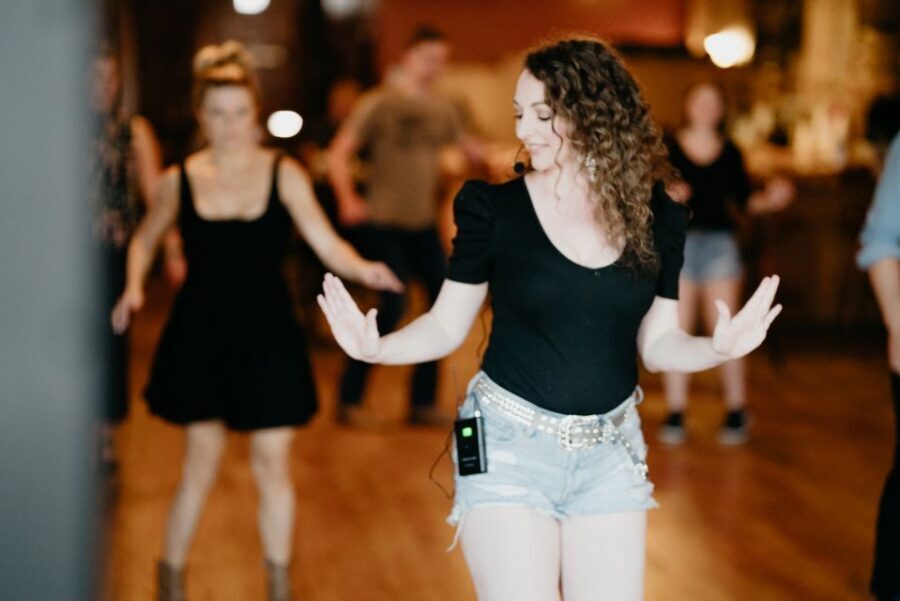
The class takes place in real, historic honky-tonk bars on Broadway, in three nearby venues within about a block of each other. Your exact location changes day to day, and the morning of your class you’ll get a text with the address. The three possible stops are:
- Bootleggers Inn (207 Broadway, Nashville, TN 37201)
- Whiskey Bent Saloon (306 Broadway, Nashville, TN 37201)
- Show Pony (121 3rd Ave South and Broadway)
Start this part by planning for Broadway traffic. Classes start promptly, and you’ll want time to check in with your instructor before the music begins. If you can’t receive texts, you’ll need to contact the provider so they can send the location by email.
One key thing: the class rooms are upstairs, and there’s no elevator. Also, the class is not suitable for wheelchair users. If stairs are a factor for anyone in your group, this is where you need to make a call early.
The 1-Hour Format: Meet, Vote, Learn Two Dances
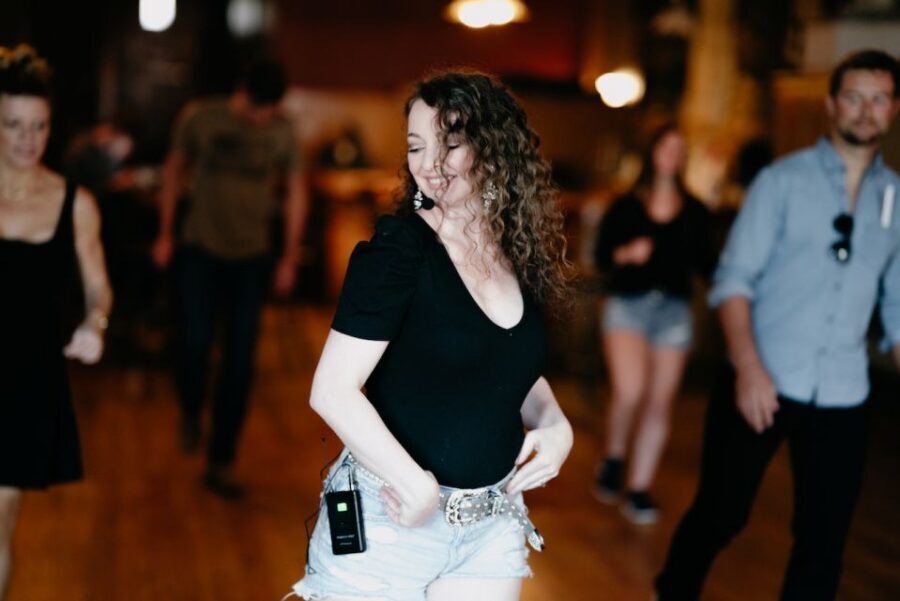
This is not a “watch for 45 minutes then try one step” situation. In one hour, you learn two line dances, taught back-to-back, with a built-in ramp from beginner-friendly to more challenging.
Here’s the flow:
- Meet-and-greet with your group and instructor
You’ll get the basics of how the class will run, then you’re ready to move.
- Warm-up dance to get comfortable
The instructor demonstrates three beginner-level dances, then your group votes on which ones you’ll practice. That voting part matters because it helps the class pick routines that fit the energy of your specific group.
- Second dance with more difficulty
After the warm-up, your instructor demonstrates three more challenging dances and you vote again. Then you focus on the choreography you chose—so you get that “we leveled up” feeling without it turning chaotic.
The instructors teach at an easy pace, aiming to build confidence first. You’ll work toward a fuller group choreography, but the emphasis is on learning the steps clearly, not perfecting them instantly.
Instructors Make It Work: What You Get From Jason, Lauren, and Lisa
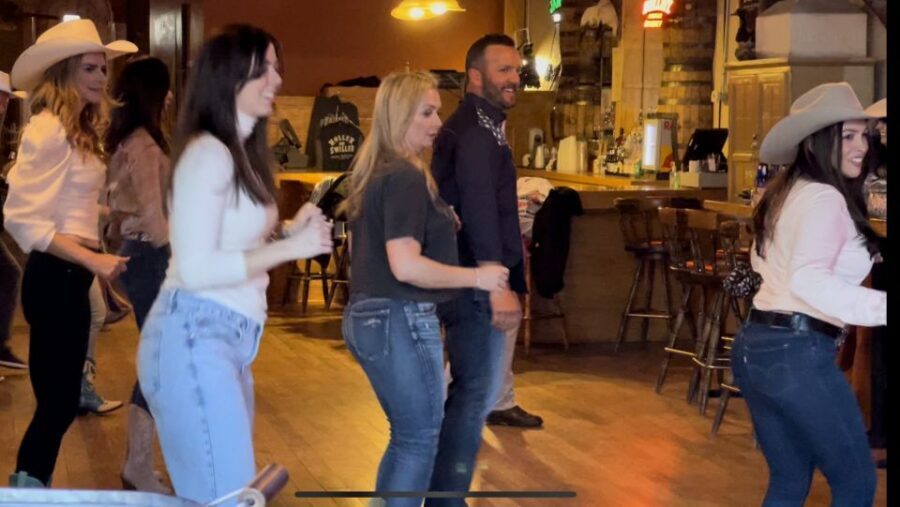
The biggest pattern in what you’ll want from this kind of class is simple: you need an instructor who can explain steps in a way your brain understands fast. That’s exactly what the teachers here are known for—especially instructors like Jason, Lauren, and Lisa (and they also rotate in others such as Alissa, Mila, Josh, Drew, Mallory, Austin, and Jadon, depending on the day).
What this looks like in practice:
- Steps are broken down so you can catch on quickly, even if you don’t dance much.
- Instructors keep the class upbeat, so mistakes turn into laughs instead of stress.
- You’re not treated like a burden for slowing people down. The goal is fun, and the teaching is built for all skill levels.
That matters, because line dancing can look intimidating from the outside. In a good class, that intimidation disappears the moment someone makes the routine feel doable—one step at a time, counted cleanly, with corrections that don’t kill your momentum.
If you like learning by doing (and you probably do if you’re reading this), this is the right format. You’ll move, adjust, and start getting it while the song is still playing.
What You Pay ($38) and What You Actually Get Back
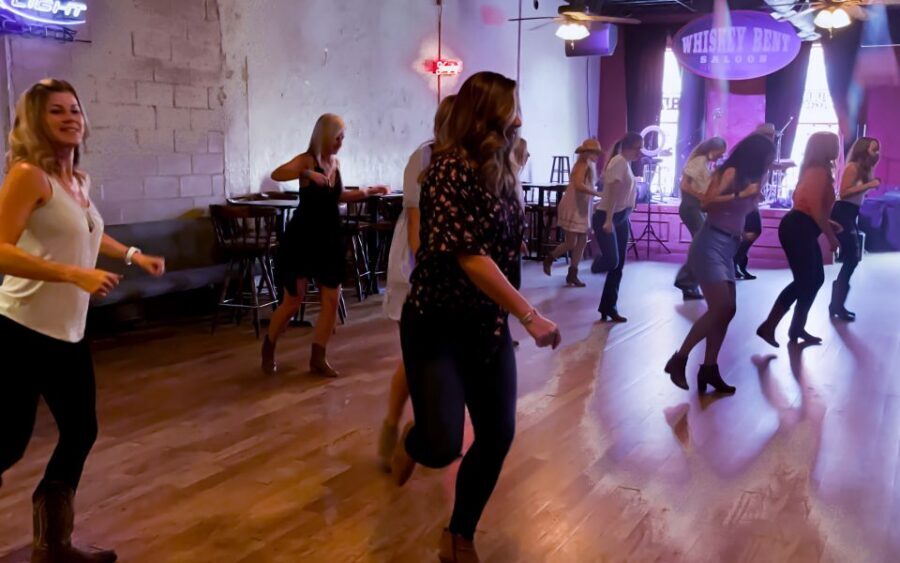
At $38 per person for a one-hour class, you’re paying for three things: instruction, access to a real venue, and a keepsake you can share.
Here’s what’s included:
- 1-hour class inside the honky-tonk venue
- Dance instructor
- Class video (your free souvenir)
- Bottled water
- Indoor venue
- Audio guide included (English)
Drinks are available for purchase, but food is not included, so eat before you go if you’re hungry. One more practical note: the video keepsake has an approximate two-week turnaround, and you’ll typically need to leave your email address with your instructor so they can send it.
Is it good value? For me, yes—because the class isn’t just “a quick activity.” You walk out with:
- A real new skill (two routines you can actually attempt again)
- A video you can use to remember and practice
- A Broadway-adjacent experience that doesn’t require prior dance knowledge
Also, if you’re traveling with kids, teens, or a mixed-age group, this can outperform a lot of “sit-and-watch” experiences. You’re all doing the same thing together.
“Easy Pace” Still Means You’ll Feel It
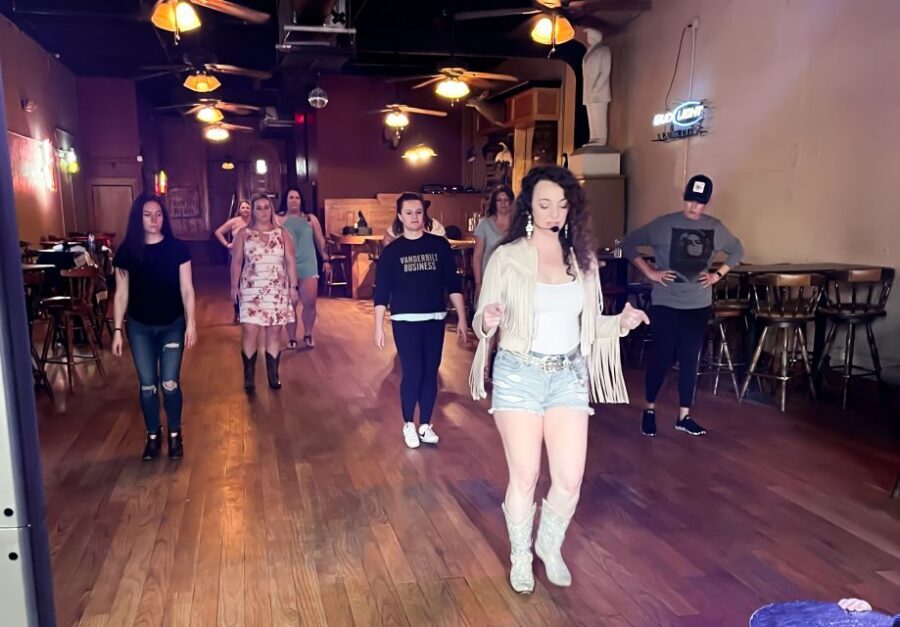
This isn’t a gentle stretching class. It’s high energy, and you should expect to break a sweat. The teaching stays accessible, but the format is built around repetition and full-song sections as you improve.
I’d plan your body like it’s an hour of active fun:
- Wear comfortable shoes (not fashion sneakers that hate quick pivots).
- Wear comfortable clothes you can move in.
- Hydrate—water is included, and it’s wise to sip through the class.
And if you’re traveling in a group, line dancing is a rare activity where everyone can participate, even if your group contains people who are shy, nervous, or sure they have two left feet. The teaching style is built for that reality, and the class stays friendly.
Timing, Checking In, and Avoiding Broadway Chaos
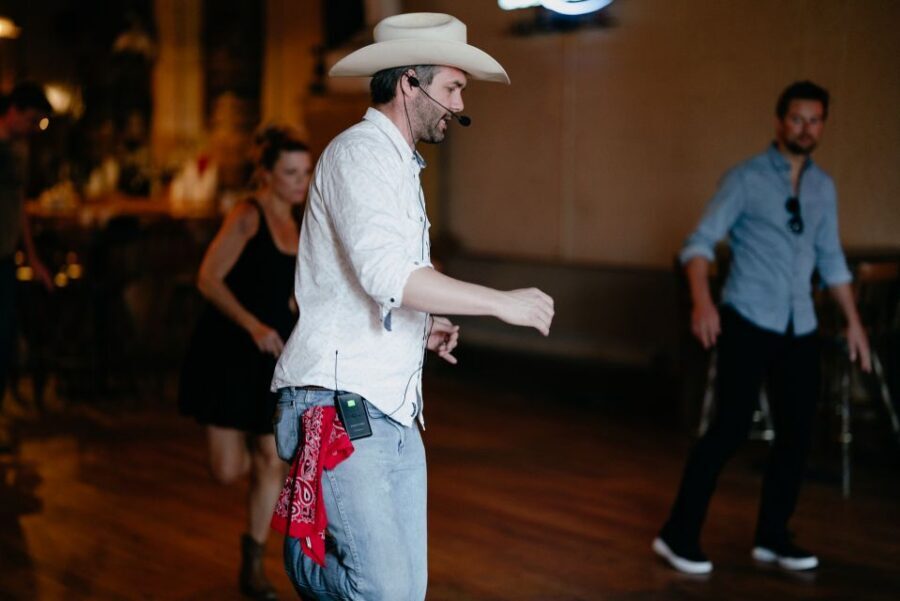
The class starts promptly, so don’t treat this as an “arrive whenever” stop. Broadway can slow you down, especially around showtimes and weekends, so build in buffer time.
A simple plan:
- Get there early enough to check in with your instructor
- Follow the text (or email instructions if texts aren’t working) so you don’t show up at the wrong bar
- If your group splits up to park or grab drinks, agree on a meeting point first
Also note that class times can change in bad weather. Even though the venue is indoors, schedule adjustments can happen.
Who This Is Best For (And Who Might Want Another Option)
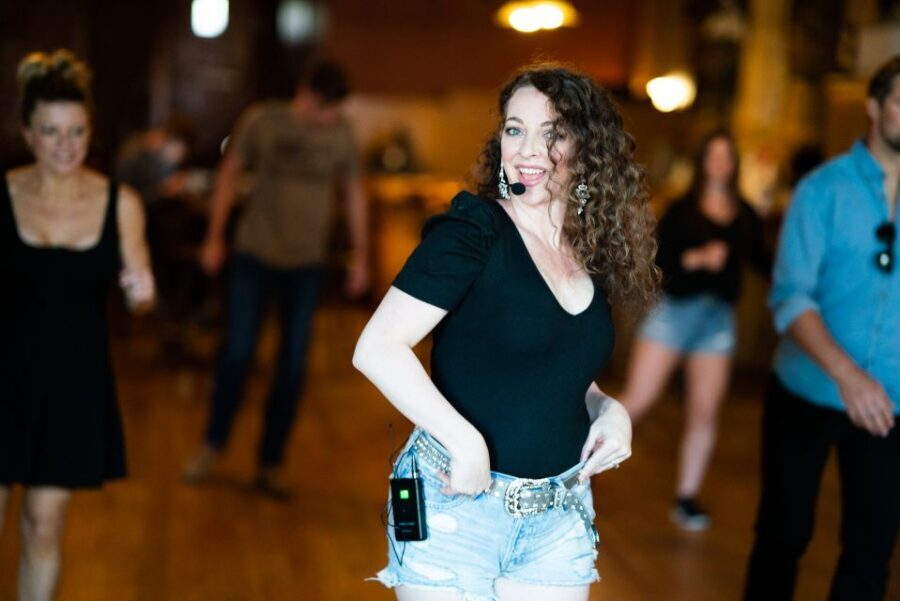
This class is a strong fit if you want:
- A hands-on Nashville activity on Broadway
- Something that works for mixed ages and mixed skill levels
- A short, memorable activity that doesn’t swallow your entire day
It’s also great if your group wants a guaranteed shared story. Two dances, filmed, and learned in one sitting is the kind of souvenir that actually sticks.
The main “not for you” case is accessibility. The class is not suitable for wheelchair users because the rooms are upstairs with no elevator.
Should You Book This Nashville Line Dancing Class?
Book it if you want a fun, social Nashville moment that doesn’t require experience. The biggest reasons to choose it are the low-stress teaching style, the chance to learn two routines in one hour, and the fact that you get a free video keepsake you can share later.
Skip it (or look for another activity) if stairs are a problem or if your group only wants passive sightseeing. If you can handle a bit of movement and you’re okay laughing at your first attempts, this is one of the easiest ways to get the Nashville line-dancing experience without overthinking it.
FAQ
Where do the line dancing classes take place?
The class is held in one of three historic Broadway honky-tonk venues: Bootleggers Inn (207 Broadway), Whiskey Bent Saloon (306 Broadway), or Show Pony (121 3rd Ave South and Broadway). You’ll receive your specific location by text the morning of your class.
How many line dances do I learn in the 1-hour class?
You’ll learn two line dances. The class teaches a warm-up dance first and then a second dance after that, with group voting on which routines to practice.
What should I bring?
Bring comfortable shoes and comfortable clothes. Water is provided, but food isn’t included.
What’s included with my ticket?
Your ticket includes the 1-hour class, an instructor, an audio guide (English), bottled water, and a free class video. Drinks are available for purchase, but food is not included.
Is the class wheelchair accessible?
No. The class is not suitable for wheelchair users.
How does cancellation work?
You can cancel up to 24 hours in advance for a full refund.
]]>I especially like the instructor-led pace and the way the teacher stays front-and-center with a microphone, so you can actually see and hear what matters. I also like the souvenir video you get afterward, which turns a one-hour class into something you can practice (and laugh at) later.
One thing to consider: the class location involves stairs. If stairs are a challenge for you, plan ahead.
Key things to know before you go
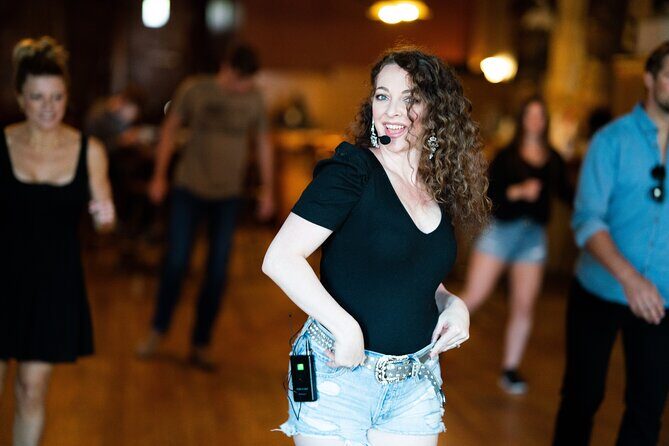
- Nashville honky-tonk setting: you learn in a real music bar, not a studio hallway
- Microphone + front-of-room teaching: the instructor stays easy to watch
- Beginners start with basics: you progress into well-known routines
- Souvenir video after class: you can practice at home for later
- Small-group feel (up to 50): big enough to be fun, not so huge that you disappear
Why Nashville line dancing beats rewatching YouTube
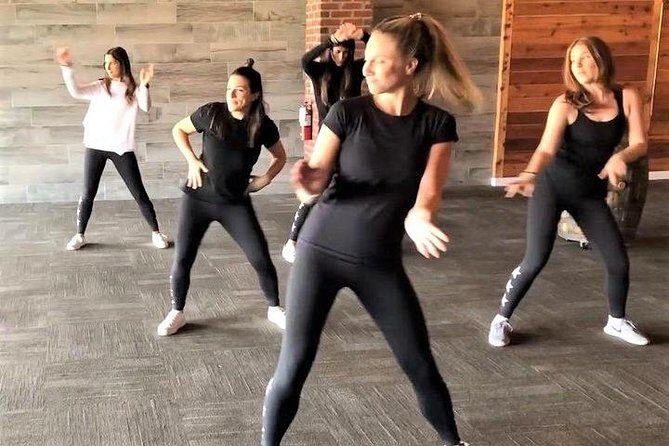
Nashville is the right place for this because you’re learning in the same culture that created this style of fun. The class is designed to get your feet moving fast, without making you feel behind.
The biggest win is the live coaching. The instructor doesn’t just show steps once and hope you catch up. They demonstrate the basics first, then teach a full routine. A teacher in front of the group, speaking through a microphone, saves you from the most common beginner problem: guessing what your body is supposed to do on the beat.
You also get a keepsake that extends the value. After the class, you’ll receive a video souvenir to take home so you can review the steps when you’re not surrounded by the noise and energy of Broadway.
Your 1-hour class: what happens from check-in to final steps
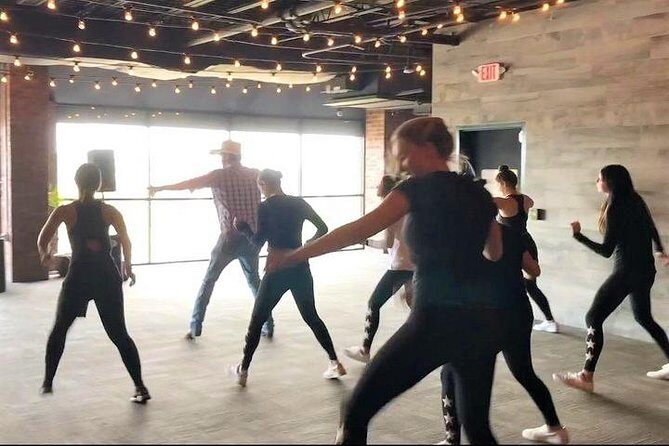
This experience runs for about one hour, and it fits nicely into a day plan with Nashville’s many distractions. When you arrive, check in first. Then the lesson starts right away, once everyone is set.
Here’s what you can expect during the class:
- You’ll be taught the basic line-dance steps first, which is exactly what beginners need.
- The instructor shows a routine and breaks it down so you can learn it in pieces.
- The teacher stays front-and-center, which is a big deal if you’re trying to copy footwork and arm timing.
- You’ll be able to hear instructions clearly thanks to the microphone.
Many classes also build confidence by keeping things light. Several instructors by name show up in class feedback as being high-energy and encouraging—names you may hear associated with these sessions include Jason, Lisa, Mallory, Lauren, Kelsey, Josh, and Miela. Even if your instructor isn’t one of those exact people, the teaching style described is consistent: step-by-step first, fun the whole time.
The venue reality check: honky-tonk bars and where to stand
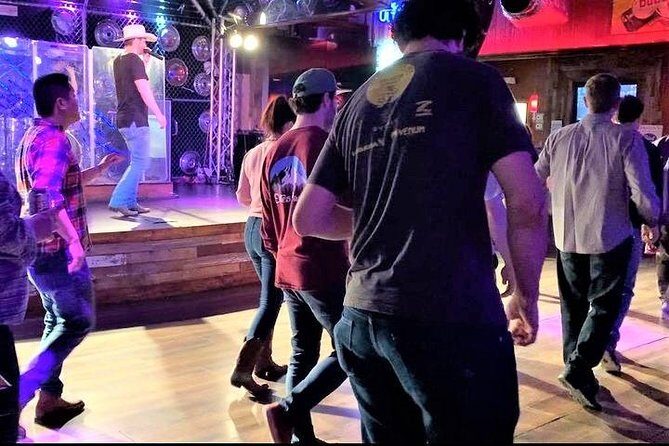
You’ll start at 207 Broadway, Nashville, TN 37201. From there, you’ll head to the class room inside a popular honky-tonk venue. That part is part of the appeal: you’re learning the routine in the place where people come to dance, sing, and loosen up.
Still, honky-tonk bars can be tight. One class location called out in feedback is Bootleggers Inn, where the space can feel narrow. In that kind of room, visibility matters. If you land farther back, you may find it harder to see full-body movements—especially when the group is packed.
Here’s how to handle that:
- Aim to arrive with enough time to get positioned closer to where you can see the instructor clearly.
- If your class is at a smaller room, consider asking staff if there’s any way to improve viewing for the back rows.
If you’re booking with the goal of maximum sightlines, it helps that the provider notes bigger options—Whiskey Bent Saloon and The Stage on Broadway—for those who prefer a room with more space. When available, that’s the kind of swap that can make a noticeable difference.
The souvenir video: a keepsake with a few practical tips
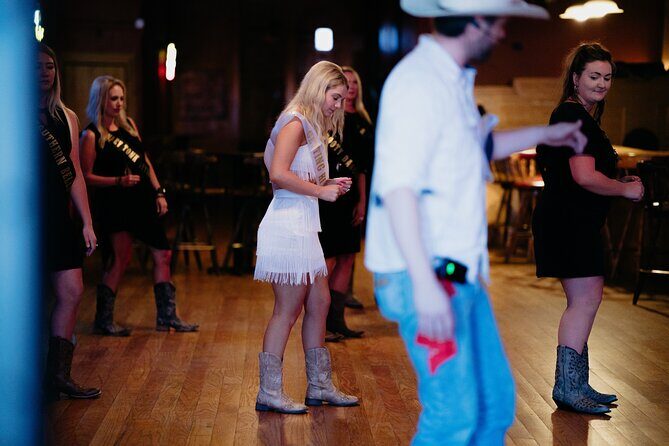
The souvenir video is included, and it’s sent within two weeks after your class. This is a smart add-on because line dancing is muscle memory plus timing. Watching yourself (even if you’re not your own biggest fan) helps you catch what your body did versus what your brain thought you did.
A couple practical points you’ll want to know:
- If you don’t see the video after a bit, check your spam folder. The media team has specifically noted that videos can land there.
- If it still doesn’t show up, you can contact the team at [email protected].
Quality can also depend on whether the video is downloaded properly from the link. One issue mentioned is that viewing on some phones can be disappointing if the file isn’t downloaded and saved in the right way. If you get the link, follow the instructions on opening or downloading rather than trying to preview it only inside an email preview.
Price and value: what $36.55 is really buying
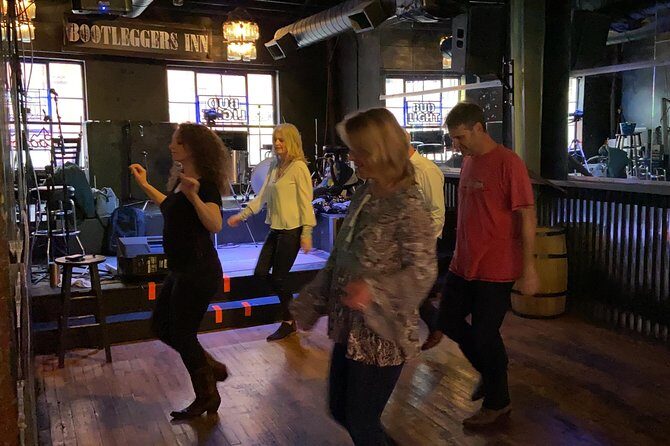
At $36.55 per person for about one hour, you’re paying for more than a dance session. You’re paying for:
- an instructor-led class with basics and a full routine
- a souvenir video
- a real Nashville venue experience (a honky-tonk bar on Broadway)
- bottled water
- a service built for mixed skill levels, from first-timers to people who already know how to move
For me, the value lands in two spots. First, live instruction compresses your learning curve. Instead of spending hours figuring out counts and steps on your own, you get coached while the routine is happening. Second, the video makes the experience stick. A one-time class is fun. A one-time class plus a take-home reminder is how you actually get better.
The cost also makes it a low-commitment add-on. You can book it early in your Nashville trip and use the video to keep the groove going on later nights, even if you’re not planning to join a dance floor the same way every day.
Who should book this class (and who might skip it)
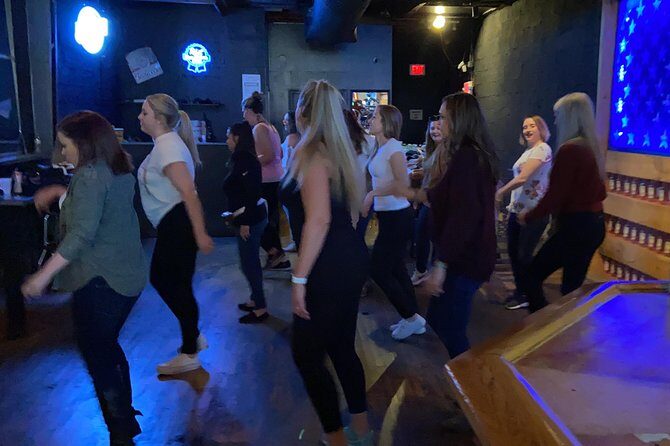
This is a great match if:
- you’re visiting Nashville and want a hands-on activity, not just another photo stop
- you want a beginner-friendly class that starts with basics
- you like the idea of leaving with a tangible souvenir video
- you’re traveling with mixed ages or different comfort levels, since the instruction is structured and encouraging
It might be less ideal if:
- stairs are a problem for you, since you’ll need them to reach the class area
- you hate physical activities that require coordinated movement for about an hour
The good news: the class doesn’t mention strict restrictions beyond the obvious fact that you’ll be dancing. You’re also not expected to be perfect. The teaching approach described is built for learning, not performing.
Quick, smart ways to get the most out of the hour
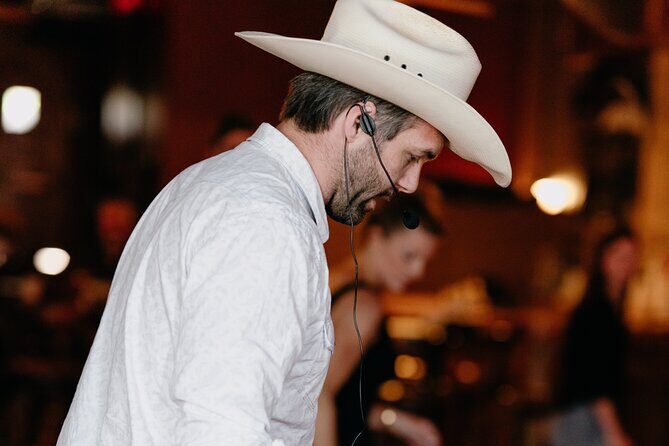
Here are small choices that help right away:
- Wear shoes you can move in easily. Line dance is about steady footwork.
- Come ready to learn the counts. The class starts with basics for a reason.
- If you care about seeing the instructor, plan your spot early—especially if your venue is on the smaller side.
- After class, treat the video like a practice tool, not just a souvenir. Even one or two review sessions can make the steps click.
Should you book this instructor-led line dancing class?
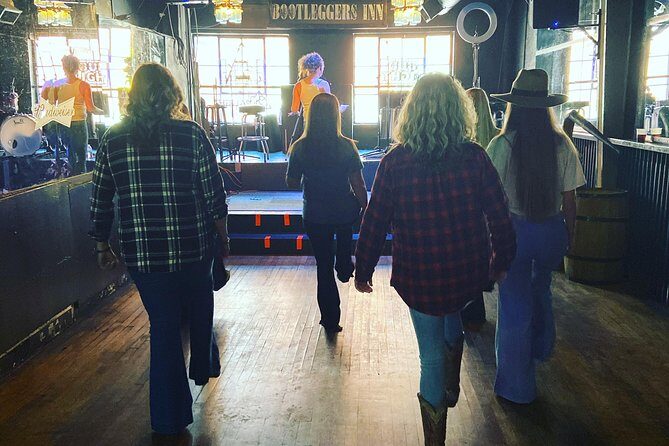
Yes, if you want a fun Nashville activity with real instruction and a take-home video that helps you remember what you learned. It’s a strong value for the price, and it’s designed for beginners while still being engaging for people who already dance.
Book it sooner in your trip if you can, so you have time to practice using the souvenir video. And if stairs are a concern or you’re worried about cramped sightlines, think about venue size—ask when booking if there’s a better option like Whiskey Bent Saloon or The Stage on Broadway.
If you’re on the fence because you think you have no rhythm, don’t. This class is built around making the steps understandable, then turning them into something you can do without stress.
FAQ
Where does the class start?
It starts at 207 Broadway, Nashville, TN 37201, USA.
How long is the line dancing class?
The class lasts about one hour.
Is this class beginner friendly?
Yes. It starts with the basic steps and progresses from there.
Is the souvenir video included?
Yes. A video souvenir is included and is sent out after class, typically within two weeks.
What’s included in the price?
Included are the 1-hour group class, the souvenir video, access to a popular honky-tonk venue experience, and bottled water.
Are alcoholic beverages included?
No. Alcoholic beverages are not included.
Is there a place to tip?
Optional gratuity is available, and you can add it before or after class by credit card, app, or cash.
Do I need to bring anything for the class?
You’ll want comfortable shoes for dancing. Your ticket will be mobile.
Are there stairs to reach the class?
Yes. You’ll have to take stairs to reach the class.
How big is the group?
The class has a maximum of 50 travelers.
]]>